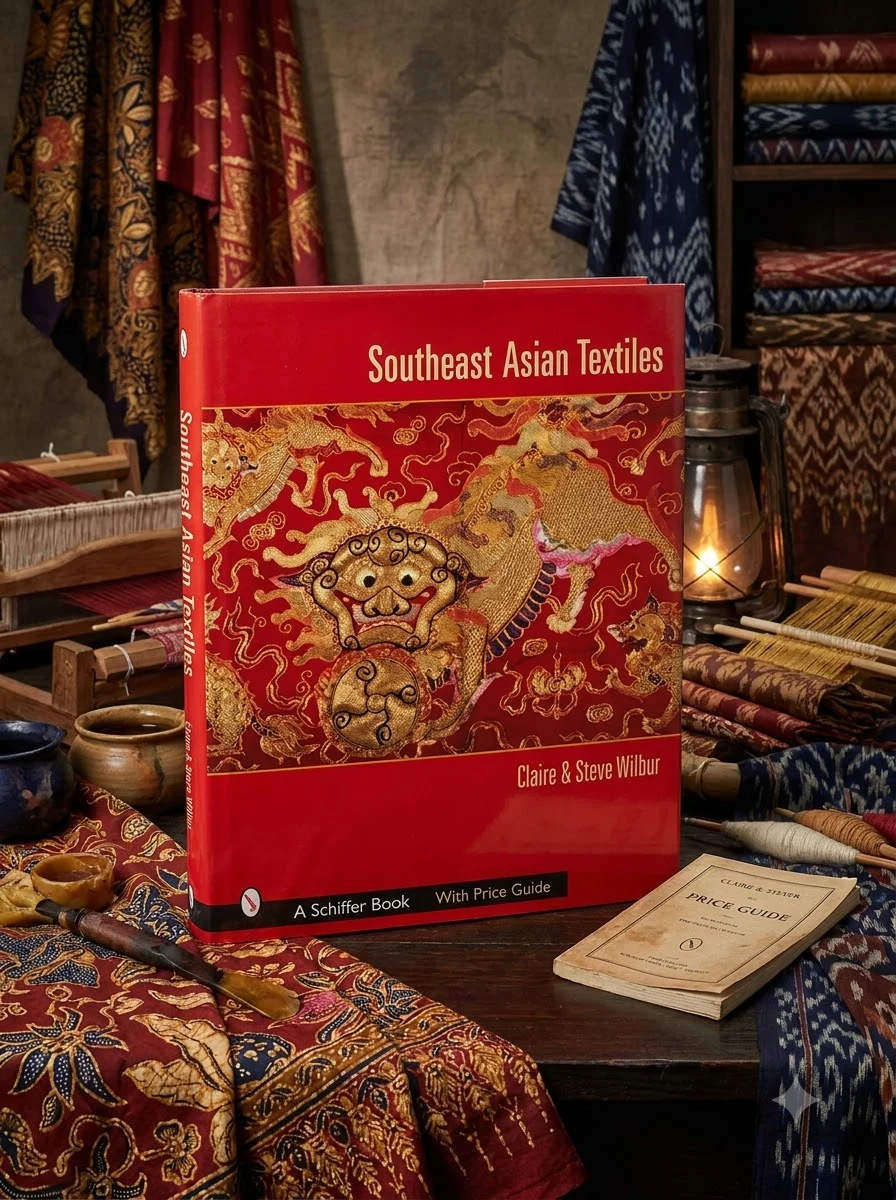
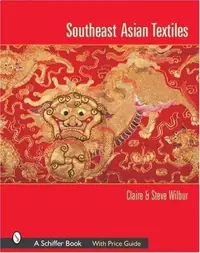
Southeast Asian Textiles
This edition can be ordered. No arrival date is confirmed.
Unveil the mystical tapestries of Southeast Asia, where wax, thread, and spirit weave ancient secrets into vibrant cloth.
Wilbur’s volume transcends mere photography to become a cartography of the spirit. Through two hundred and sixty vivid images, we trace the sacred geometry of batik’s wax barriers and ikat’s bound resist. This is not simply a catalog of aesthetics but a manual for the soulful collector. It dissects the alchemy of dye and weave, offering practical wisdom on preservation while illuminating the symbolic language of flora and fauna. Here, the loom becomes an altar, and every thread a conduit for the unseen forces that shape Southeast Asian cosmology.
This volume situates Southeast Asian textile arts within the realm of esoteric practice, framing the creation of batik and ikat as spiritual cartography rather than mere craft. It aligns with traditions that view material objects as conduits for unseen cosmological forces.


📝 Description: Southeast Asian Textiles
💎 Expert review
📖 Why choose it
Why this book is worth reading
This book is essential for the soulful collector and the occult enthusiast who perceives the loom as an altar. It offers more than visual pleasure; it provides a manual for understanding the alchemy of dye and weave. Readers seeking to decipher the symbolic language of flora and fauna will find profound wisdom here. The text transforms vibrant cloth into a map of ancient secrets, guiding the viewer through the sacred geometry of wax barriers and bound resist. It appeals to those who wish to connect with the unseen forces shaping Southeast Asian cosmology, offering practical preservation tips alongside deep spiritual insight for the dedicated practitioner.
⭐ Reader reviews
Reader rating
My book club chose this last month. It rewards patience more than any book I've bought this year. My only regret is not ordering it sooner.
Was skeptical at first. Not a light read, but far more accessible than I feared. It assumes more background than a beginner might have. Solid, if not essential.
This edition finally does the material justice. The typesetting is comfortable for study, with good margins for notes. The ideas are old but land with surprising force today. One of my better finds this year.
As someone who reads a lot in this field, I can be picky. It connects ideas I'd only seen treated separately elsewhere. Recommended if you're ready to do the work.
Perfect companion for my morning study sessions. Solid binding, decent paper — holds up to heavy use. Shipping was quick too.
Been hunting for a decent copy of this text for ages. Challenging in places, but never needlessly obscure. It pairs well with more modern commentaries on the same tradition. It assumes more background than a beginner might have. Recommended with reservations.
Came across this title in a footnote and had to track it down. The historical context alone makes it worth the price. Some sections stopped me cold in the best way. A few pages arrived with light corner wear, though nothing serious. Good, with the caveats above.
Wilbur presents a compelling blend of photography and metaphysical interpretation, turning a catalog into a manual for the soul. However, this work does not suit readers seeking purely technical weaving instructions or dry historical chronologies. Those looking for straightforward aesthetic appreciation without the esoteric overlay may find the spiritual framing excessive. The book is best appreciated by those already inclined toward occult perspectives on material culture. It demands a reader willing to engage with the mystical tapestries rather than just the physical threads, filtering out anyone uninterested in the alchemy of spirit and substance.
❓ Frequently asked questions
📖 Who should read this
For the esoteric collector seeking objects with spiritual weight, the textile historian interested in symbolic codes, and the designer craving inspiration from ancient resist-dye rituals. It suits those who view fabric as a vessel for memory and magic.
🎯 Key themes and symbolism
Wax and Resist Alchemy
The text explores how batik artisans manipulate heat and wax to create sacred barriers, revealing the ritualistic precision behind the resist-dye process. It frames the technique not as craft, but as a disciplined meditation on negative space and spiritual protection.
Bind-Resist Symbolism
Ikat weaving is presented as a complex negotiation between chaos and order. The binding of threads before dyeing mirrors the binding of fate, with each color shift representing a moment of transformation or ancestral guidance woven directly into the fabric's structure.
Collector's Stewardship
Beyond aesthetics, the book demands ethical stewardship. It instructs the reader on preserving these fragile artifacts, treating them not as commodities but as living entities requiring care, respect, and a deep understanding of their cultural and energetic weight.
💬 Quotes from the book
“The loom is not merely a tool, but a threshold where the weaver’s intent meets the chaos of the dye.”
“To hold a piece of antique batik is to hold a shield against the unseen.”
📜 Historical context
📚 Glossary
- Batik
- Ikat
- Resist
📔 Questions to reflect on
- What patterns in your life feel like resist-dye, where certain truths are hidden to preserve their power?
- How might the concept of 'binding' threads before dyeing apply to your own intentions and commitments?
- In what ways do you steward the objects in your home as vessels of memory or energy?
🏛 Books from this publisher Schiffer Craft
All books from this publisher →


 83
83
You might also like
See more →

 90
90

 89
89
 89
89