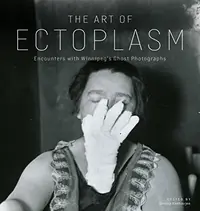
The Art of Ectoplasm: Encounters with Winnipeg's Ghost Photographs
Stock reported in the catalog; fulfillment is confirmed with your request.
Uncover spectral secrets through the camera lens of Winnipeg's most audacious ghost hunters.
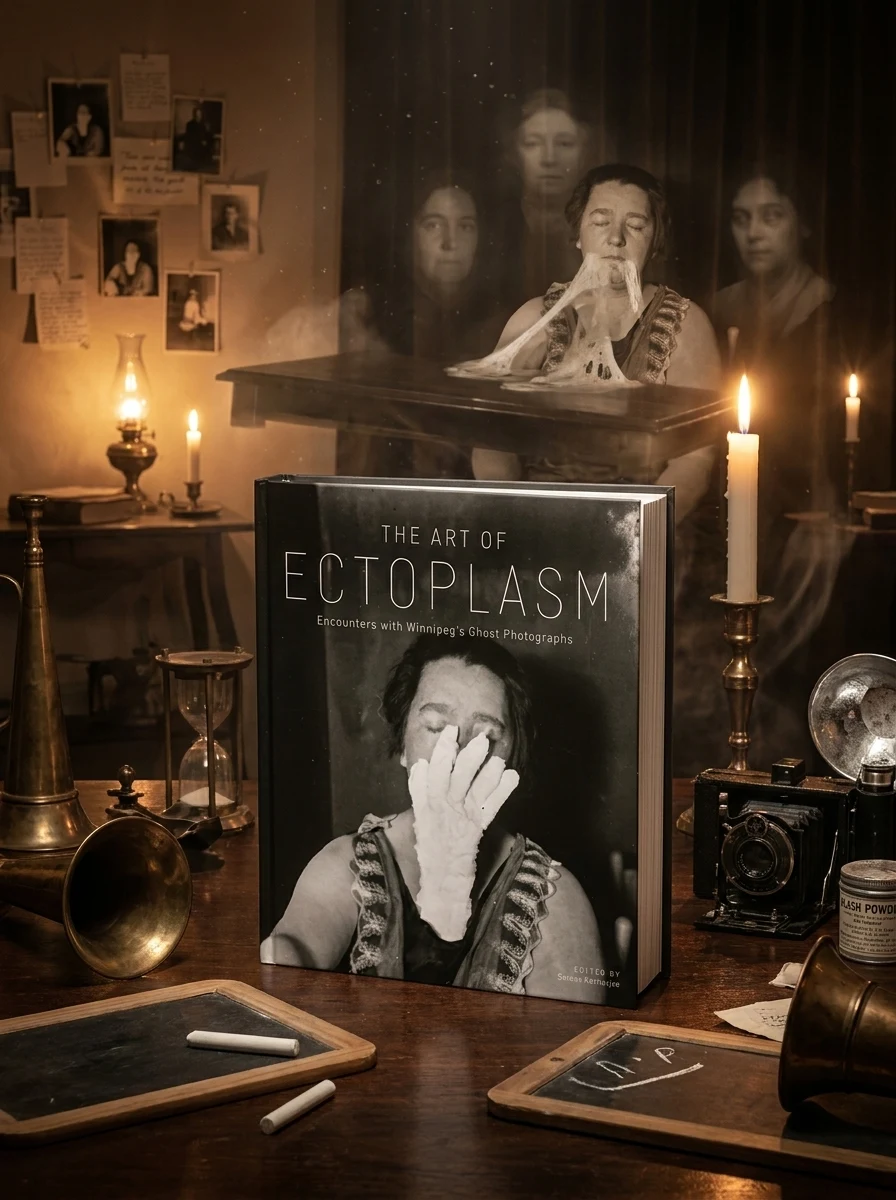
This compelling volume delves into the extraordinary archive of T.G. and Lillian Hamilton, a Winnipeg couple who meticulously documented séances in their home laboratory following the devastation of World War I and the 1918 pandemic. Driven by a quest to prove the survival of consciousness, their research yielded hundreds of unique photographs, capturing everything from levitating tables to the mysterious substance known as ectoplasm. The book thoughtfully explores this legacy, examining the Hamiltons' methods, their impact on psychical science, and the enduring fascination their work holds for scholars and artists today.
This work sits firmly within the early twentieth-century spiritualist movement, specifically examining the intersection of psychical research and photographic technology in post-World War I Winnipeg. It reflects the era's intense societal desire to verify the survival of consciousness through scientific documentation amidst global trauma.


📝 Description: The Art of Ectoplasm: Encounters with Winnipeg's Ghost Photographs
💎 Expert review
📖 Why choose it
Why this book is worth reading
Readers fascinated by the historical intersection of science, spirituality, and visual media will find this volume deeply rewarding. It offers a unique window into the lives of T.G. and Lillian Hamilton, whose meticulous documentation of séances provides tangible evidence of early psychical research. Those interested in how trauma and loss drive intellectual pursuits will appreciate the context of their work following the devastation of World War I and the 1918 pandemic. Scholars and artists alike will gain insight into how these early ghost hunters utilized photography to bridge the gap between the physical and spiritual worlds, making this a vital resource for understanding the legacy of Winnipeg’s occult history.
⭐ Reader reviews
Reader rating
This book provides a scholarly yet accessible examination of the Hamiltons' archive, offering valuable context for their photographic experiments. However, it is not suited for readers seeking sensational ghost stories or practical guides to summoning spirits. It may also disappoint those who prefer definitive proof of the paranormal over historical analysis. Instead, this volume appeals to those interested in the sociology of belief and the history of photography. The narrative is thoughtful and well-researched, but its academic tone might feel dry to casual readers looking for immediate thrills. It is best appreciated by those willing to engage with the intellectual and cultural implications of early spiritualism rather than just its spooky aesthetics.
❓ Frequently asked questions
📖 Who should read this
If you're fascinated by the intersection of early photography, psychic phenomena, and cultural responses to collective grief, this meticulous study offers a compelling journey into the Hamiltons' extraordinary world. A must-read for historians of the occult and spiritualism.
🎯 Key themes and symbolism
Post-War Spiritualism
Explore the profound cultural shift after World War I and the global pandemic, where widespread grief fueled a desperate search for connection with the deceased. This book situates the Hamiltons' work within this fervent spiritualist movement, highlighting how their research offered solace and a perceived scientific pathway to the afterlife.
Photography as Evidence
Examine how the seemingly objective medium of photography was controversially employed to 'prove' the existence of spirits and ectoplasm. This analysis delves into the blurred lines between scientific documentation, artistic expression, and illusion, showcasing photography's complex role in early psychical investigations and public perception.
The Ectoplasmic Enigma
Delve into the mysterious substance of ectoplasm, its purported role in spirit manifestation, and the Hamiltons' detailed, often startling, photographic documentation. The book scrutinizes how this enigmatic material challenged scientific understanding and captivated the public imagination, pushing the boundaries of material reality.
💬 Quotes from the book
“The Hamiltons' photographic archive stands not merely as a collection of curious images, but as a poignant artifact of a society grappling with profound loss, seeking solace through the veil.”
“To scrutinize an ectoplasmic manifestation through the lens of a camera is to confront the very boundaries of perception and belief, where the tangible blurs into the spectral.”
📜 Historical context
📚 Glossary
- Ectoplasm
- Séance
- Psychical Research
📔 Questions to reflect on
- How do you think the widespread grief following WWI and the 1918 pandemic influenced the public's embrace of spiritualism and psychical research?
- Considering the Hamiltons' use of photography, how has technology historically shaped, and potentially distorted, our understanding of the supernatural?
- If you were present at one of the Hamiltons' séances, what would you be looking for, and what would it take for you to believe in the manifestations?
You might also like
See more →
 91
91