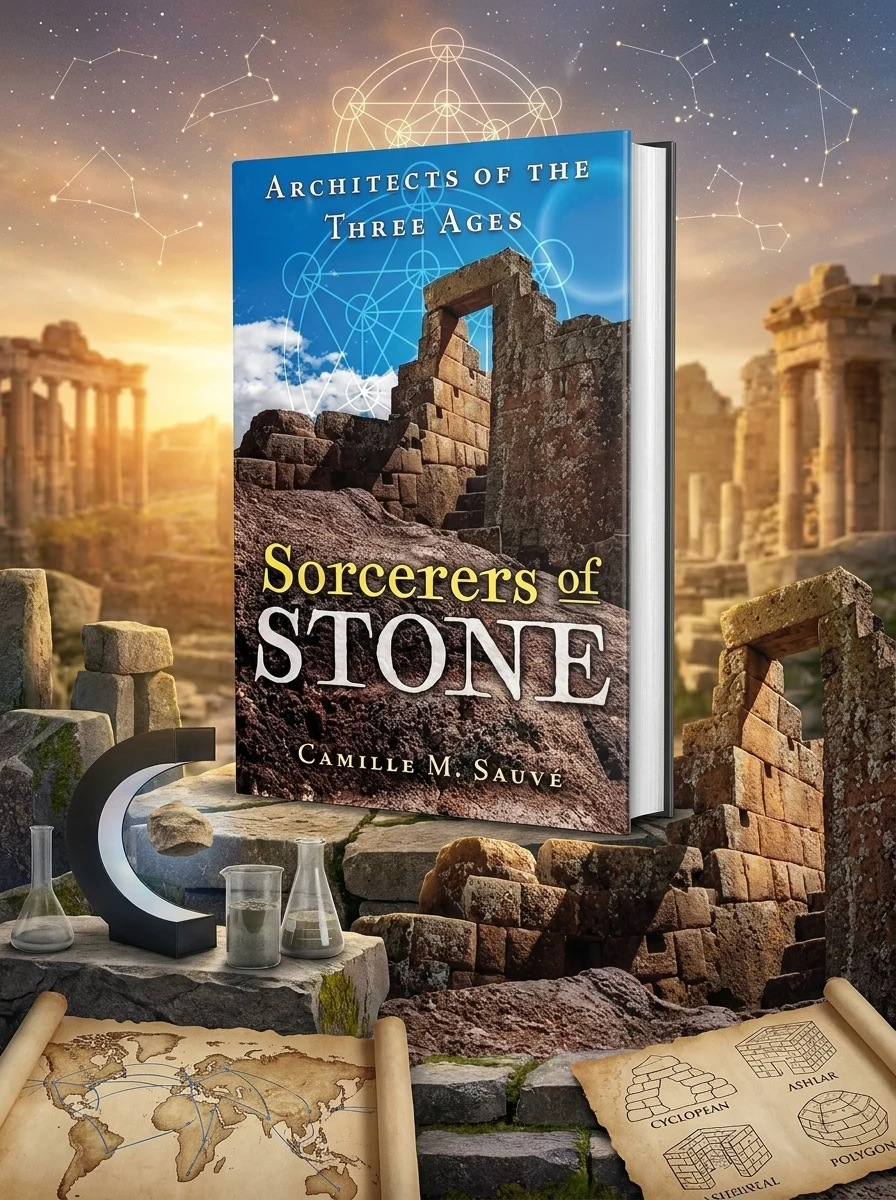
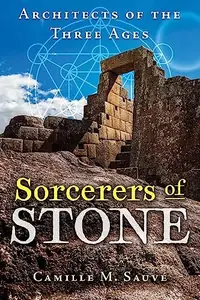
Sorcerers of Stone: Architects of the Three Ages


This edition can be ordered. No arrival date is confirmed.
Unearth the secrets of a global civilization that shaped our world in stone.
Camille M. Sauvé's "Sorcerers of Stone" unveils a compelling hypothesis: a sophisticated ancient civilization once thrived worldwide, leaving behind monumental architecture. This groundbreaking work meticulously categorizes sacred sites into three distinct architectural ages, challenging conventional archaeological timelines. Focusing intensely on Peru's Sacred Valley and drawing global parallels, Sauvé presents evidence of advanced building techniques, including acoustic levitation and geopolymers. She dares us to rethink our understanding of prehistory, revealing a forgotten global culture far more advanced than typically imagined.
This work sits firmly within the esoteric tradition of alternative archaeology and ancient astronaut theory, echoing the speculative histories popularized by authors like Graham Hancock. It challenges mainstream academic consensus by proposing a sophisticated, global prehistoric civilization.


📝 Description: Sorcerers of Stone: Architects of the Three Ages
💎 Expert review
📖 Why choose it
Why this book is worth reading
Readers fascinated by the mysteries of ancient engineering and alternative historical narratives will find this book deeply engaging. Sauvé invites you to look at familiar sites like Peru's Sacred Valley through a radical new lens, suggesting that monumental architecture was not merely built but crafted using advanced, forgotten technologies. If you enjoy piecing together global parallels and questioning established timelines, this text offers a compelling narrative of a lost world. It is perfect for those who seek evidence of acoustic levitation and geopolymers, providing a sense of wonder regarding our ancestral capabilities. This book serves as a gateway to reimagining human history, appealing to dreamers and skeptics alike who are ready to explore the possibility that we are not the first advanced civilization on Earth.
⭐ Reader reviews
Reader rating
Sauvé presents a bold hypothesis that will delight those already inclined toward alternative archaeology, offering meticulous categorization of sacred sites across three architectural ages. The focus on Peru’s Sacred Valley provides a concrete anchor for these global parallels, making the abstract theory feel tangible. However, readers expecting rigorous peer-reviewed archaeological data or mainstream historical analysis may find the reliance on unconventional techniques like acoustic levitation frustrating or unsubstantiated. This is not a textbook for academic purists but rather a speculative journey for the open-minded. It succeeds in challenging conventional timelines but demands a willingness to suspend skepticism regarding established scientific consensus.
❓ Frequently asked questions
📖 Who should read this
If you question accepted historical narratives and seek provocative new theories on humanity's past, this book is for you. Dive into a meticulously researched journey challenging archaeological dogma, perfect for seekers of ancient wisdom and forgotten origins eager to explore alternative perspectives on human history.
🎯 Key themes and symbolism
Global Ancient Civilization
This book posits the existence of a unified, highly advanced global culture preceding known historical civilizations. Sauvé meticulously connects architectural similarities across continents, arguing these aren't coincidences but rather remnants of a shared, sophisticated heritage. She suggests a worldwide network of builders possessed knowledge and technology far beyond what mainstream archaeology currently acknowledges, fundamentally reshaping our view of human origins.
Three Architectural Ages
"Sorcerers of Stone" introduces a revolutionary framework for understanding ancient construction by identifying three distinct architectural styles. These styles, found consistently across numerous sacred sites, are presented as indicators of different epochs within this lost global civilization. The author delves into the unique characteristics of each age, particularly the two oldest, providing a new lens through which to interpret the timeline and evolution of ancient building prowess.
Advanced Construction Techniques
Sauvé explores the profound scientific principles likely employed by these ancient master builders. The book delves into cutting-edge research on concepts such as acoustic levitation, which could explain the effortless movement of colossal stones, and the ancient application of geopolymers for creating incredibly durable, precisely-formed structures. This investigation into advanced physics and material science offers plausible, non-supernatural explanations for seemingly impossible ancient feats.
💬 Quotes from the book
“The monolithic structures at Sacsayhuaman scream of a technology far beyond the copper tools attributed to their supposed builders, hinting at a global design language from an age we have conveniently forgotten.”
“When acoustic frequencies can manipulate matter, the 'impossible' feats of ancient stonework become not magic, but engineering. We must reconsider our entire understanding of their craft and capabilities.”
📜 Historical context
📚 Glossary
- Acoustic Levitation
- Geopolymers
- Sacred Valley
📔 Questions to reflect on
- How does the idea of a forgotten global civilization challenge or confirm your existing beliefs about human history and progress?
- If ancient peoples possessed technologies like acoustic levitation, what implications does this have for our understanding of their society, spirituality, and daily life?
- Consider an ancient site you've visited or seen images of. How might viewing it through the lens of 'three architectural ages' alter your perception of its origins and purpose?
🏛 Books from this publisher Bear & Company
All books from this publisher →


You might also like
See more →