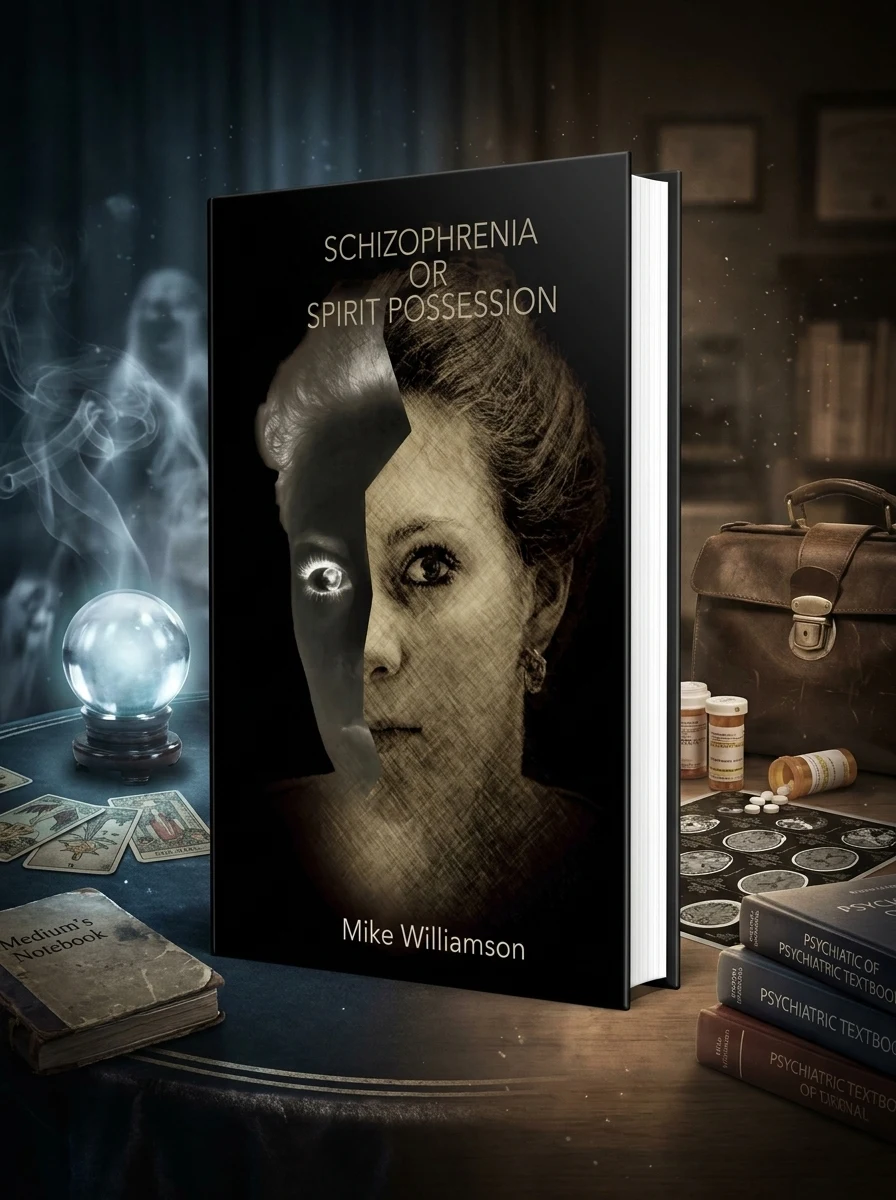
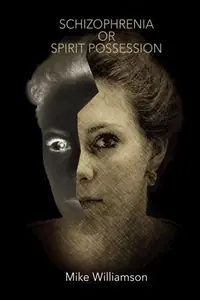
Schizophrenia or Spirit Possession
Stock reported in the catalog; fulfillment is confirmed with your request.
What if the whispers you hear aren't illness, but a call from beyond the veil?
This book delves into the profound question of whether certain experiences, often categorized as mental illness, might actually stem from spiritual phenomena. Drawing on decades of experience as a medium, the author challenges conventional medical paradigms, particularly regarding the diagnosis of schizophrenia. It proposes that while physiological factors and medication side effects are valid considerations, a significant number of individuals hearing voices or experiencing mood shifts could be interacting with discarnate entities. The text explores the brain's role as a spiritual receiver, suggesting that the "sixth sense" offers a pathway to understanding these often-misunderstood perceptions.
This work emerges from the contemporary intersection of occultism and alternative spirituality, challenging mainstream medical narratives through a lens of spiritualist inquiry. It sits firmly within the tradition of esoteric philosophy that investigates the boundaries between psychic phenomena and psychological health.


📝 Description: Schizophrenia or Spirit Possession
💎 Expert review
📖 Why choose it
Why this book is worth reading
Readers who feel alienated by purely medical explanations for their auditory experiences will find profound validation in this text. It offers a compassionate framework for those suspecting spiritual origins behind their perceptions, bridging the gap between occult practice and personal identity. Those interested in the mechanics of mediumship and the brain as a receiver will appreciate the detailed exploration of these concepts. It is essential for anyone navigating the complex terrain where mental health discourse intersects with esoteric truth-seeking, providing a respectful yet bold alternative perspective.
⭐ Reader reviews
Reader rating
Bernard and Williamson present a provocative thesis that demands attention from open-minded seekers. While it successfully articulates the spiritualist viewpoint on schizophrenia and voice-hearing, readers strictly adhering to clinical psychiatry will likely find its dismissal of conventional diagnosis frustrating or unscientific. It is not for those seeking empirical medical advice but rather for those already inclined toward metaphysical interpretations of consciousness. The argument is compelling within its own paradigm but lacks the rigor expected by hardline skeptics. Ultimately, it serves as a powerful tool for community building among those who identify with spiritual phenomena, though it may polarize readers divided on the nature of mental illness.
❓ Frequently asked questions
📖 Who should read this
Are you questioning the conventional explanations for your own, or a loved one's, unique perceptions? Do you seek alternative frameworks for understanding spiritual encounters often dismissed as illness? This book offers a thought-provoking perspective for those open to exploring the intersections of spirituality and mental well-being beyond mainstream discourse.
🎯 Key themes and symbolism
Spirit Communication vs. Illness
The book critically examines the overlap between experiences like hearing voices and mood fluctuations, typically diagnosed as mental disorders, and the potential for genuine spiritual contact. It argues many individuals are misdiagnosed and medicated when their perceptions might actually be interactions with the spirit realm.
The Brain as Receiver
This theme explores the concept of the brain not merely as an originator of thought, but as a sophisticated receiver, capable of processing information beyond the five conventional senses. It posits this 'sixth sense' allows for communication with the spirit world.
Re-evaluating Diagnosis
The author scrutinizes diagnostic criteria for schizophrenia, highlighting the absence of definitive pathological markers. It challenges the medical profession's dismissal of spiritual explanations, suggesting that if genuine spiritual contact occurs, many mediums and psychics could be inaccurately labeled, necessitating a more inclusive diagnostic approach.
💬 Quotes from the book
“Too many individuals languish on medications, their true spiritual encounters mislabeled as pathology, simply because science refuses to acknowledge the unseen.”
“Our brains are not merely isolated generators of thought, but sophisticated instruments, finely tuned to receive signals from realms beyond our physical perception.”
📜 Historical context
📚 Glossary
- Discarnate Spirit
- Pathology
- Sixth Sense
📔 Questions to reflect on
- How might reinterpreting experiences like hearing voices as spiritual encounters change societal and individual responses to them?
- Consider the concept of the brain as a 'receiver.' What implications does this hold for our understanding of consciousness and reality?
- If medical science were to fully acknowledge discarnate spirit interactions, how might diagnostic and therapeutic approaches to mental health evolve?
You might also like
See more →





 91
91