US shipping Secure card payment Occult and esoteric books

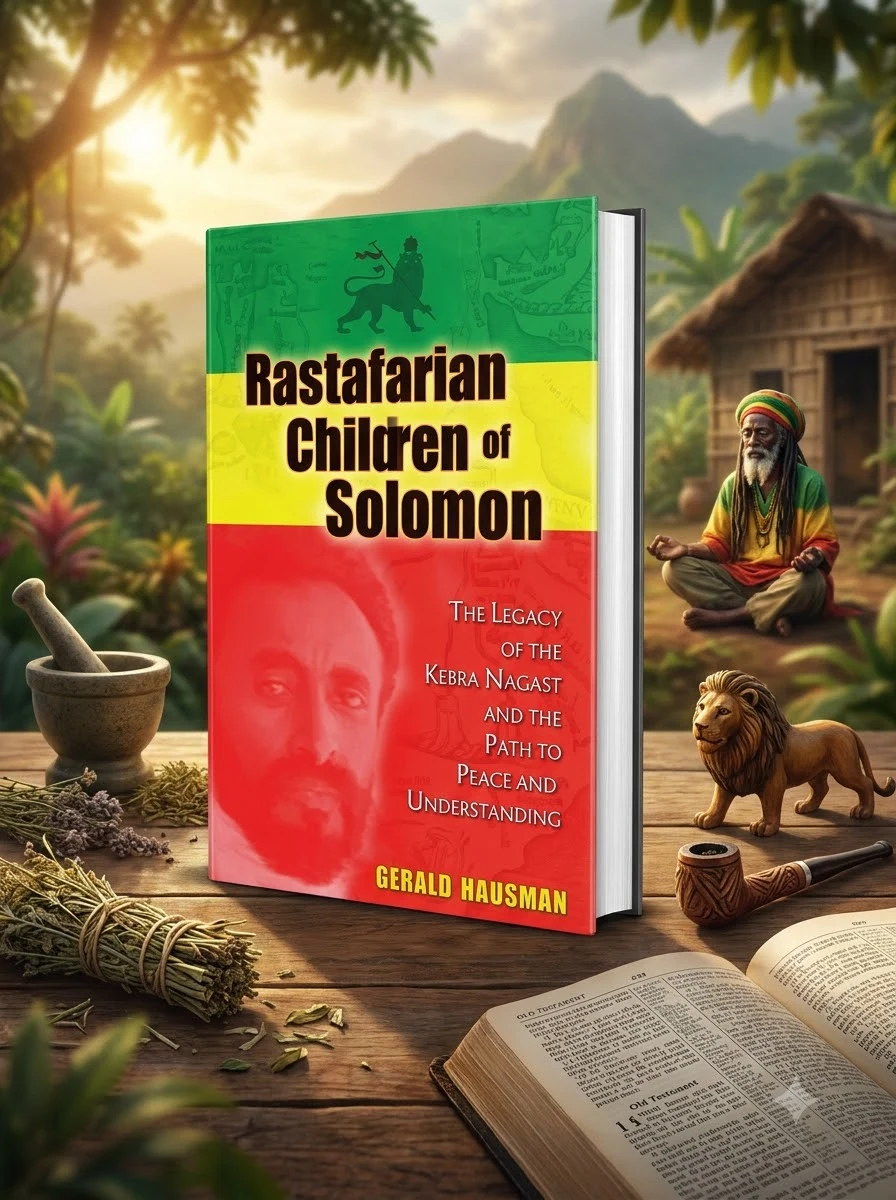
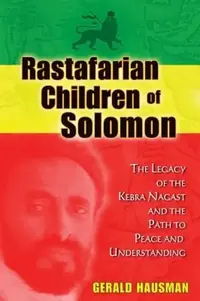
Rastafarian Children of Solomon: The Legacy of the Kebra Nagast and the Path to Peace and Understanding

Hausman, Gerald
Reader rating
4.7
(6 reviews) 45 sold
Availability to be confirmed

This edition can be ordered. No arrival date is confirmed.

📚 ABOUT THE BOOK

Uncover the ancient Solomonic lineage pulsing beneath the rhythms of Rastafari in this intimate ethnographic portrait.

Drawing from fifteen years of immersion in Jamaica, Gerald Hausman presents a profound exploration of Rastafarian spirituality, tracing its roots to the legendary Kebra Nagast and King Solomon. Through candid interviews with bush doctors, elders, and members of the Marley family, this work reveals a living tradition of peace and meditation that predates organized dogma. Hausman illuminates the unbroken spiritual lineage connecting Rastafarian beliefs to biblical passages excised from standard versions, offering readers a rare, firsthand glimpse into the daily rituals, herbal wisdom, and prophetic visions that sustain this vibrant, unbroken path to understanding.

Key themes
Solomonic Lineage Oral Tradition Herbal Healing
Historical context

This work situates itself within the intersection of Rastafarian spirituality and ancient Solomonic mythos, drawing heavily on the Ethiopian epic Kebra Nagast. It explores the esoteric lineage connecting biblical history with contemporary Jamaican religious practice.


Difficulty
● Easy
Fans will love it
Marvin Harris · Ras Michael Sabahado · The Kebra Nagast · W.E.B. Du Bois
🌌 Mysticism
🏛 Bear & Company 📖 152 pages 📔 Paperback 📐 Paperback ISBN: 9781591431541
Fun fact
Hausman excels at weaving intimate oral histories into a coherent narrative of spiritual continuity, offering a rare, respectful window into Rastafari life. However, readers seeking rigorous academic critique or theological debate may find the approach too personal and anecdotal. It sits firmly as a bridge between ethnography and devotional literature, ideal for those valuing human connection over doctrinal analysis.
📚 This book appears in Esoterica Books

📝 Description: Rastafarian Children of Solomon: The Legacy of the Kebra Nagast and the Path to Peace and Understanding

Shares the spiritual wisdom of Rastafari through the stories, teachings, and traditions of practicing Rastas in Jamaica - Includes the author's interviews with bush doctors, healers, and Rastafarians gathered during his 15 years of living in Jamaica - Reveals the old ways of the Rastafarians and how their beliefs form an unbroken lineage tracing back to King Solomon - Explains the connection of Rasta beliefs to important biblical passages Tracing their lineage back to King Solomon--the wisest man who ever lived--Rastafarians follow a spiritual tradition of peace and meditation that is more a way of life than an organized religion. During his 15 years living in Jamaica, Gerald Hausman developed deep friendships with Rastafarians and rootsmen, enabling him to experience firsthand the beliefs and traditions of these followers of the Kebra Nagast--the African gospel excised from the King James version of the Bible. He met bush doctors, Rasta preachers, members of the Marley family, and respected elders who knew Marcus Garvey, prophet of the Rasta movement and vocal proponent of the Pan-African movement in America. He also met elders who were present when Haile Selassie I, Emperor of Ethiopia and descendant of the House of David, came to Jamaica in the 1960s. Through interviews with fishermen, mystics, and wise men, as well as direct encounters with spirits and the spiritual, the author reveals the deep wisdom that underlies the "old ways" of the Rastas. He connects their stories, lives, and teachings with important biblical passages as well as reggae songs. He shares their views on the medicinal and meditative powers of cannabis--the sacred herb of Solomon--and explains that while Rastas believe it to be "the opener of the door," they maintain that peace and understanding must be found within. Illustrating the unwavering faith and hope of the Rastafari of Jamaica, Hausman shows them to be a people who, above all, emphasize equality, because the Holy Spirit within each of us makes us all one and the same.

💎 Expert review

💎
Esoterica Books editorial team
Occult literature desk
Hausman provides a profound, firsthand exploration of Rastafarian beliefs, grounding them in the legendary Kebra Nagast. The strength lies in his fifteen years of immersion, offering candid interviews that illuminate daily rituals and herbal wisdom. However, readers seeking rigorous academic sociological analysis or dry historical fact-checking may find the intimate, spiritual tone too subjective. It is not for those who prefer detached observation over empathetic engagement. This work suits those willing to accept its perspective on biblical excisions as part of a living tradition rather than strict historical record. It is essential for spiritual seekers but less relevant for critical historians.
✓ EDITOR'S REVIEW

📖 Why choose it

📖

Why this book is worth reading

Readers seeking a deep, empathetic understanding of Rastafarian spirituality will find this book invaluable. Gerald Hausman offers a rare, intimate glimpse into the daily rituals and herbal wisdom that sustain this vibrant path. It is ideal for those interested in the unbroken spiritual lineage connecting biblical passages to modern esoteric practice. By moving beyond organized dogma, the text reveals a living tradition of peace and meditation. Those craving authentic ethnographic insights and prophetic visions from bush doctors and elders will appreciate the candid nature of these accounts. It serves as a bridge for anyone wishing to understand the roots of Rastafari through the lens of the Kebra Nagast and King Solomon's legacy.

⭐ Reader reviews

The starting rating comes from the team Esoterica Books —
⭐ Esoterica editorial review Editorial rating 4.4/5
★★★★
Seekers of non-dogmatic spirituality, historians of Caribbean culture, and those interested in the syncretic blend of African heritage, biblical mysticism, and indigenous healing practices within the Rastafari movement.

Reader rating

4.7
Based on 6 reviews
5
5
4
1
3
0
2
0
1
0
I
Ivy A. ✓ Verified purchase
April 2, 2026
My new favorite

Exactly what I was looking for. Solid binding, decent paper — holds up to heavy use. Deserves a place on any esoteric bookshelf.

H
Hannah M. ✓ Verified purchase
April 17, 2026
Essential reading

Not my usual area but wanted to branch out. Solid binding, decent paper — holds up to heavy use. Some sections stopped me cold in the best way. One of my better finds this year.

G
George C. ✓ Verified purchase
December 24, 2025
My new favorite

I collect works on this subject and this is a worthy addition. I appreciated how the argument builds steadily from first principles. It reads better in small doses — a chapter at a time with notes. One of my better finds this year.

J
Julia T.
September 7, 2025
Essential reading

This edition finally does the material justice. The ideas are old but land with surprising force today. It connects ideas I'd only seen treated separately elsewhere. A keeper.

M
Margaret B. ✓ Verified purchase
August 1, 2025

Came across this title in a footnote and had to track it down. Not a light read, but far more accessible than I feared. Well worth it.

E
Esoterica Books editorial team

Hausman provides a profound, firsthand exploration of Rastafarian beliefs, grounding them in the legendary Kebra Nagast. The strength lies in his fifteen years of immersion, offering candid interviews that illuminate daily rituals and herbal wisdom. However, readers seeking rigorous academic sociological analysis or dry historical fact-checking may find the intimate, spiritual tone too subjective. It is not for those who prefer detached observation over empathetic engagement. This work suits those willing to accept its perspective on biblical excisions as part of a living tradition rather than strict historical record. It is essential for spiritual seekers but less relevant for critical historians.

❓ Frequently asked questions

No, it is an ethnographic narrative. It focuses on lived experience and oral history rather than prescribing doctrinal rules or liturgical practices for practitioners.
Hausman emphasizes it as a way of life and a spiritual path rooted in peace and meditation, often distinct from formalized religious structures, highlighting its organic, community-based nature.

📖 Who should read this

Seekers of non-dogmatic spirituality, historians of Caribbean culture, and those interested in the syncretic blend of African heritage, biblical mysticism, and indigenous healing practices within the Rastafari movement.

🎯 Key themes and symbolism

Solomonic Lineage

Oral Tradition

Herbal Healing

💬 Quotes from the book

“Rastafari is not an organized religion; it is a way of life, a path of peace and meditation.”

“The Kebra Nagast is the African gospel, the truth excised from the King James version.”

📜 Historical context

This text emerges from the rich soil of Jamaican syncretism, bridging Ethiopian Orthodoxy, Jewish Kabbalah, and African tribal traditions. It reflects the post-colonial spiritual reclamation of the mid-20th century, where the Kebra Nagast served as a foundational counter-narrative to colonial religious texts, empowering a community to assert its divine heritage through the lens of Solomon and Sheba.

📚 Glossary

Kebra Nagast
Bush Doctor
Rootsman

📔 Questions to reflect on

  1. How might your personal lineage or heritage offer a different perspective on spiritual authority than mainstream narratives?
  2. In what ways does the concept of 'excised truth' resonate with your own search for spiritual authenticity?
  3. Reflect on a time when you learned more about a community through their daily practices than their stated doctrines.

🏛 Books from this publisher Bear & Company

All books from this publisher →

You might also like

See more →