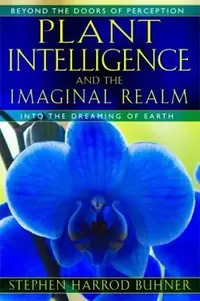
Plant Intelligence and the Imaginal Realm: Beyond the Doors of Perception Into the Dreaming of Earth
Buhner, Stephen Harrod

Stock reported in the catalog; fulfillment is confirmed with your request.
Awaken the sleeping intelligence of the earth through direct, conscious communion with the living world.
Buhner dismantles the barrier between observer and observed, proposing that every organism possesses a sophisticated inner life and communicative capacity. He offers practical methods to shift your consciousness, allowing you to perceive the subtle languages of nature. This is not merely theory but a manual for becoming a wild scientist, urging readers to shed domesticated habits and engage Gaia as a kin. By embracing analogical thinking, you will discover that plants, fungi, and bacteria are not silent resources but vibrant participants in a shared dreaming reality.
This work emerges from the contemporary ecological spirituality and permaculture movements, bridging modern scientific inquiry with ancient animistic traditions. It sits firmly within the esoteric exploration of consciousness that challenges materialist paradigms by proposing a living, intelligent Earth.


📝 Description: Plant Intelligence and the Imaginal Realm: Beyond the Doors of Perception Into the Dreaming of Earth
💎 Expert review
📖 Why choose it
Why this book is worth reading
This book is essential for those feeling a deep, often unspoken longing to reconnect with the natural world on a profound, personal level. It offers a transformative manual for shifting consciousness from passive observation to active communion, inviting readers to shed domesticated habits and perceive the vibrant inner lives of plants, fungi, and bacteria. If you seek to become a wild scientist and engage Gaia as kin rather than resource, this text provides the practical methods and analogical thinking needed to unlock these subtle languages. It is ideal for ecologists, mystics, and anyone ready to participate in the shared dreaming reality of Earth, awakening the sleeping intelligence that has always been present but largely ignored by modern sensibilities.
⭐ Reader reviews
Reader rating
As someone who reads a lot in this field, I can be picky. It reads better in small doses — a chapter at a time with notes. The language takes some getting used to, but it becomes part of the charm. Some archaic spellings slow things down. Solid, if not essential.
Long-time student of the esoteric here. Some chapters demand a slow, careful read, and that's exactly the point. It assumes more background than a beginner might have.
Buhner presents a compelling, albeit controversial, framework that dismantles the barrier between observer and observed. While the invitation to view nature as a conscious participant is inspiring for those open to animistic perspectives, this book may frustrate readers seeking strictly empirical, data-driven botanical science. It does not suit those who prefer detached academic analysis or remain skeptical of metaphysical claims regarding plant intelligence. However, for those willing to embrace analogical thinking and direct experience, it serves as a vital bridge between ecological awareness and spiritual practice, offering a unique lens through which to understand our place within the living web.
❓ Frequently asked questions
📖 Who should read this
Seekers feeling alienated from nature, ecologists curious about consciousness, and anyone tired of reductionist science. If you suspect the earth speaks and wish to learn its language, this manual is your essential guide to waking up.
🎯 Key themes and symbolism
Universal Biological Cognition
The text argues that intelligence is not exclusive to humans but is a fundamental property of life itself. Buhner details how bacteria, plants, and ecosystems exhibit complex decision-making and memory, challenging the materialist view that consciousness requires a brain.
The Imaginal Perception
Central to the work is the cultivation of 'imaginal' sight, a mode of perception that bridges the physical and spiritual. The author provides exercises to train the mind to see the symbolic and energetic patterns that underlie physical forms, enabling direct dialogue with nature.
Ecological Re-enchantment
Buhner frames ecological crisis as a crisis of perception. He suggests that healing the planet requires us to remember our kinship with the non-human world, shifting from exploitation to participation. This re-enchantment is presented as the only viable path forward for humanity.
💬 Quotes from the book
“We cannot solve the problems facing us by using the same kind of thinking that created them.”
“Become again wild scientists, nondomesticated explorers of a Gaian world.”
📜 Historical context
📚 Glossary
- Imaginal Realm
- Analogical Thinking
- Gaia
📔 Questions to reflect on
- When was the last time you felt truly listened to by a plant or animal? Describe the sensation.
- What assumptions about 'intelligence' do you hold that might be limiting your perception of nature?
- How might your daily routine change if you viewed every organism you encounter as a conscious kin?
✍️ More books by this author Buhner, Stephen Harrod
All books by this author →

🏛 Books from this publisher Bear & Company
All books from this publisher →




You might also like
See more →