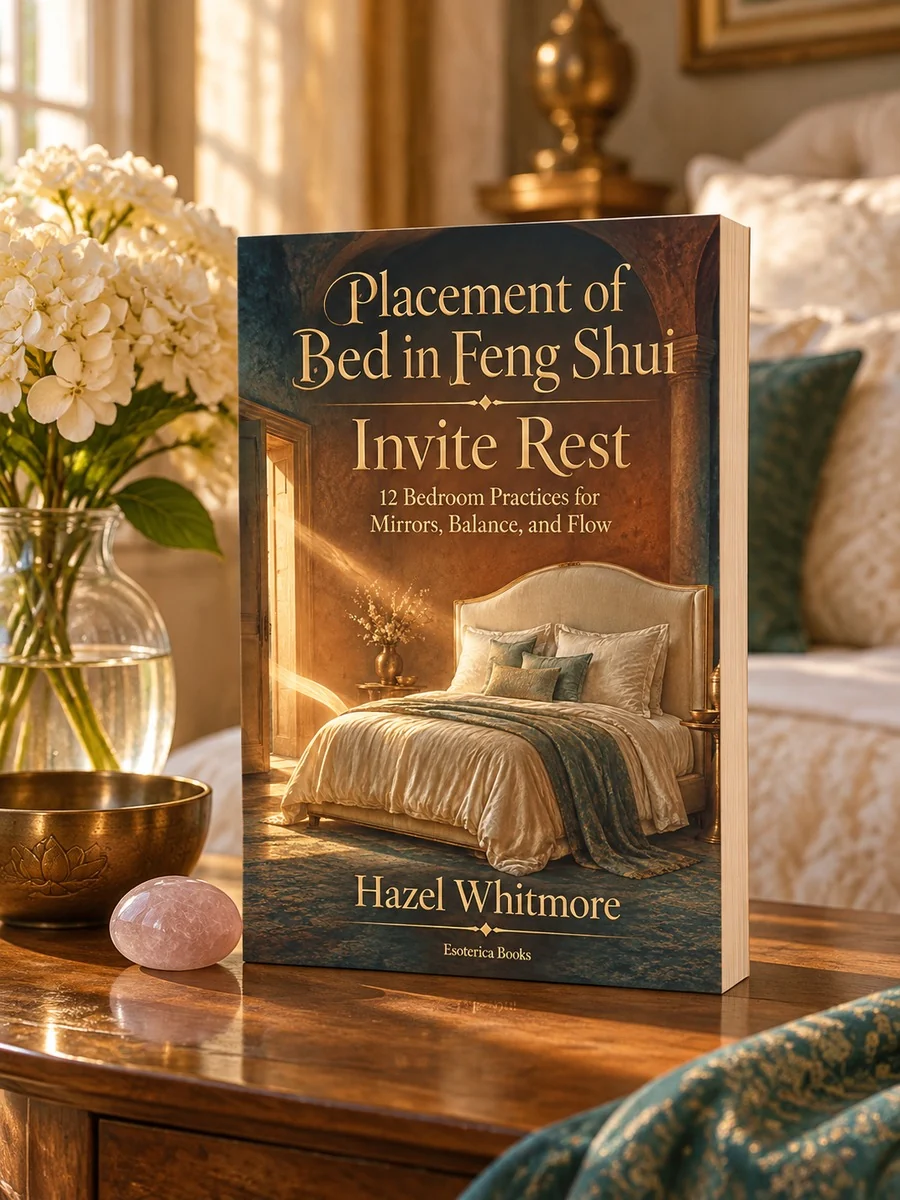
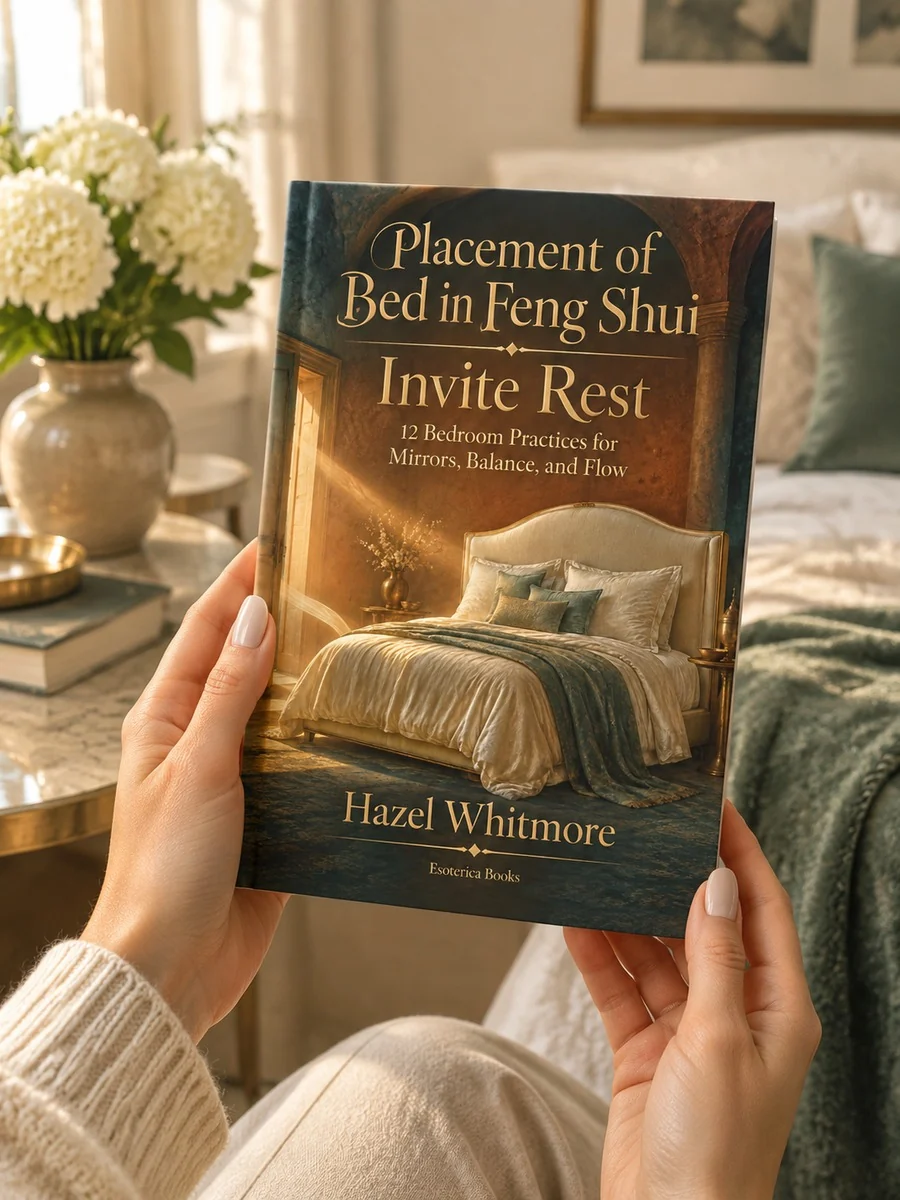
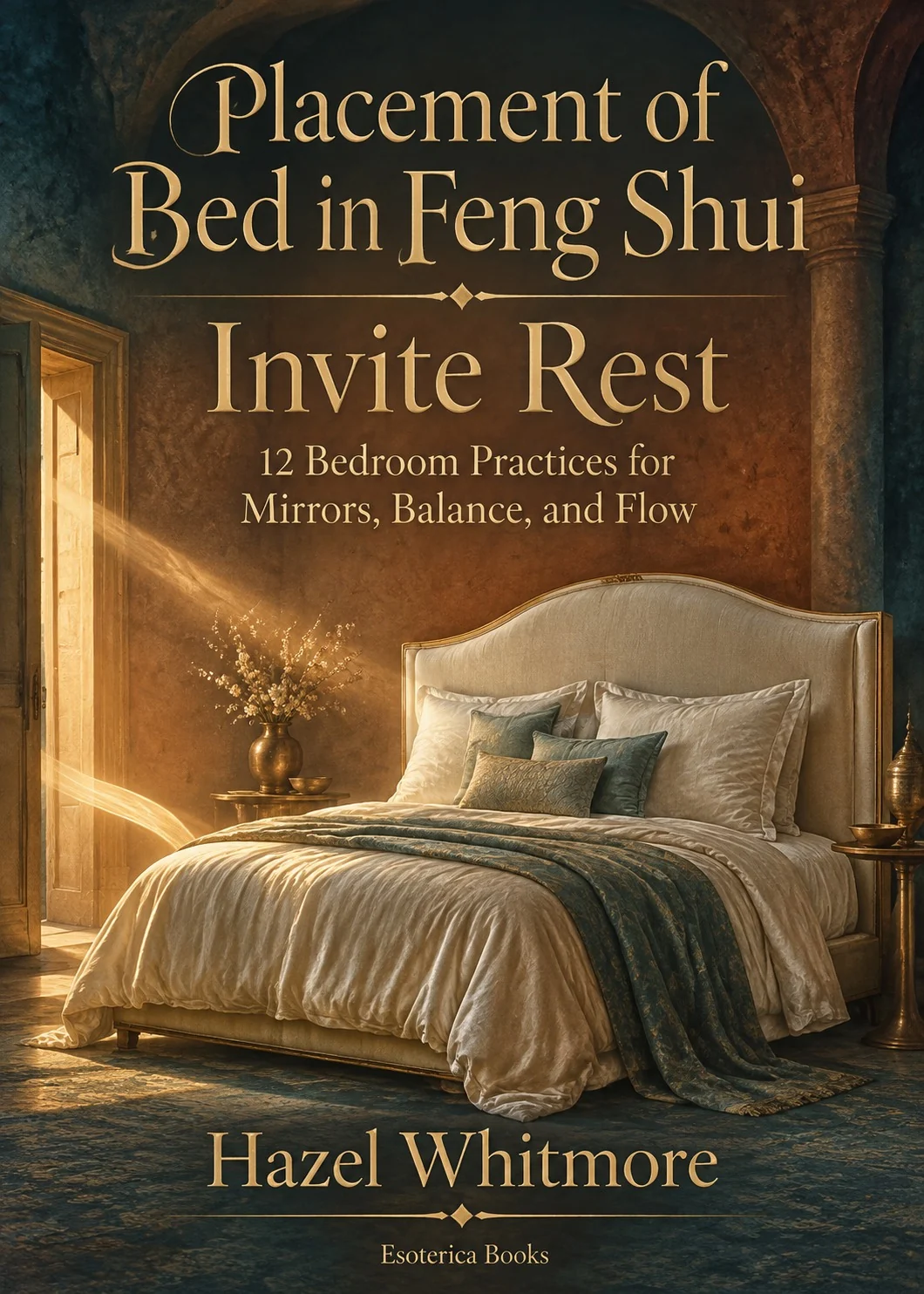
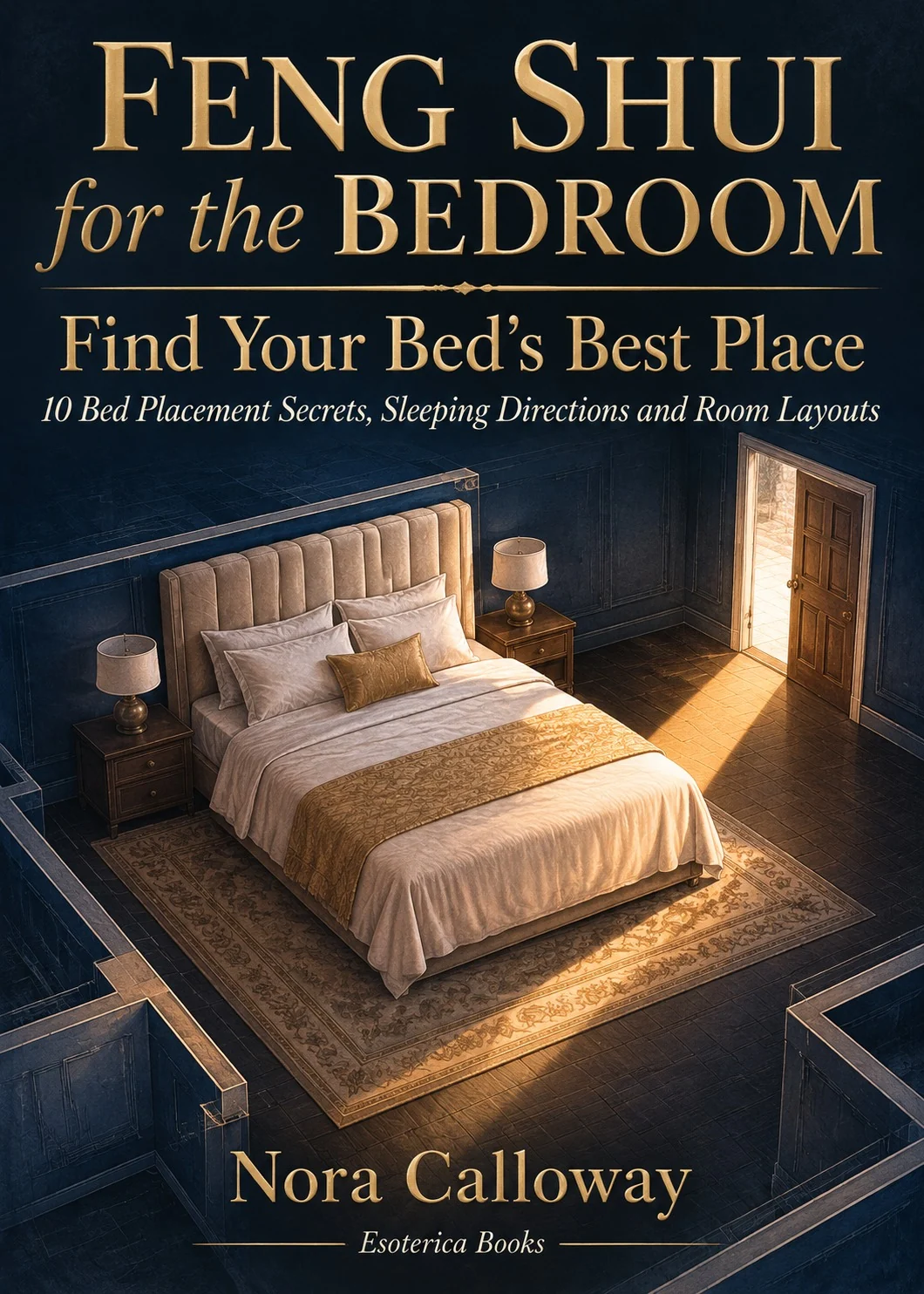
Placement of Bed in Feng Shui: Invite Rest
Find a favorable bed position, rethink mirror placement, and bring balance to your bedroom with Feng Shui.
Discover how to arrange your bed, mirrors, bedside furniture, and bedroom surroundings according to traditional Feng Shui principles. Hazel Whitmore introduces the four-step Resting Place Method: Survey, Support, Settle, and Soften. Learn to recognize the commanding position, evaluate compass directions, work with windows and awkward floor plans, and create visual balance using colors, natural materials, and thoughtful details. Twelve practical bedroom practices guide you from an initial layout assessment to a personal arrangement that reflects your intentions and everyday needs.
Feng Shui is a traditional Chinese practice concerned with the relationship between people and their surroundings. Its concepts of Qi, Yin and Yang, the Five Elements, and directional arrangements provide a symbolic framework for considering how a bedroom is organized.
📝 Description: Placement of Bed in Feng Shui: Invite Rest
📖 Why choose it
Why this book is worth reading
Bed placement is often the first question people encounter when exploring Feng Shui, but real bedrooms rarely match an ideal floor plan. This guide addresses that problem directly. Instead of treating every traditional recommendation as an absolute rule, it teaches you to assess the available space, prioritize the commanding position, and make sensible adjustments around architectural limitations. Its strongest appeal is the combination of practical layout advice and traditional symbolism, allowing readers to approach their bedrooms with greater intention and a clearer understanding of the choices available.
⭐ Reader reviews
Reader rating
This preview makes a useful case for approaching bedroom Feng Shui as a practical arrangement exercise rather than a collection of rigid instructions. The commanding-position explanation is clear, and the four-step Resting Place Method gives readers an understandable framework for assessing their space. Particularly welcome is the attention to real architectural limitations, including narrow rooms, windows, and awkward floor plans. The twelve-minute bedside exercise is a strong opening because it asks readers to observe and map their existing arrangement before making changes. The preview also introduces mirrors, compass directions, the Five Elements, and Yin and Yang. One limitation: readers seeking advanced compass-based Feng Shui calculations or an in-depth historical account will find the treatment introductory.
❓ Frequently asked questions
📖 Who should read this
This guide is for beginners exploring Feng Shui for the first time and homeowners or renters who want to improve their bedroom arrangement without replacing furniture. It is particularly useful for anyone uncertain about bed direction, mirror reflections, or making traditional placement principles work in a small or awkward room.
🎯 Key themes and symbolism
Commanding Bed Position
Bedroom Mirror Placement
Directional Feng Shui
Balance and Harmony
📜 Historical context
📚 Glossary
- Feng Shui
- Qi
- Commanding Position
- Five Elements
- Yin and Yang
- Headboard
📔 Questions to reflect on
- When you look at your bedroom from the entrance, which furniture arrangement feels most balanced, and what makes you notice it?
- What does having a supportive and welcoming resting place mean to you, and how might your bed's position reflect that intention?
- Which colors, materials, objects, or natural elements would best express the atmosphere you want to create in your bedroom?
📖 Read on the blog
✍️ More books by this author Hazel Whitmore








🏛 Books from this publisher Esoterica Books
All books from this publisher →






You might also like
See more →





Have a question about this item?
Ask about the edition, condition, delivery or anything else — we reply by email or phone, usually within a day.
