US shipping Secure card payment Occult and esoteric books

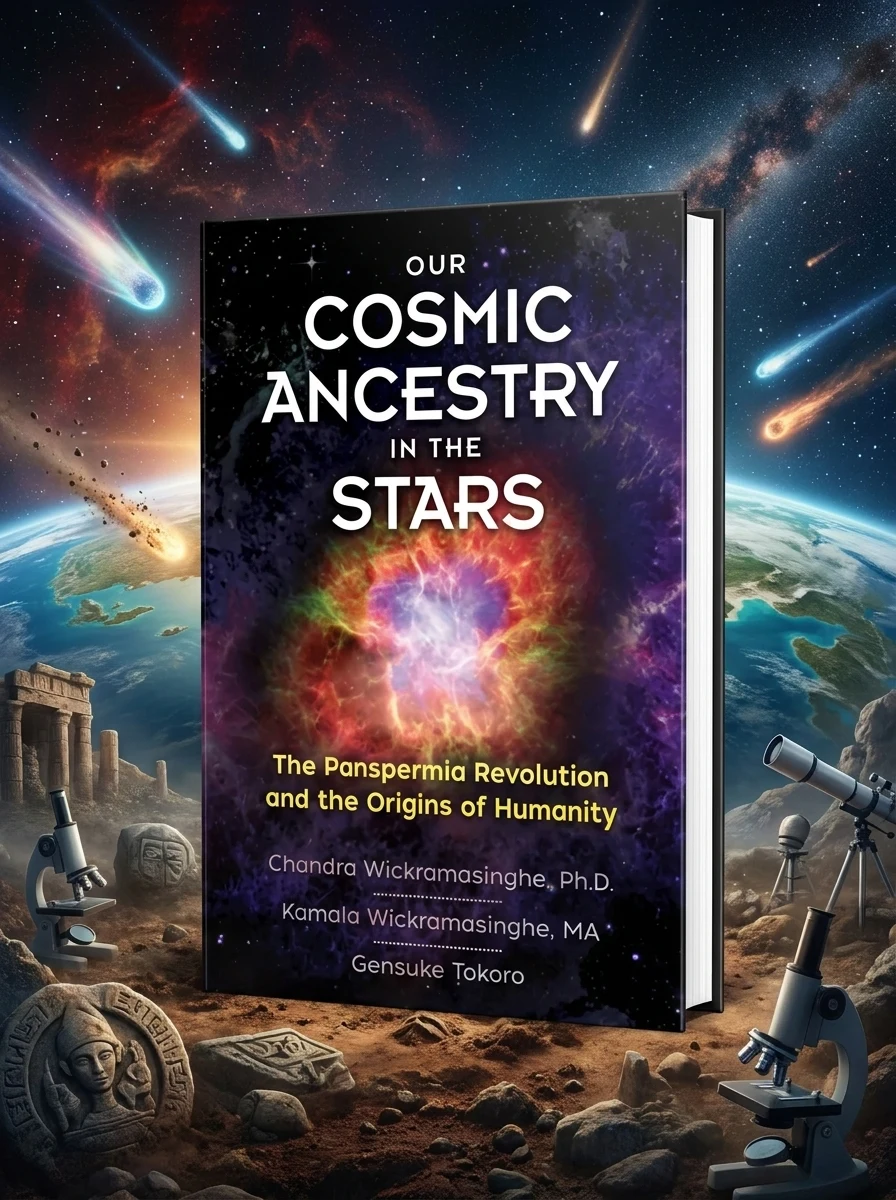
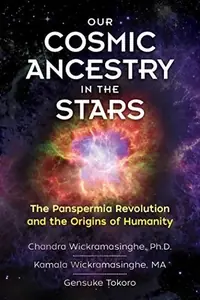
Our Cosmic Ancestry in the Stars: The Panspermia Revolution and the Origins of Humanity

Wickramasinghe Ph D, Chandra
Reader rating
4.6
(1 reviews) 83 sold
Availability to be confirmed

This edition can be ordered. No arrival date is confirmed.

📚 ABOUT THE BOOK

Life is not Earth-born; it is cosmic, carried by comets and viruses from the stars.

This provocative work challenges the primordial soup hypothesis, arguing that life on Earth arrived via extraterrestrial vectors. Wickramasinghe presents evidence that comets and interstellar dust seeded our planet with the building blocks of biology. The text posits that evolution is driven by viral mutations delivered from space, rather than random terrestrial chance. It explores the profound implications of this view, suggesting a paradigm shift comparable to Copernicus. The author examines how accepting this cosmic origin alters our understanding of consciousness, religion, and our place in the universe, framing humanity as part of a continuous celestial lineage.

Key themes
Cometary panspermia Viral evolution Cosmic origins of consciousness
Historical context

This work sits at the intersection of speculative science and esoteric spiritualism, challenging mainstream biological narratives through a cosmic lens. It aligns with the tradition of questioning terrestrial origins by proposing a celestial lineage for humanity.

Difficulty
●● Moderate
Fans will love it
Carl Sagan · Zecharia Sitchin · Fritjof Capra
🕊️ Spiritualism
🏛 Bear & Company 📖 144 pages 📔 Paperback 📐 Paperback ISBN: 9781591433286
Fun fact
Wickramasinghe delivers a rigorous, albeit controversial, argument that life is a cosmic import. The strength lies in its interdisciplinary approach, weaving virology with philosophy. It will disappoint strict materialists who demand conventional consensus, but it will ignite the imagination of esotericists and astrobiologists alike. This text is essential for understanding the growing niche of scientific panspermism.
📚 This book appears in Esoterica Books

📝 Description: Our Cosmic Ancestry in the Stars: The Panspermia Revolution and the Origins of Humanity

An exploration of how acceptance of panspermia will soon change history - Offers extensive scientific proof of panspermia--that life arose on Earth via comets and that evolution is seeded by viruses arriving via comets and interstellar dust - Explores the major philosophical, psychological, cultural, religious, and environmental ramifications of the acceptance of this new scientific worldview Mainstream consensus is that life arose on Earth spontaneously out of "primordial soup." Yet this theory, as well as the Darwinian "survival of the fittest" concept as it relates to major steps in evolution, has no scientific basis or proof. Where, then, did life come from? As the authors show, with conclusive scientific evidence, life came from space--a concept known as "panspermia." We humans, and all other life on Earth, evolved over millennia in response to viruses that arrived via comets, and we continue to do so. Exploring the philosophical, psychological, cultural, and environmental ramifications of the acceptance of panspermia, the authors show how the shift will be on par with the Copernican Revolution--when it was finally accepted that the Earth was not the center of the Universe. Explaining the origins of the panspermia theory in the work of the late Sir Fred Hoyle, the authors reveal the vast body of evidence that has accumulated over the past 4 decades in favor of the cosmic origins of life, including viral inserts found in DNA that have shaped our human genome over millions of years. They show how the tiniest of viruses, microscopic animals (tardigrades), and even seeds have been found to be natural cosmonauts. The authors also show how space-borne viruses play a crucial role in the positive evolution of life and that our entire existence on this planet is contingent on the continuing ingress of cosmic viruses. Revealing how panspermia offers answers to some of humanity's longstanding questions about the origins of life, the authors discuss the impact this shift in understanding will have on our relationship with the Earth and on culture, history, and religion. And perhaps the most dramatic ramification of all is that acceptance of panspermia means acceptance that Earth is not unique--that other life-filled planets exist and intelligent life is common in the Universe. Not only did we come from space, but we are not alone.

💎 Expert review

💎
Esoterica Books editorial team
Occult literature desk
Wickramasinghe presents a provocative challenge to the primordial soup hypothesis, arguing that life arrived via extraterrestrial vectors like comets. While intellectually stimulating for those open to panspermia, this book may frustrate readers who strictly adhere to conventional terrestrial evolutionary models. It is not suitable for those seeking hard empirical data or those uninterested in spiritual implications of biology. The text demands a willingness to accept viral mutations as cosmic drivers rather than random chance. Readers expecting a dry scientific treatise might find the spiritual undertones jarring, but fans of speculative cosmology will appreciate its bold claim that we are part of a continuous celestial lineage.
✓ EDITOR'S REVIEW

📖 Why choose it

📖

Why this book is worth reading

Readers seeking a profound paradigm shift in understanding human origins will find this book deeply engaging. It appeals to those curious about the intersection of biology and cosmology, offering a fresh perspective on life's arrival via comets and viruses. If you are fascinated by the idea that consciousness and religion stem from a continuous celestial lineage, this text provides a compelling framework. It is ideal for open-minded thinkers willing to explore how accepting extraterrestrial vectors alters our spiritual and scientific worldview, framing humanity not as an accident but as part of a cosmic ancestry.

⭐ Reader reviews

The starting rating comes from the team Esoterica Books —
⭐ Esoterica editorial review Editorial rating 4.7/5
★★★★
Readers fascinated by the intersection of astrobiology and metaphysics. If you question terrestrial origins and seek a scientific framework for cosmic connectedness, this book offers a radical, evidence-based perspective for your exploration.

Reader rating

4.6
Based on 1 reviews
5
0
4
1
3
0
2
0
1
0
E
Esoterica Books editorial team

Wickramasinghe presents a provocative challenge to the primordial soup hypothesis, arguing that life arrived via extraterrestrial vectors like comets. While intellectually stimulating for those open to panspermia, this book may frustrate readers who strictly adhere to conventional terrestrial evolutionary models. It is not suitable for those seeking hard empirical data or those uninterested in spiritual implications of biology. The text demands a willingness to accept viral mutations as cosmic drivers rather than random chance. Readers expecting a dry scientific treatise might find the spiritual undertones jarring, but fans of speculative cosmology will appreciate its bold claim that we are part of a continuous celestial lineage.

❓ Frequently asked questions

No. While it cites scientific data, the panspermia theory remains a minority hypothesis compared to the consensus on terrestrial abiogenesis. It is presented here as a compelling alternative framework.
Yes. Wickramasinghe extensively discusses how accepting a cosmic origin of life impacts religious dogma, psychological identity, and cultural narratives, suggesting a spiritual dimension to biological evolution.

📖 Who should read this

Readers fascinated by the intersection of astrobiology and metaphysics. If you question terrestrial origins and seek a scientific framework for cosmic connectedness, this book offers a radical, evidence-based perspective for your exploration.

🎯 Key themes and symbolism

Cometary panspermia

Viral evolution

Cosmic origins of consciousness

💬 Quotes from the book

“We are not Earth-born; we are cosmic beings who have forgotten our origins.”

“Evolution is not a blind process but a directed response to celestial visitors.”

📜 Historical context

Positioned against Darwinian gradualism and abiogenesis, this work aligns with the broader panspermia theories of Arrhenius and Hoyle. It bridges 20th-century astrophysics with esoteric traditions that have long viewed humanity as star-born. By reframing viral evolution as a cosmic mechanism, it updates ancient mystery school concepts with modern virology, challenging the anthropocentric view of life's isolation on Earth.

📚 Glossary

Panspermia
Primordial Soup
Interstellar Dust

📔 Questions to reflect on

  1. How would your sense of self change if you knew your DNA was delivered by a comet?
  2. In what ways does the 'primordial soup' narrative limit your spiritual perspective?
  3. How might accepting a cosmic ancestry alter your relationship with the natural world?

🏛 Books from this publisher Bear & Company

All books from this publisher →
You might also like

See more →