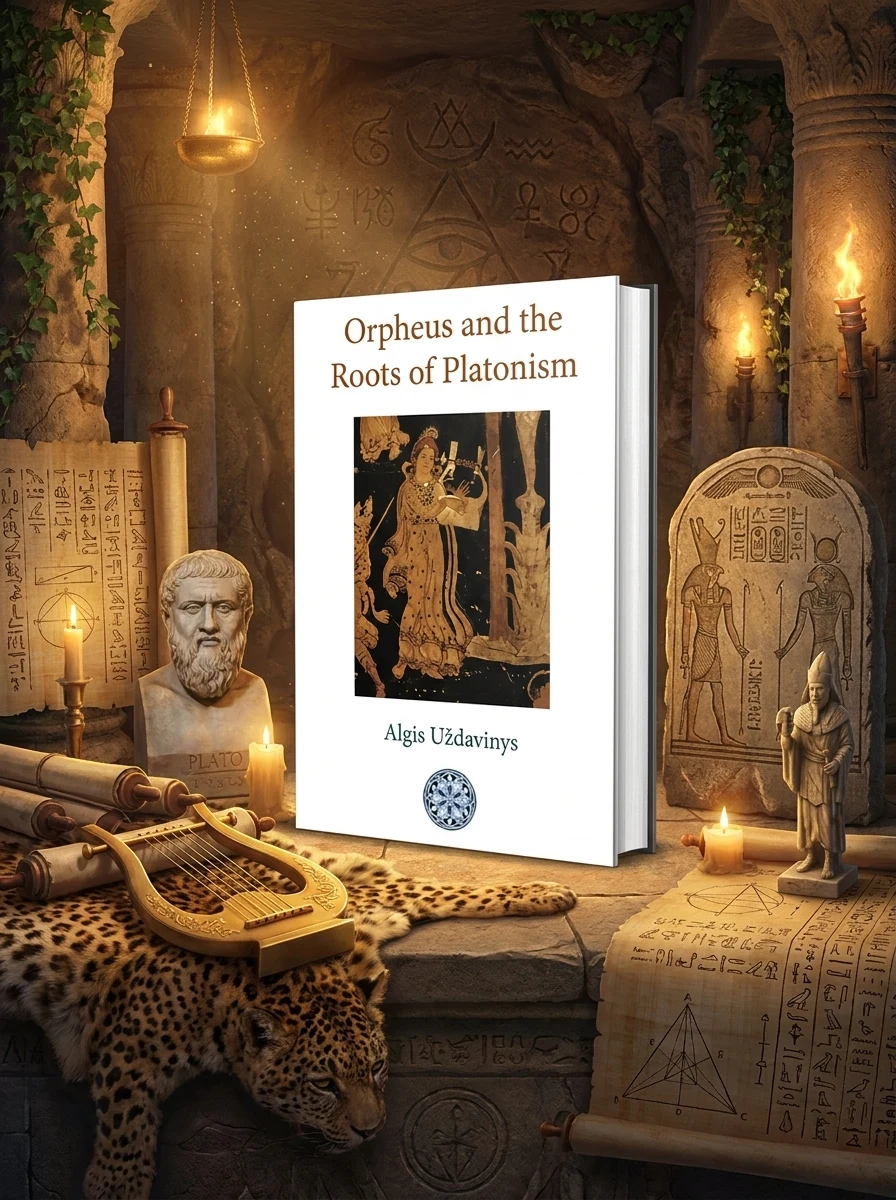
Orpheus and the Roots of Platonism


Stock reported in the catalog; fulfillment is confirmed with your request.
Unearth the hidden mystical currents flowing beneath the foundations of Western philosophy.
Algis Uzdavinys masterfully dissects the profound, often overlooked, spiritual underpinnings of ancient philosophy in *Orpheus and the Roots of Platonism*. This scholarly investigation moves beyond conventional academic views, charting the journey from the enigmatic figure of Orpheus through the intricate Greek mystery traditions, all the way to the sophisticated philosophical constructs of Plato and his Neoplatonic successors. It argues for a deep, initiatory connection between ancient Egyptian wisdom and the very essence of Hellenic thought, revealing philosophy not merely as intellectual discourse but as a path to divine understanding.
This work situates itself within the esoteric study of ancient Greek philosophy, specifically exploring the initiatory and mystical currents that underpin Platonic thought through the lens of Orphic traditions.


📝 Description: Orpheus and the Roots of Platonism
💎 Expert review
📖 Why choose it
Why this book is worth reading
Readers deeply invested in the spiritual dimensions of Western philosophy will find this text indispensable. It offers a transformative perspective for those who suspect that ancient Greek thought was not merely intellectual but profoundly mystical. By tracing the hidden lineage from Orpheus to Plato, Uzdavinys provides a rare glimpse into the initiatory pathways that shaped Hellenic wisdom. This book is essential for seekers of esoteric history, scholars of Neoplatonism, and anyone wishing to understand the divine roots of philosophical discourse beyond standard academic interpretations.
⭐ Reader reviews
Reader rating
Algis Uzdavinys delivers a rigorous scholarly investigation that challenges conventional academic views by highlighting the spiritual underpinnings of Platonism. While the text is masterfully articulated for those willing to engage with complex initiatory connections, it may not suit readers seeking accessible, popularized introductions to philosophy or those who prefer secular, purely historical analyses devoid of mystical interpretation. It demands patience and an openness to the idea that ancient wisdom was fundamentally a path to divine understanding rather than just intellectual exercise.
❓ Frequently asked questions
📖 Who should read this
If you are drawn to the hidden dimensions of ancient thought, seeking to understand the spiritual bedrock beneath philosophy, this book is for you. Engage with a rigorous exploration that connects mythology, religion, and the very structure of Platonic metaphysics.
🎯 Key themes and symbolism
Orpheus's Enduring Influence
Discover how the mythical figure of Orpheus, often seen as a poet and musician, served as a foundational spiritual guide, his teachings and initiatory practices deeply embedding themselves within the development of Greek religious thought and later, the profound philosophical systems, particularly Platonism.
Philosophy's Mystic Origins
This work challenges the modern perception of philosophy as purely rational inquiry, instead revealing its ancient roots in religious ecstasy, initiatory rites, and sacred wisdom traditions. It demonstrates how early philosophical contemplation was inextricably linked with quests for spiritual enlightenment and divine revelation, not just intellectual understanding.
Egypt, Greece, and Plato
Explore the often-understated yet crucial connections between the esoteric traditions of ancient Egypt, the Greek mystery schools (such as Eleusis and Orphism), and the philosophical edifice constructed by Plato. Uzdavinys illuminates how these streams of ancient wisdom converged, shaping Platonic thought and its subsequent Neoplatonic and Hermetic developments.
💬 Quotes from the book
“The Orphic current is not merely a mythological footnote to Hellenic thought; it is the very subterranean river nourishing the Platonic ascent towards the Forms.”
“To understand Plato fully, one must first shed the anachronistic lens of purely rational inquiry and embrace the initiatic, visionary context from which his profound insights emerged.”
📜 Historical context
📚 Glossary
- Orphism
- Platonism
- Neoplatonism
📔 Questions to reflect on
- How does acknowledging the mystical origins of philosophy change your understanding of its purpose and goals?
- Consider the idea of 'poetic madness' meeting 'religious initiation.' What might this imply about the nature of inspiration and truth?
- If ancient Egyptian wisdom truly influenced Platonic thought, what implications might this have for the perceived 'Western' origins of philosophy?
You might also like
See more →