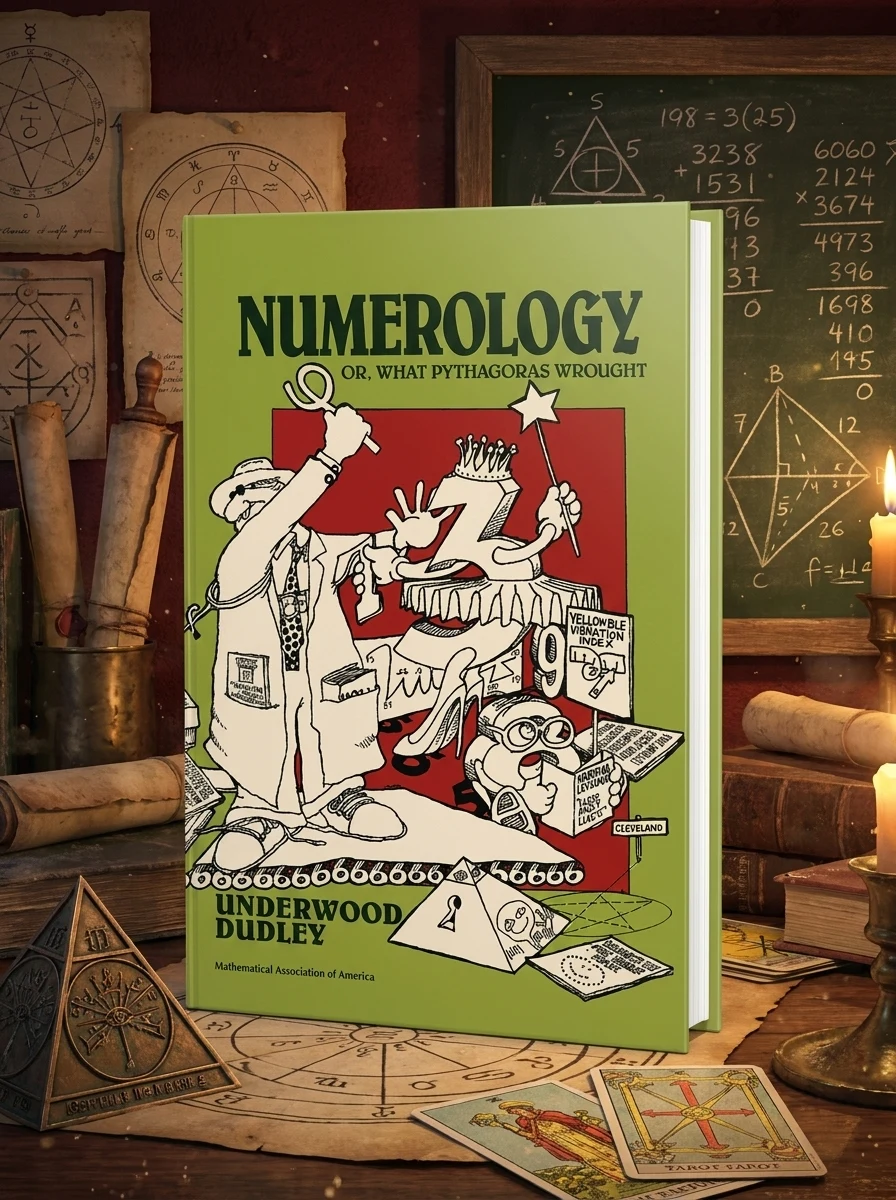
Numerology: Or, What Pythagoras Wrought Dudley, Underwood
Delve into the captivating yet often misguided history of number mysticism, from its Pythagorean origins to its modern manifestation as numerology. This incisive work by Underwood Dudley meticulously chronicles how humanity has ascribed mystical power to numbers, detailing a lineage stretching from ancient beliefs to contemporary fads like biorhythms and pyramidology. Dudley argues compellingly that while numbers undoubtedly hold sway, their true influence lies over human perception and intellect, rather than dictating cosmic events or personal destinies. Prepare for a revealing exposé on this widespread intellectual illusion.
📝 Description: Numerology: Or, What Pythagoras Wrought Dudley, Underwood
💎 Expert review
📖 Why choose it
Why this book is worth reading
Readers fascinated by the intersection of mathematics and human psychology will find this book essential for understanding how intellectual illusions form. Dudley offers a compelling exposé for those tired of superficial horoscopes and pyramidology, revealing that numbers influence our perception rather than dictating fate. It is perfect for skeptics seeking rigorous historical context on why humanity persists in ascribing mystical power to abstract concepts. By unmasking these seductive delusions, the book empowers readers with clarity, helping them distinguish between mathematical utility and magical thinking. It provides a refreshing, logical perspective for anyone curious about the history of ideas and the human tendency to find meaning in patterns.
⭐ Reader reviews
Reader rating
Dudley delivers an incisive critique of number mysticism, tracing its lineage from Pythagorean origins to modern absurdities with scholarly precision. This book is ideal for those who appreciate rigorous historical analysis and logical deconstruction of popular beliefs. However, it does not suit readers seeking validation for their spiritual practices or those looking for practical numerological advice. If you prefer esoteric texts that affirm mystical connections rather than dismantle them, this exposé may feel dismissive or overly dry. It is a challenging read for the devoutly superstitious but a rewarding one for intellectual skeptics who enjoy dismantling widespread cultural myths with evidence-based arguments.
❓ Frequently asked questions
📖 Who should read this
If you're a discerning seeker who questions popular esoteric claims, or simply intrigued by the psychological roots of belief systems, this book is for you. It requires no complex mathematical expertise, only an open mind ready to dissect numerical fallacies and understand their profound hold on human thought.
🎯 Key themes and symbolism
Exposing Numerical Delusion
This book sharply critiques numerology as a modern offshoot of number mysticism, revealing it as a belief system that erroneously assigns intrinsic characteristics and predictive power to numbers, particularly in relation to individuals. Dudley unveils the mechanisms behind this widespread intellectual trap, highlighting its deceptive allure.
Numbers' Influence on Thought
Contrary to popular belief, Dudley posits that numbers exert their primary influence not over external events or universal forces, but directly upon human cognition and conviction. He illustrates how numerical patterns, real or imagined, can sway perception and shape belief systems, thereby demonstrating their psychological rather than metaphysical impact.
💬 Quotes from the book
“The true power of numbers lies not in dictating fate, but in their astonishing capacity to shape human perception and intellectual frameworks.”
“What appears as profound insight through numerical contemplation is, upon closer inspection, often a meticulously constructed, yet entirely human-made, intellectual illusion.”
📜 Historical context
📚 Glossary
- Numerology
- Number Mysticism
- Biorhythms
📔 Questions to reflect on
- How have numerical patterns influenced your own perception or beliefs, even subtly?
- Considering Dudley's argument, what other belief systems might gain their power more from influencing minds than from objective reality?
- Reflect on a time you encountered a numerological claim. How does this book's perspective alter your understanding of that experience?