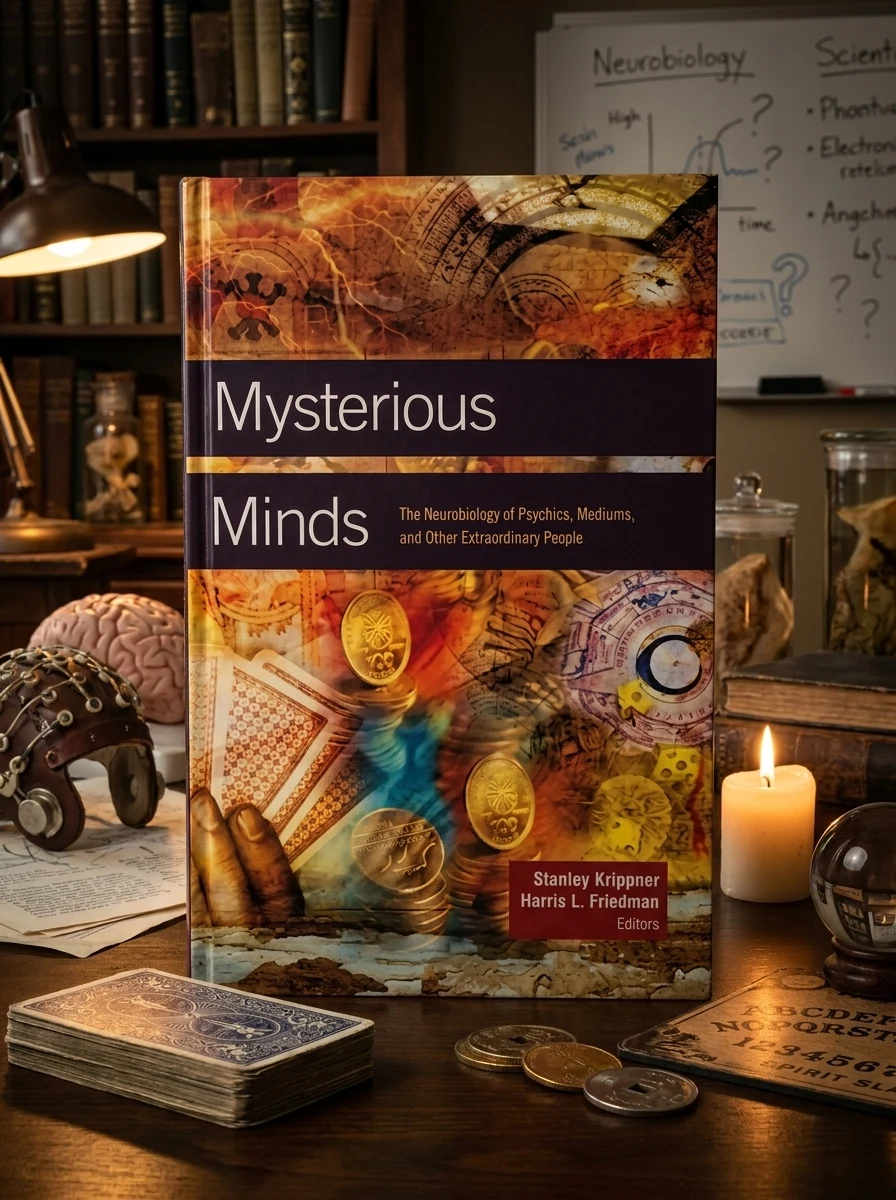
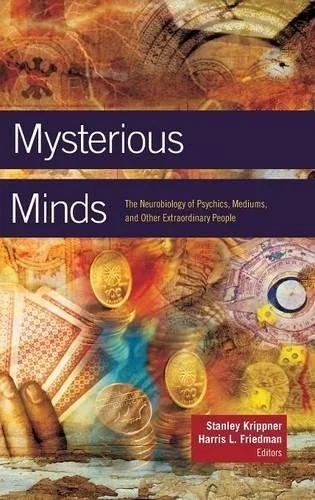
Mysterious Minds: The Neurobiology of Psychics, Mediums, and Other Extraordinary People
✍️ Stanley Krippner, Harris L FriedmanThis groundbreaking exploration delves into the rigorous scientific examination of psychics, mediums, and other individuals claiming unusual abilities. Dispelling sensationalism, this volume distinguishes between outright deception, psychological conditions, and phenomena that defy conventional explanation. Through a neurobiological lens, the book presents a compelling case for applying scientific tools and approaches to validate or refute such claims, offering insights into the brain's role in these enigmatic experiences. It's a vital read for anyone seeking a balanced, evidence-based perspective on the edges of human perception.


Praise for this book
“Krippner (psychology, Saybrook U.) and Friedman (psychology, U. of Florida, Gainesville) assemble nine articles that examine claims of parapsychological experiences like telepathy, psychokinesis, and precognition from a neurobiological perspective. Instead of promoting a position on the existence or non-existence of these phenomena, they aim to introduce readers to pioneering efforts exploring the mind through…”
“There isn't space here to review every chapter in this timely volume, but each one offers worthwhile perspectives on psi and neurobiology. The editors are to be applauded for assembling this range of informative material. The anthology shows that there could be real value in bringing neuroscience into the realms of parapsychology, with potential benefits to both areas of research...”
📝 Description: Mysterious Minds: The Neurobiology of Psychics, Mediums, and Other Extraordinary People
📑 What's inside
- Foreword / Allan Combs
- Acknowledgments
- Introduction / Harris L. Friedman, Stanley Krippner
- 1. Quantum Theory, Neurobiology, and Parapsychology / William G. Roll, Bryan J. Williams
- 2. The Parapsychologist's Lament / James E. Alcock
- 3. Processes Underlying the Phenomena of Mysterious Minds: Laboratory Evidence for ESP / Caroline A. Watt, Harvey J. Irwin
- 4. The Mind-Body Problem and the Issue of Psychokinesis / Adrian Parker
- 5. The Neurobiology of Trance and Mediumship in Brazil / Joan H. Hageman, Julio F. P. Peres, Alexander Moreira-Almeida, Leonardo Caixeta, Ian Wickramasekera II, Stanley Krippner
- 6. Electrical Activity in the Brain and the Extraordinary Mind / Norman S. Don
- 7. Neurobiology, Brain Reductionism, and Subjective Experience / Vernon M. Neppe
- 8. Psi and the Brain / Morris Freedman
- 9. The Neurochemistry of Psi Reports and Associated Experiences / David Luke, Harris L. Friedman
- Postscript / Stanley Krippner, Harris L. Friedman
- About the Editors and Contributots
- Index
💎 Expert review
📖 Why choose it
Why this book is worth reading
Readers who stand at the crossroads of spiritual curiosity and scientific skepticism will find this volume particularly rewarding. It offers a rare, balanced perspective that refuses to dismiss extraordinary human experiences as mere delusion while simultaneously rejecting sensationalism. By applying rigorous neurobiological tools, the text helps those seeking evidence-based insights into the edges of perception understand the brain's role in these enigmatic events. It is ideal for scholars, clinicians, and open-minded enthusiasts who desire a grounded, analytical framework to explore the mysteries of mediumship and psychic ability without compromising intellectual integrity or succumbing to pseudoscience.
⭐ Reader reviews
Reader rating
This text serves as a vital bridge between esoteric interest and hard science, meticulously distinguishing deception from psychological condition and unexplained phenomena. However, it is not suited for readers seeking mystical validation, supernatural confirmation, or lighthearted entertainment regarding psychic powers. Those looking for anecdotal ghost stories or spiritual guidance will likely find the rigorous, clinical tone dry and unsatisfying. The book demands a willingness to engage with complex neurobiological concepts and statistical analysis. It is best appreciated by those who value intellectual honesty and empirical evidence over emotional resonance or supernatural affirmation in their study of human consciousness.
❓ Frequently asked questions
📖 Who should read this
If you're a curious mind fascinated by the intersection of consciousness, neuroscience, and the unexplained, this book is for you. It appeals to both open-minded skeptics and science-savvy seekers who crave an evidence-based approach to psychic phenomena.
🎯 Key themes and symbolism
Scientific Psychic Scrutiny
The book advocates for a rigorous, scientific approach to paranormal claims, moving beyond anecdote and skepticism to employ empirical methods. It highlights how cutting-edge research can differentiate between genuine, albeit unexplained, phenomena and those that are easily dismissed as fraud or psychological anomaly, establishing a new standard for investigation.
Neurobiological Foundations
At its core, this work explores the brain's involvement in reported psychic experiences. It details the use of advanced neuroimaging, clinical neurological assessments, and even psychotropic drugs to probe the physiological underpinnings of individuals who claim extraordinary abilities, seeking to map these experiences to neural processes.
Distinguishing True Anomalies
A crucial aspect of the book is its commitment to discerning authentic, difficult-to-explain claims from those that are patently false or indicative of mental health issues. It offers specific case studies where paranormal assertions are meticulously examined, providing a framework for identifying instances that warrant further scientific inquiry rather than outright dismissal.
📜 Historical context
📚 Glossary
- Neurobiology
- Parapsychology
- Mediumship
📔 Questions to reflect on
- How do your personal beliefs about psychic phenomena align with or diverge from the scientific approaches presented in this book?
- Consider the ethical implications of using neurobiological tools to investigate individuals claiming extraordinary abilities. What are the potential benefits and drawbacks?
- If 'extraordinary' perception is indeed rooted in neurobiology, how might this change our societal understanding of consciousness and human potential?
📖 Read on the blog
🏛 Books from this publisher Praeger
All books from this publisher →




You might also like
See more →

Have a question about this item?
Ask about the edition, condition, delivery or anything else — we reply by email or phone, usually within a day.
