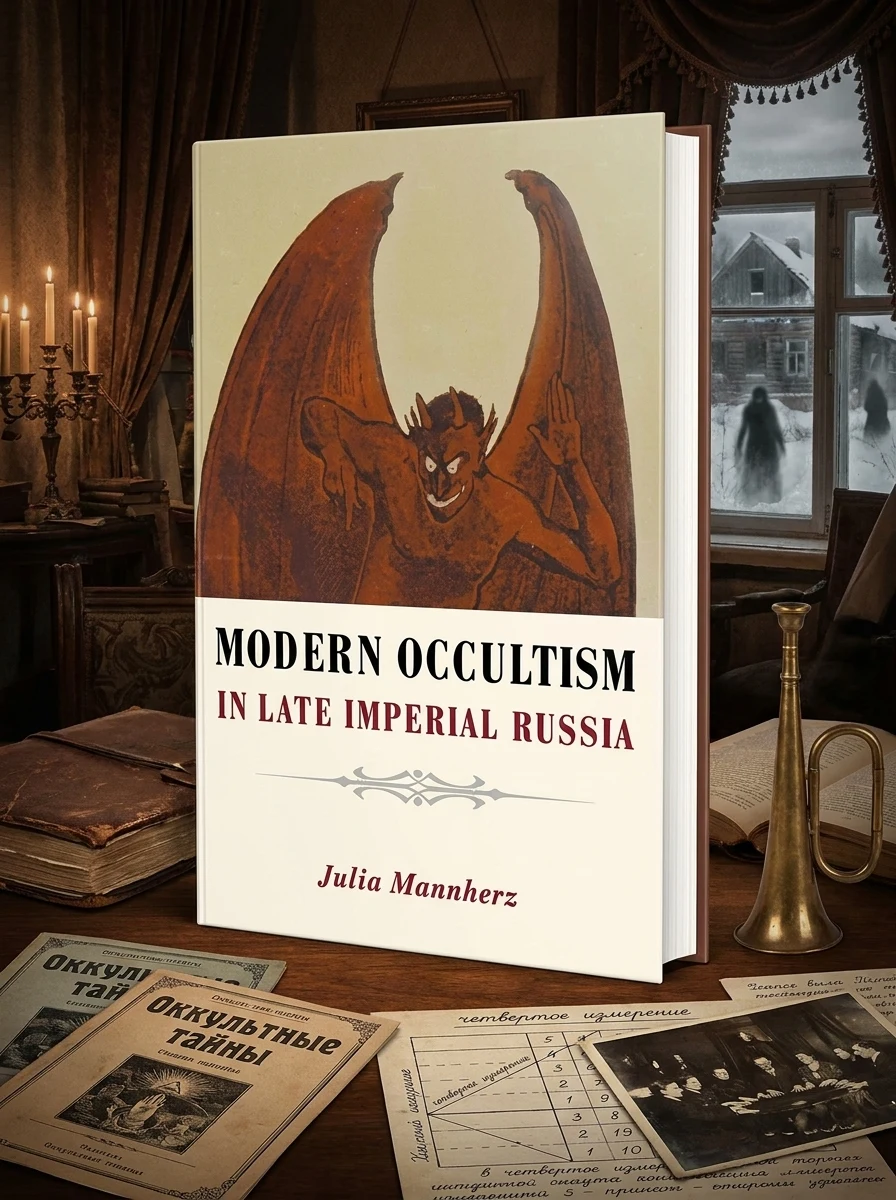
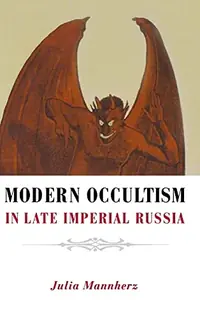
Modern Occultism in Late Imperial Russia Mannherz, Julia
Stock reported in the catalog; fulfillment is confirmed with your request.
Unveil Russia's hidden mystical currents, from elite salons to spectral mass obsessions.
Mannherz masterfully charts the fascinating trajectory of esoteric thought and practice within late Imperial Russia. This study illuminates how occult ideas transitioned from exclusive aristocratic gatherings to pervasive popular culture at the turn of the 20th century. Delving into lively public discourse on phenomena like séances and complex mathematical theories, the book also explores the proliferation of accessible occult guides and the widespread fascination with haunted locales. It furthermore considers the Russian Orthodox Church's responses, offering a vital, overdue re-evaluation of the occult’s cultural significance.
This work situates itself within the rich tapestry of late Imperial Russian history, examining the intersection of esoteric thought and popular culture during a period of intense societal transformation. It bridges the gap between academic historical analysis and the study of Western occult traditions by highlighting unique regional manifestations of mystical currents.


📝 Description: Modern Occultism in Late Imperial Russia Mannherz, Julia
💎 Expert review
📖 Why choose it
Why this book is worth reading
Scholars and enthusiasts of esoteric history will find immense value in this comprehensive study, which reveals how occult ideas migrated from exclusive aristocratic salons to become a pervasive element of late Imperial Russian popular culture. It is essential reading for those fascinated by the specific ways séances, mathematical theories, and haunted locales captured the public imagination during this era. By exploring the Russian Orthodox Church’s responses and the proliferation of accessible guides, the book offers a vital re-evaluation of the occult’s cultural significance. Readers seeking to understand the complex dialogue between elite mysticism and mass obsession in pre-revolutionary Russia will gain a deeper appreciation for these hidden currents that shaped the spiritual landscape of the time.
⭐ Reader reviews
Reader rating
Mannherz delivers a meticulous account of esoteric transitions, yet this academic rigor may alienate casual readers seeking narrative flair or practical magical instruction. The text focuses heavily on historical trajectory, public discourse, and ecclesiastical reaction rather than personal experience or spellcraft. It is not suited for those looking for immediate occult practice or simplified summaries. However, for historians and serious students of comparative religion, it provides an indispensable, well-researched perspective on how mystical phenomena permeated society. The analysis of accessible guides and spectral obsessions offers fresh insights into the era's cultural anxieties, making it a crucial, if dense, contribution to the field.
❓ Frequently asked questions
📖 Who should read this
If you're a historian seeking to enrich your understanding of turn-of-the-century Russian culture, or an enthusiast of the esoteric looking for rigorous academic insight, this book is essential. It offers a comprehensive, engaging exploration of a often-overlooked aspect of modern history.
🎯 Key themes and symbolism
Occultism's Social Ascent
Mannherz meticulously tracks how esoteric practices, initially confined to private, elite circles, permeated the broader Russian populace. The book details this evolution from exclusive salon experiments to the widespread consumption of popular occult literature and the collective fascination with supernatural phenomena that characterized the fin de siècle era.
Public Mystical Debates
The work vividly reconstructs the spirited public discussions of the 1870s concerning paranormal events like séances and abstract mathematical concepts hinting at other dimensions. It highlights how these topics weren't just niche interests but fueled significant societal dialogue, reflecting a pervasive intellectual curiosity about the unseen and the unknown.
Orthodox Church's Reaction
This volume critically examines how the established Russian Orthodox Church responded to the burgeoning interest in occultism. Mannherz analyzes the theological perspectives and official stances adopted by religious authorities, revealing the dynamic interplay between traditional faith and the emerging esoteric movements of the period.
💬 Quotes from the book
“The salon, far from being merely a social arena, served as a crucial crucible where esoteric ideas were first tested, debated, and ultimately, transmuted for wider consumption.”
“The fervent public discourse surrounding spectral manifestations and abstract mathematical concepts underscores a society grappling with modernity while simultaneously reaching for the transcendent.”
📜 Historical context
📚 Glossary
- Occultism
- Séance
- Higher Dimensional Mathematics
📔 Questions to reflect on
- How might the Russian Orthodox Church's reaction to occultism compare to religious responses to similar movements in other cultures or time periods?
- Considering the role of 'cheap instruction manuals' and 'popular occult journals,' how do contemporary forms of accessible spiritual information shape public understanding today?
- Reflect on how the fascination with 'haunted houses' could bridge rural folklore and urban anxieties in a rapidly modernizing society.
📖 From the series “Niu Slavic, East European, and Eurasian Studies”
All books in the series →
 87
87
🏛 Books from this publisher Northern Illinois University Press
All books from this publisher →You might also like
See more → 91
91
 91
91

 91
91
 91
91