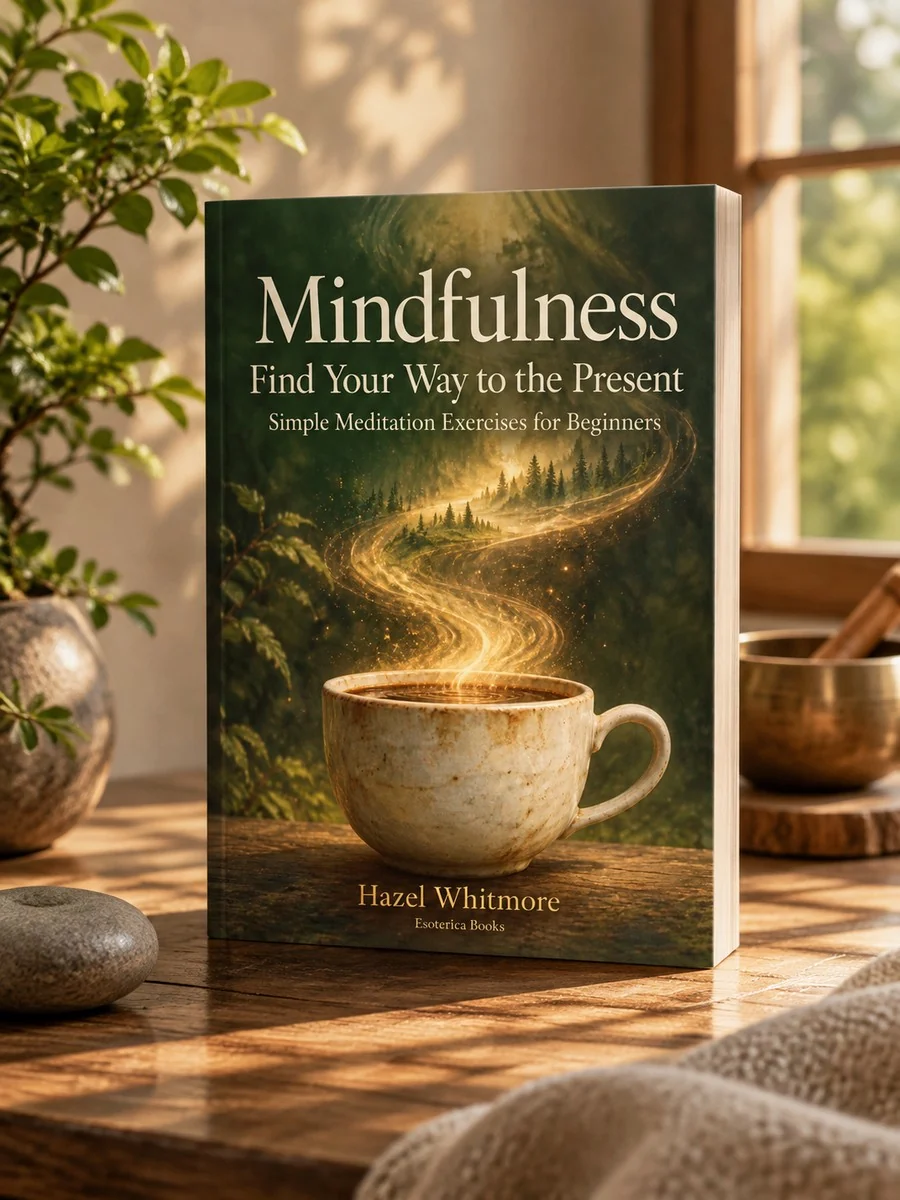
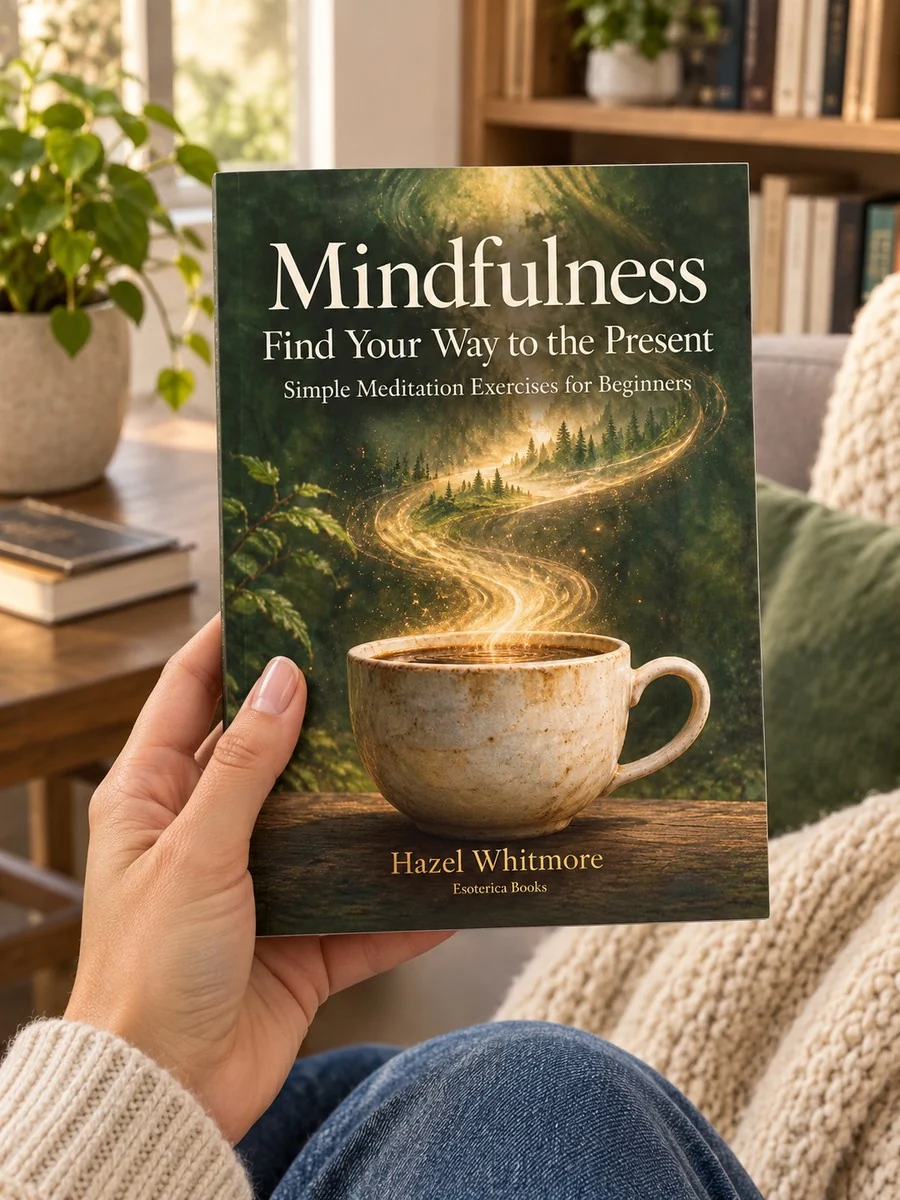

Mindfulness: Find Your Way to the Present
Bring mindfulness into everyday life with six simple steps, practical exercises, and a fresh way to experience the present.
What does it mean to practice mindfulness in everyday life? Hazel Whitmore offers a welcoming introduction built around the N.O.T.I.C.E. Method, a six-step framework for developing present-moment awareness. Beginning with a five-minute sensory exercise, the book guides readers through mindful breathing, eating, walking, listening, and meditation. Practical instructions show how to recognize wandering thoughts, return attention to a chosen anchor, and make ordinary activities opportunities for awareness. From morning coffee to evening journaling, readers learn to shape a flexible personal practice that fits their routines.
Mindfulness is presented through the accessible practice of paying attention to present-moment experience, an approach associated with both contemplative traditions and contemporary everyday practice. Whitmore's N.O.T.I.C.E. Method is a six-step teaching framework developed for this book, rather than a historical religious or traditional system.


📝 Description: Mindfulness: Find Your Way to the Present
📖 Why choose it
Why this book is worth reading
The appeal of this guide is its emphasis on practice rather than abstract explanations. Instead of asking beginners to master meditation immediately, it starts with a cup of tea, a familiar sound, or three natural breaths. The six N.O.T.I.C.E. steps provide a repeatable structure, while the twelve chapters gradually extend mindfulness into meals, movement, conversations, and personal reflection. It is a particularly approachable choice for readers who want clear instructions and exercises they can adapt to an existing daily routine.
⭐ Reader reviews
Reader rating
Hazel Whitmore's guide has a clear strength: it makes mindfulness tangible. The N.O.T.I.C.E. Method gives beginners six memorable steps, while the opening five-minute exercise immediately demonstrates how an everyday object can become a focus for attention. The chapter progression is sensible, moving from sensory observation and breathing into eating, walking, communication, and independent practice. Particularly useful are the concrete exercises, including counting breaths from one to ten and identifying five distinct sounds. The main limitation is its deliberately introductory scope: readers seeking an extensive exploration of contemplative philosophy, historical lineages, or advanced meditation techniques will need a more specialized book. For practical beginners, however, the structure is inviting and accessible.
❓ Frequently asked questions
📖 Who should read this
This book is suited to complete beginners, curious readers who want to understand mindfulness, and anyone looking for practical ways to bring greater attention to eating, walking, conversations, and daily routines. It is especially useful for people who find formal meditation intimidating and prefer to begin with short, familiar activities.
🎯 Key themes and symbolism
Present-Moment Awareness
Sensory Exploration
Everyday Mindfulness
Personal Meditation Practice
📜 Historical context
📚 Glossary
- Mindfulness
- N.O.T.I.C.E. Method
- Anchor
- Sensory Awareness
- Mindful Walking
- Mindful Journaling
📔 Questions to reflect on
- Which ordinary activity in your day do you most often complete automatically, and what might you notice if you gave it your full attention?
- When your thoughts wander during a quiet moment, what kinds of stories or distractions tend to capture your attention, and which anchor could help you return?
- How would you arrange your morning, midday, and evening routines to include the six steps of the N.O.T.I.C.E. Method in ways that feel natural to you?
📖 Read on the blog
✍️ More books by this author Hazel Whitmore










🏛 Books from this publisher Esoterica Books
All books from this publisher →







You might also like
See more →





Have a question about this item?
Ask about the edition, condition, delivery or anything else — we reply by email or phone, usually within a day.
