US shipping Secure card payment Occult and esoteric books

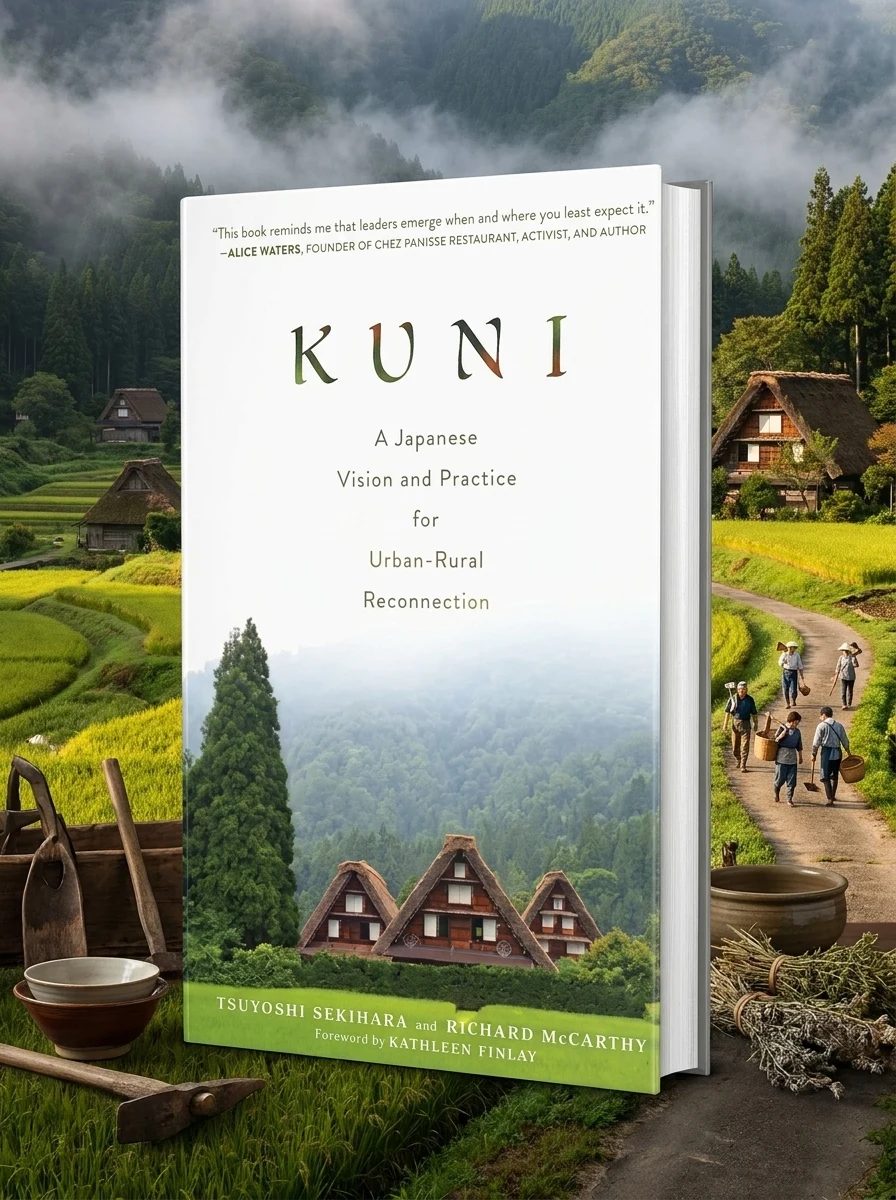
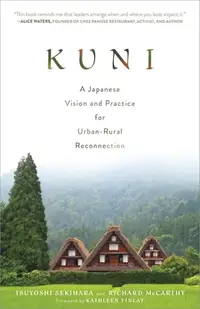
Kuni: A Japanese Vision and Practice for Urban-Rural Reconnection

Sekihara, Tsuyoshi
Reader rating
4.6
(3 reviews) 180 sold
Availability to be confirmed

This edition can be ordered. No arrival date is confirmed.

📚 ABOUT THE BOOK

Reclaim the soul of place through Japanese principles of communal regeneration and ecological balance.

Tsuyoshi Sekihara presents a compelling blueprint for revitalizing dying communities by reinterpreting the Japanese concept of kuni. This is not merely rural development; it is a radical social experiment where citizens reclaim agency over their environment. Through democratic management and circular economies, residents transform abandoned spaces into vibrant, self-sustaining ecosystems. The text details how equality and shared stewardship can reverse urban-rural divides, offering a tangible path for local empowerment that transcends geography and culture.

Key themes
Community Regeneration Circular Economics Democratic Stewardship
Historical context

This work emerges from contemporary Japanese social philosophy and ecological activism, reinterpreting traditional communal concepts for modern urban-rural challenges. It aligns with global movements seeking sustainable, community-led regeneration as an alternative to centralized development.


Difficulty
●● Moderate
Fans will love it
Wendell Berry · Masanobu Fukuoka · Jane Jacobs
🕯️ Occult Philosophy
🏛 North Atlantic Books 📖 176 pages 📔 Paperback 📐 Paperback ISBN: 9781623177317
Fun fact
Sekihara succeeds in blending sociological theory with actionable ecological practice, offering a refreshing antidote to urban alienation. It shines in its clear, principled framework for local autonomy. However, readers seeking high-level macroeconomic policy may find it too granular. It sits firmly within the practical occult of community building, bridging the gap between spiritual longing for place and tangible civic action.

📝 Description: Kuni: A Japanese Vision and Practice for Urban-Rural Reconnection

"Reading Kuni makes me want to dive into rural Japan...this book reminds me that leaders emerge when and where you least expect it."-- ALICE WATERS, founder of Chez Panisse restaurant, activist, and author A guide to reviving and revitalizing forgotten places and communities through the Japanese principles of kuni Kuni offers a unique model for the revitalization of rural and deindustrialized lands and communities--and shares lessons in citizen-led regeneration for all of us, regardless of where we live. "Kuni" is both a reimagining of the Japanese word for nation and an approach to reviving communities. It shows what happens when dedicated people band together and invest their hearts, minds, and souls back into a community, modeling a new way of living that actually works. A kuni can be created anywhere--even a hamlet on the verge of extinction--and embodies 7 key principles: Everyone is equal in a kuni Kuni is equipped with a Regional Management Organization--a democratic organization that takes care of small public services Kuni is a link between residents and repeat visitors Life in a kuni is circular--consumption and production are in balance Kuni embraces the whole person Kuni can be a place for young people who seek interconnectedness The time for kuni is now Kuni offers a compelling vision of regenerative relationships that can take root in the United States--and anywhere. With spare and beautiful prose and useful principles for reviving rural places, this book addresses our longing for a hopeful revolution of everyday life.

💎 Expert review

💎
Esoterica Books editorial team
Occult literature desk
Sekihara delivers a radical yet practical vision for community resilience, framing 'kuni' as a tool for social and ecological rebirth. The strength lies in its actionable framework for democratic management and circular economies, offering clear steps for local empowerment. However, this is not a light read for those seeking quick fixes or purely theoretical abstraction; it demands engagement with complex socio-political structures. Readers expecting traditional esoteric mysticism will find the focus on civic infrastructure and economic models dry. It suits those willing to do the hard work of community organizing rather than passive consumption of ideas.
✓ EDITOR'S REVIEW

📖 Why choose it

📖

Why this book is worth reading

Readers deeply concerned with ecological collapse, social fragmentation, and the loss of local agency will find profound inspiration in this text. It offers a tangible blueprint for those who feel powerless against large-scale urbanization, demonstrating how ordinary citizens can reclaim their environment through democratic stewardship. The book is ideal for activists, planners, and spiritual seekers looking to bridge the gap between theory and practice. By exploring circular economies and shared ownership, it provides hope that dying communities can be revitalized not by external aid, but by internal collective will. It speaks to anyone wanting to understand how place-making can restore both ecological balance and human dignity in a disconnected world.

⭐ Reader reviews

The starting rating comes from the team Esoterica Books —
⭐ Esoterica editorial review Editorial rating 4.6/5
★★★★
Activists, urban planners, and eco-conscious readers seeking practical models for local empowerment. If you feel disconnected from your surroundings, this guide offers a roadmap to rebuild community bonds and ecological integrity from the ground up.

Reader rating

4.6
Based on 3 reviews
5
1
4
2
3
0
2
0
1
0
S
Simon E. ✓ Verified purchase
April 8, 2025

This exceeded my expectations. Challenging in places, but never needlessly obscure. Some sections stopped me cold in the best way.

M
Matthew S. ✓ Verified purchase
October 14, 2024
Essential reading

A friend in my study group recommended this one. It reads better in small doses — a chapter at a time with notes. Recommended if you're ready to do the work.

E
Esoterica Books editorial team

Sekihara delivers a radical yet practical vision for community resilience, framing 'kuni' as a tool for social and ecological rebirth. The strength lies in its actionable framework for democratic management and circular economies, offering clear steps for local empowerment. However, this is not a light read for those seeking quick fixes or purely theoretical abstraction; it demands engagement with complex socio-political structures. Readers expecting traditional esoteric mysticism will find the focus on civic infrastructure and economic models dry. It suits those willing to do the hard work of community organizing rather than passive consumption of ideas.

❓ Frequently asked questions

No. The principles of kuni apply to any community, including urban neighborhoods, focusing on local resource loops and citizen-led governance rather than geographic isolation.
Sekihara emphasizes citizen-led initiatives and private-public partnerships initiated by residents, rather than top-down state mandates, making it a grassroots manual.

📖 Who should read this

Activists, urban planners, and eco-conscious readers seeking practical models for local empowerment. If you feel disconnected from your surroundings, this guide offers a roadmap to rebuild community bonds and ecological integrity from the ground up.

🎯 Key themes and symbolism

Community Regeneration

Circular Economics

Democratic Stewardship

💬 Quotes from the book

“A kuni can be created anywhere... even a hamlet on the verge of extinction.”

“Invest their hearts, minds, and souls back into a community.”

📜 Historical context

Rooted in the post-bubble economic collapse of Japan, this work challenges the modernist notion of the nation-state. It draws upon ancient communal land trusts and Shinto animism, merging them with contemporary sustainable agriculture movements. It stands as a counter-narrative to globalized homogenization, echoing early 20th-century agrarian socialism but updated for the digital age.

📚 Glossary

Kuni
Regional Management Organization
Circular Balance

📔 Questions to reflect on

  1. What resources in your immediate neighborhood are currently wasted, and how could they be repurposed locally?
  2. How might your community's decision-making process change if it prioritized circular resource loops over external trade?
  3. In what ways do you currently disconnect from the origins of your daily consumption, and how could you rebuild that link?

🏛 Books from this publisher North Atlantic Books

All books from this publisher →

You might also like

See more →