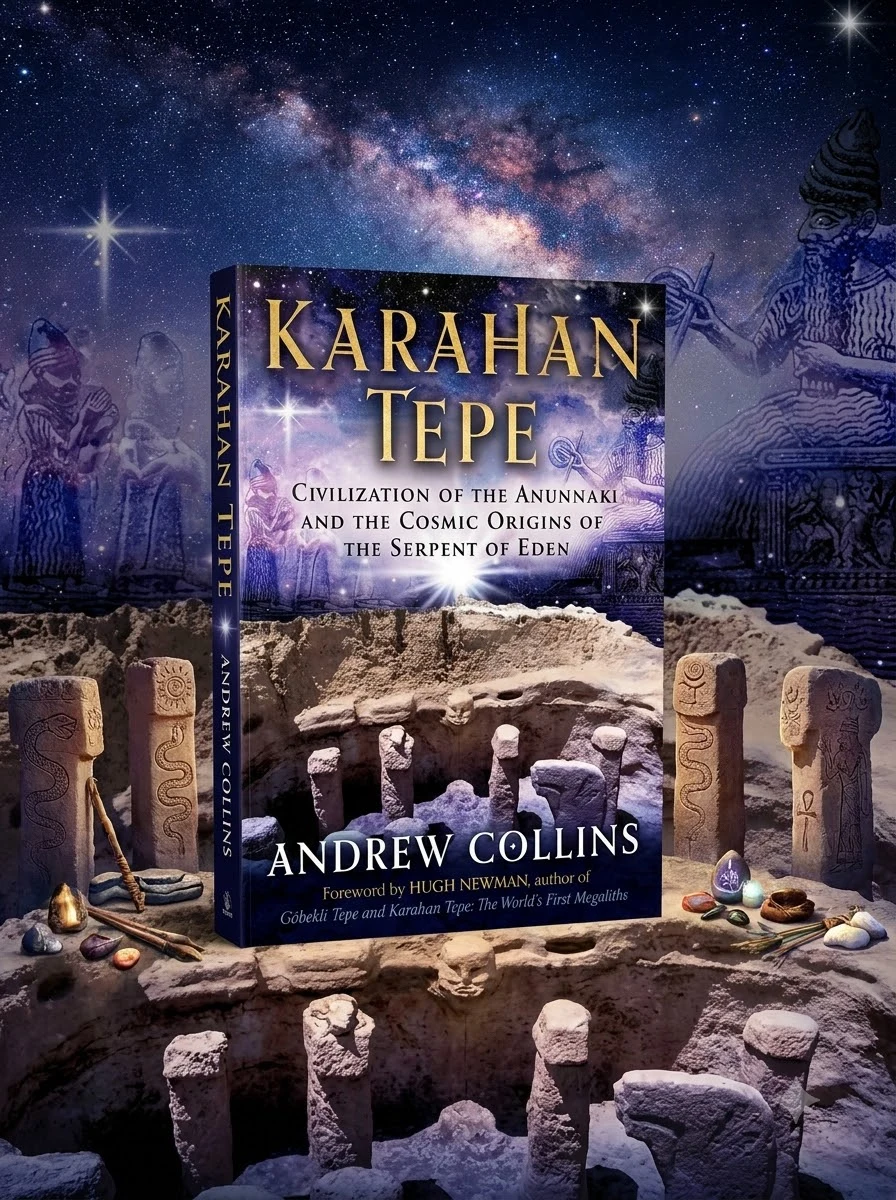
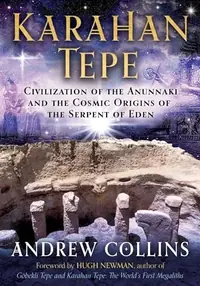
Karahan Tepe: Civilization of the Anunnaki and the Cosmic Origins of the Serpent of Eden


Stock reported in the catalog; fulfillment is confirmed with your request.
Uncover the cosmic secrets of humanity's earliest monumental structures.
Andrew Collins and Hugh Newman embark on an in-depth investigation of Karahan Tepe, an enigmatic 11,000-year-old archaeological site in Turkey. They meticulously examine its intricate carvings, T-shaped pillars, and subterranean chambers, revealing its advanced acoustical properties and precise astronomical alignments. The authors propose that this pivotal location was a shamanic center designed to connect with the Milky Way's galactic core, personified as a cosmic serpent. Furthermore, they explore how the site's builders, pioneers of the first post-Ice Age civilization, are echoed in ancient myths as the Anunnaki, Watchers, and Nephilim.
This work sits firmly within the fringe archaeology and ancient astronaut theory tradition, blending speculative anthropology with esoteric mythology. It aligns with the broader occult interest in deciphering cosmic origins through terrestrial monumental architecture.


📝 Description: Karahan Tepe: Civilization of the Anunnaki and the Cosmic Origins of the Serpent of Eden
💎 Expert review
📖 Why choose it
Why this book is worth reading
Readers fascinated by the intersection of archaeology, mythology, and cosmic consciousness will find this book deeply rewarding. If you are drawn to narratives that challenge conventional historical timelines and seek connections between ancient sites and celestial phenomena, this investigation offers a compelling framework. The authors provide a detailed exploration of how early post-Ice Age civilizations may have utilized acoustics and astronomy for shamanic purposes. It is ideal for those who enjoy speculative theories about the Anunnaki and the origins of serpent mythology in Eden. You will appreciate the meticulous examination of Karahan Tepe’s structures and its proposed role as a gateway to the galactic core, satisfying a curiosity about humanity's forgotten spiritual heritage.
⭐ Reader reviews
Reader rating
This text appeals strongly to enthusiasts of alternative history and esoteric cosmology who are already sympathetic to theories regarding the Anunnaki and prehistoric advanced civilizations. However, it does not suit readers seeking peer-reviewed archaeological consensus or strict academic rigor, as its claims rely heavily on speculative interpretation rather than empirical proof. Skeptics of ancient astronaut hypotheses may find the leaps in logic regarding astronomical alignments and acoustic properties unconvincing. The narrative is engaging for those who enjoy mythological analysis but may feel repetitive to experts in Near Eastern archaeology. It serves best as a thought-provoking exploration of fringe theory rather than a definitive historical account.
❓ Frequently asked questions
📖 Who should read this
If you're captivated by the origins of human civilization, ancient alien theories, or the esoteric links between early humanity and the cosmos, this deep dive into Karahan Tepe offers profound insights. It's for anyone seeking to unravel the untold stories of our past and challenge conventional historical narratives.
🎯 Key themes and symbolism
Cosmic Shamanism Explored
The book delves into how Karahan Tepe was not merely a dwelling but a sophisticated ritual complex. It presents evidence that ancient shamans utilized the site's unique architectural features and acoustic design to facilitate profound spiritual experiences, specifically to ritually engage with the Milky Way's galactic bulge, perceived as the head of a cosmic serpent.
Proto-Civilization & Mythic Origins
This work challenges conventional historical timelines by identifying Karahan Tepe's builders as the architects of Earth's earliest post-Ice Age civilization. It thoughtfully links these enigmatic creators to legendary figures from various ancient traditions, including the Anunnaki from Sumerian texts and the Watchers and Nephilim from Jewish lore, suggesting a shared, profound heritage.
Archaeoastronomy & Site Design
A core theme is the meticulous examination of Karahan Tepe's structures for their astronomical significance. The authors highlight how the site's design, including its ubiquitous snake carvings and T-pillars, was intimately aligned with celestial phenomena, indicating an advanced understanding of the cosmos and its integration into their spiritual and architectural practices.
💬 Quotes from the book
“Standing amidst the T-pillars, one feels the echoes of a purpose far grander than mere habitation, a profound dialogue with the celestial sphere.”
“The serpent's ubiquitous presence here is no mere animal worship; it is a direct channel to the Milky Way's heart, a cosmic artery of ancient wisdom.”
📜 Historical context
📚 Glossary
- Karahan Tepe
- Anunnaki
- Galactic Bulge
📔 Questions to reflect on
- How might our understanding of early human history and the development of civilization change if sophisticated astronomical and spiritual practices predated widespread agriculture?
- Considering the concept of a 'cosmic serpent,' what other ancient mythologies or symbols from various cultures might represent hidden astronomical knowledge or celestial connections?
- What implications does the existence of Karahan Tepe have for theories regarding 'lost civilizations' or potential extraterrestrial influence on human development?
🏛 Books from this publisher Bear & Company
All books from this publisher →




You might also like
See more →