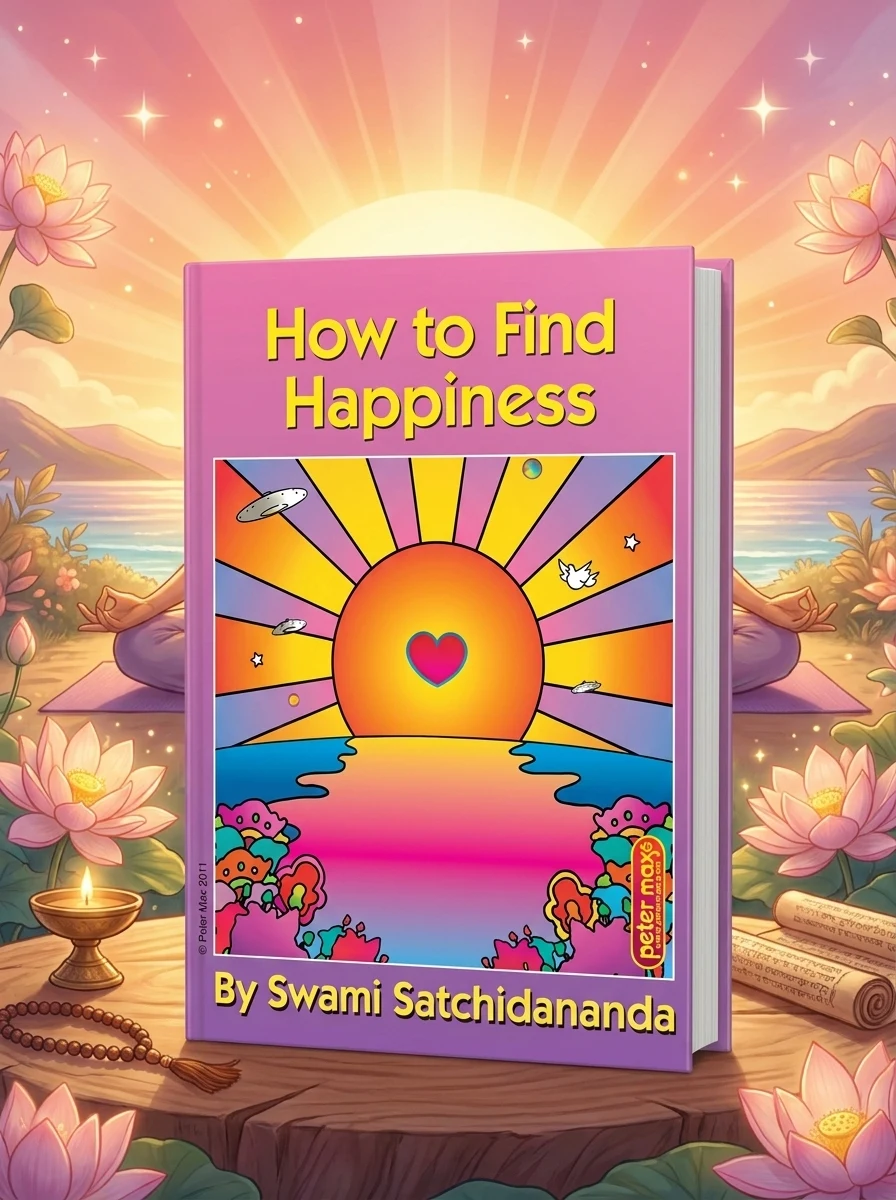

How to Find Happiness
This edition can be ordered. No arrival date is confirmed.
Uncover the joy already within you by shedding the illusion of lack and embracing your true nature.
Swami Satchidananda dismantles the notion that happiness is an external prize to be won. Instead, he argues that bliss is your innate condition, merely obscured by mental noise. Through teachings on karma yoga, self-surrender, and the cultivation of a pure heart, he guides readers to silence the ego. This text serves as a practical manual for uncovering the self, suggesting that by knowing who you truly are, all other wisdom gains profound resonance. It is a call to recognize that you are already the happiness you seek, requiring only stillness to be realized.
This work emerges from the Integral Yoga tradition, blending classical Vedanta with practical Hatha Yoga techniques to address modern spiritual seekers. It reflects a mid-to-late 20th-century synthesis of Eastern wisdom and Western accessibility, positioning happiness as an internal state rather than a worldly achievement.


📝 Description: How to Find Happiness
💎 Expert review
📖 Why choose it
Why this book is worth reading
Readers weary of the relentless pursuit of external validation will find profound relief in this guide. It is ideal for those who feel a subtle sense of lack despite their achievements, offering a gentle path to silence the ego and recognize their innate bliss. If you seek a practical manual that combines philosophical depth with actionable steps like karma yoga, this book provides the stillness needed to uncover the joy already present within you.
⭐ Reader reviews
Reader rating
Ordered this after seeing it referenced in another book I was studying. The symbolism is layered and generous to patient readers. A few pages arrived with light corner wear, though nothing serious. Happy enough with the purchase.
This has been on my wishlist for months. There's real depth here that reveals itself on a second reading. It reads better in small doses — a chapter at a time with notes. Highly recommend to serious students.
My third book from this store and this one might be the best. Plenty of passages worth underlining; my copy is already full of margin notes. It's become a regular reference in my practice. Shipping was quick too.
This edition finally does the material justice. It connects ideas I'd only seen treated separately elsewhere. It assumes more background than a beginner might have. Solid, if not essential.
Swami Satchidananda offers a compassionate dismantling of the illusion that happiness must be earned. The text is clear, accessible, and deeply rooted in self-surrender and pure heart cultivation. However, readers seeking complex intellectual debate or rigorous academic critique may find the straightforward assertions too simple. It does not suit those who prefer external solutions to internal problems or those resistant to the concept of innate perfection. For the sincere seeker ready to embrace stillness, it is a transformative resource.
❓ Frequently asked questions
📖 Who should read this
Seekers tired of external validation who wish to explore non-dual yoga. Ideal for those ready to silence their minds and discover that fulfillment is an internal state, not an external acquisition, requiring only awareness to unlock.
🎯 Key themes and symbolism
Innate Bliss and Silence
The text posits that joy is not a destination but a foundational reality. By entering deep silence, practitioners can strip away layers of conditioning to reveal their inherent nature as pure happiness, rather than chasing fleeting external pleasures.
Karma Yoga and Selflessness
Satchidananda emphasizes action without attachment to results. By serving others selflessly and dissolving the ego through karma yoga, one aligns with a higher order, transforming mundane duties into spiritual practices that lead to liberation and inner peace.
The Necessity of a Guide
The path to self-realization is depicted as treacherous for the unaided mind. The author insists on the vital role of a spiritual teacher to provide direction, correct misconceptions, and help the seeker navigate the complexities of inner transformation.
💬 Quotes from the book
“You are only to realize that you already are happiness personified.”
“To realize, go into deep, deep silence.”
📜 Historical context
📚 Glossary
- Karma Yoga
- Self-Surrender
- Pure Heart
📔 Questions to reflect on
- Where in your daily life do you mistakenly seek happiness in external objects rather than internal states?
- How might your actions change if you performed them without any expectation of personal reward or recognition?
- What specific mental noise prevents you from accessing the silence described as your true nature?
You might also like
See more →





 91
91