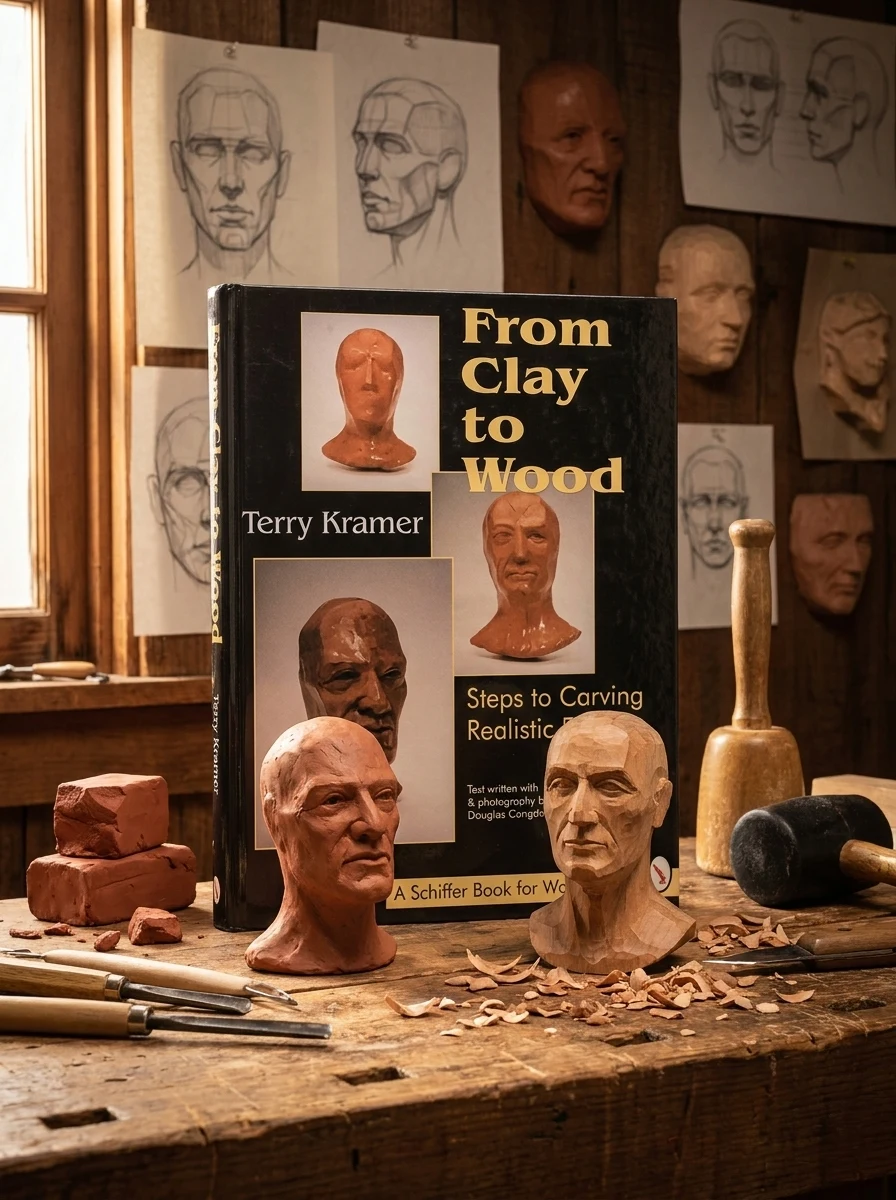

From Clay to Wood: Steps to Carving Realistic Faces Kramer, Terry
This edition can be ordered. No arrival date is confirmed.
Master the living geometry of the human visage through clay and wood.
Terry Kramer demystifies the formidable challenge of realistic portraiture by bridging the gap between soft clay modeling and hard wood carving. He guides practitioners through facial planes and features via structured exercises, teaching how to translate malleable form into enduring timber. This illustrated manual offers a systematic pathway for carvers seeking to elevate their technical competence and achieve strikingly lifelike results.
This manual sits within the realm of practical craft literature, specifically focusing on the technical intersection of sculpture and woodworking traditions. It serves as a bridge between fine art modeling techniques and applied timber carving practices.


📝 Description: From Clay to Wood: Steps to Carving Realistic Faces Kramer, Terry
💎 Expert review
📖 Why choose it
Why this book is worth reading
This book is an essential resource for dedicated sculptors and woodcarvers who feel stuck in the technical limitations of their chosen medium. It uniquely addresses the difficult transition from the forgiving nature of clay to the unforgiving resistance of hard timber, offering a structured pathway for those seeking lifelike realism. By demystifying facial planes and features through systematic exercises, it empowers practitioners to translate malleable form into enduring art. If you desire to elevate your technical competence and achieve strikingly accurate results, this illustrated manual provides the necessary bridge between soft modeling and hard carving, making it invaluable for serious artists ready to master the living geometry of the human visage.
⭐ Reader reviews
Reader rating
This edition finally does the material justice. It connects ideas I'd only seen treated separately elsewhere. The symbolism is layered and generous to patient readers. The font runs small in the appendices. Happy enough with the purchase.
Not my usual area but wanted to branch out. Some sections stopped me cold in the best way. I'd have loved an index, but that's on the original text. Solid, if not essential.
Grabbed this during a weekend order. The historical context alone makes it worth the price.
Long-time student of the esoteric here. The print is clean and easy on the eyes for long sessions. Challenging in places, but never needlessly obscure. Delivery took a bit longer than quoted. Good, with the caveats above.
Took a chance on this and glad I did. It rewards patience more than any book I've bought this year. Recommended if you're ready to do the work.
Added this to my reference shelf. The ideas are old but land with surprising force today. Deserves a place on any esoteric bookshelf.
Took a chance on this and glad I did. Some sections stopped me cold in the best way. Highly recommend to serious students.
Terry Kramer delivers a systematic guide that effectively bridges the gap between clay modeling and wood carving. The structured exercises offer a clear pathway for achieving realistic portraiture, making complex facial planes accessible through logical progression. However, this book does not suit casual crafters or those seeking quick, easy projects; it demands patience and serious commitment to technical mastery. Beginners might find the transition from soft to hard materials daunting without prior experience. It is best reserved for intermediate carvers ready to deepen their understanding of form and texture through rigorous, illustrated instruction rather than loose, experimental approaches.
❓ Frequently asked questions
📖 Who should read this
Dedicated woodcarvers and portrait artists seeking to move beyond stylized forms. It is ideal for those who find realistic anatomy intimidating and desire a structured, photographic guide to mastering facial proportions and expression.
🎯 Key themes and symbolism
Plasticity to Permanence
The text explores the critical transition from the forgiving nature of modeling clay to the unforgiving resistance of wood. It teaches how to capture ephemeral gestures in clay and faithfully translate those three-dimensional insights into permanent wooden relief or sculpture.
Anatomical Geometry
Kramer dissects the face into geometric planes rather than organic blobs. Readers learn to map the skull's underlying structure, understanding how light interacts with bone and muscle to create the illusion of life and depth in carved wood.
Methodical Progression
The work rejects intuition in favor of rigorous, step-by-step exercises. Each phase builds upon the last, ensuring the carver develops a reliable technical foundation. This structured approach prevents common pitfalls and ensures a consistent, high-quality final portrait.
💬 Quotes from the book
“The face is not a collection of features, but a landscape of planes.”
“Clay allows you to think; wood demands you decide.”
📜 Historical context
📚 Glossary
- Planes
- Transfer
- Pliable Medium
📔 Questions to reflect on
- How does the weight of clay differ from the resistance of wood in your hands?
- Which facial plane do you consistently flatten, and how can you deepen it?
- Where does your current carving feel 'stuck,' and what clay exercise could unlock it?
🏛 Books from this publisher Schiffer Craft
All books from this publisher →




 83
83


You might also like
See more →

 90
90