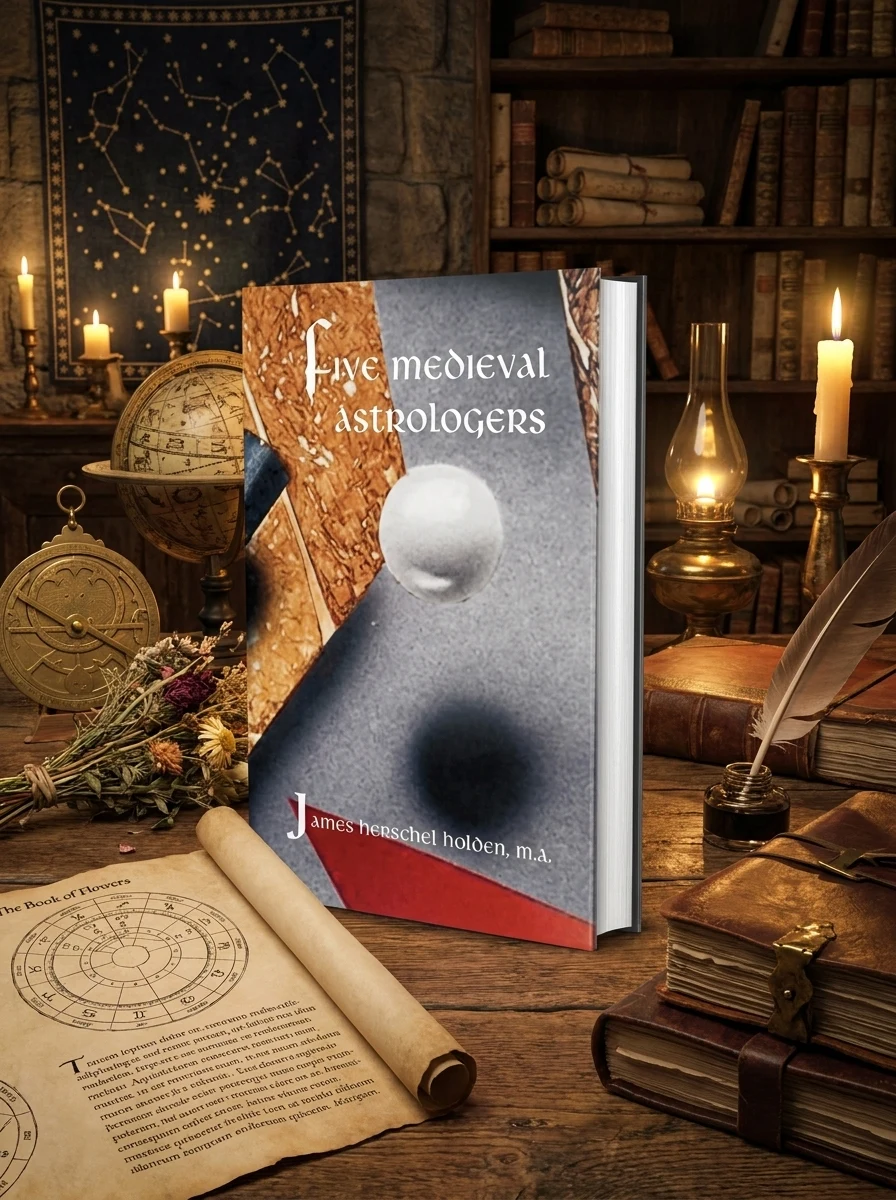
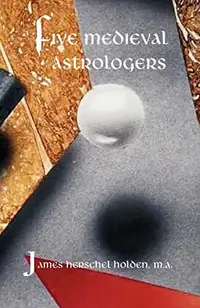
Five Medieval Astrologers
Holden, James HStock reported in the catalog; fulfillment is confirmed with your request.
Unearth the celestial wisdom of the Middle Ages with these foundational astrological treatises.
This essential volume presents meticulously translated astrological works from five pivotal medieval figures, offering direct insight into the period's cosmic understanding. Featuring Albumasar's comprehensive guide to Mundane Astrology, "The Book of Flowers," alongside the insightful "Centiloquies" attributed to Ptolemy, Hermes Trismegistus, and Bethen, it provides direct access to the intellectual bedrock of Western astrology. A fifth, unnamed treatise further enriches this rare collection, making complex historical texts accessible to contemporary readers and scholars alike.
This volume anchors itself in the rich tradition of medieval astrological scholarship, bridging ancient cosmological theories with the intellectual frameworks of the Middle Ages. It serves as a critical link between classical authorities like Ptolemy and the later systematic developments of Western astrology.


📝 Description: Five Medieval Astrologers
💎 Expert review
📖 Why choose it
Why this book is worth reading
Scholars and dedicated practitioners of Western astrology will find this compilation indispensable for its direct access to foundational texts that shaped the field. By presenting meticulously translated treatises from pivotal medieval figures, the book removes barriers to understanding complex historical concepts. Readers seeking the intellectual bedrock of their craft will appreciate the inclusion of Albumasar’s guide to Mundane Astrology and the varied insights attributed to Hermes Trismegistus and others. It offers a rare opportunity to engage with primary sources that define the period's cosmic understanding, making it an essential resource for those committed to deepening their historical knowledge and technical precision in the practice.
⭐ Reader reviews
Reader rating
This collection serves as a vital academic resource for historians of astrology and serious students of esoteric traditions. Its strength lies in the careful translation of rare texts, providing clarity where previous editions may have been obscure. However, it does not suit casual hobbyists or those seeking practical, immediate horoscope interpretations. The dense, theoretical nature of Albumasar’s work and the philosophical depth of the Centiloquies require patience and a scholarly mindset. Readers expecting modern psychological astrology or simple predictive techniques will likely find the content dry and overly abstract. It is strictly for those interested in the genealogy of astrological thought rather than its contemporary application.
❓ Frequently asked questions
📖 Who should read this
If you're a serious student of astrological history, a practitioner seeking ancient roots, or simply curious about how medieval minds interpreted the cosmos, this collection offers unparalleled insight. It's perfect for those eager to engage directly with foundational primary sources.
🎯 Key themes and symbolism
Medieval Astrological Thought
The book meticulously translates key texts, revealing the intricate systems and philosophical underpinnings that shaped astrological practice during the Middle Ages. It showcases how ancient knowledge, often filtered through Arabic scholarship, was integrated and interpreted by Latin authors, offering a window into the era's intellectual landscape and its engagement with the stars.
Mundane Astrology Principles
Through Albumasar’s significant work, readers gain a profound understanding of Mundane Astrology, which focuses on predicting events affecting nations, cities, and larger communities. The text lays out classical rules and techniques for interpreting global trends and societal shifts based on celestial alignments, providing a historical perspective on macro-level astrological analysis.
Aphoristic Astrological Wisdom
The inclusion of multiple "Centiloquies" highlights a unique form of astrological instruction: concise, aphoristic statements. These hundred-verse compilations, attributed to legendary figures like Ptolemy and Hermes, distill complex doctrines into memorable maxims, serving as invaluable summaries of predictive principles and ethical considerations for the practicing astrologer.
💬 Quotes from the book
“When Jupiter doth behold the Ascendant with benefic aspect, then shall prosperity attend the native in his endeavors, and honor shall be granted unto him by the highborn.”
“Observe diligently the conjunctions of the greater lights, for in their union lies the fate of kingdoms and the changing of the seasons, as revealed by ancient masters.”
📜 Historical context
📚 Glossary
- Mundane Astrology
- Centiloquy
- Hermes Trismegistus
📔 Questions to reflect on
- How do the predictive techniques described by these medieval astrologers compare to modern astrological practices you are familiar with? What are the key similarities and differences?
- Consider the cultural and scientific context of the Middle Ages. How might this historical environment have influenced the interpretation and application of astrological principles within these texts?
- Reflect on the concept of 'fate' versus 'free will' as implied by these ancient astrological doctrines. What insights do these texts offer your own understanding of destiny and personal agency?
✍️ More books by this author Holden, James H
All books by this author →
🏛 Books from this publisher American Federation of Astrologers
All books from this publisher →
 86
86
You might also like
See more → 81
81
 91
91