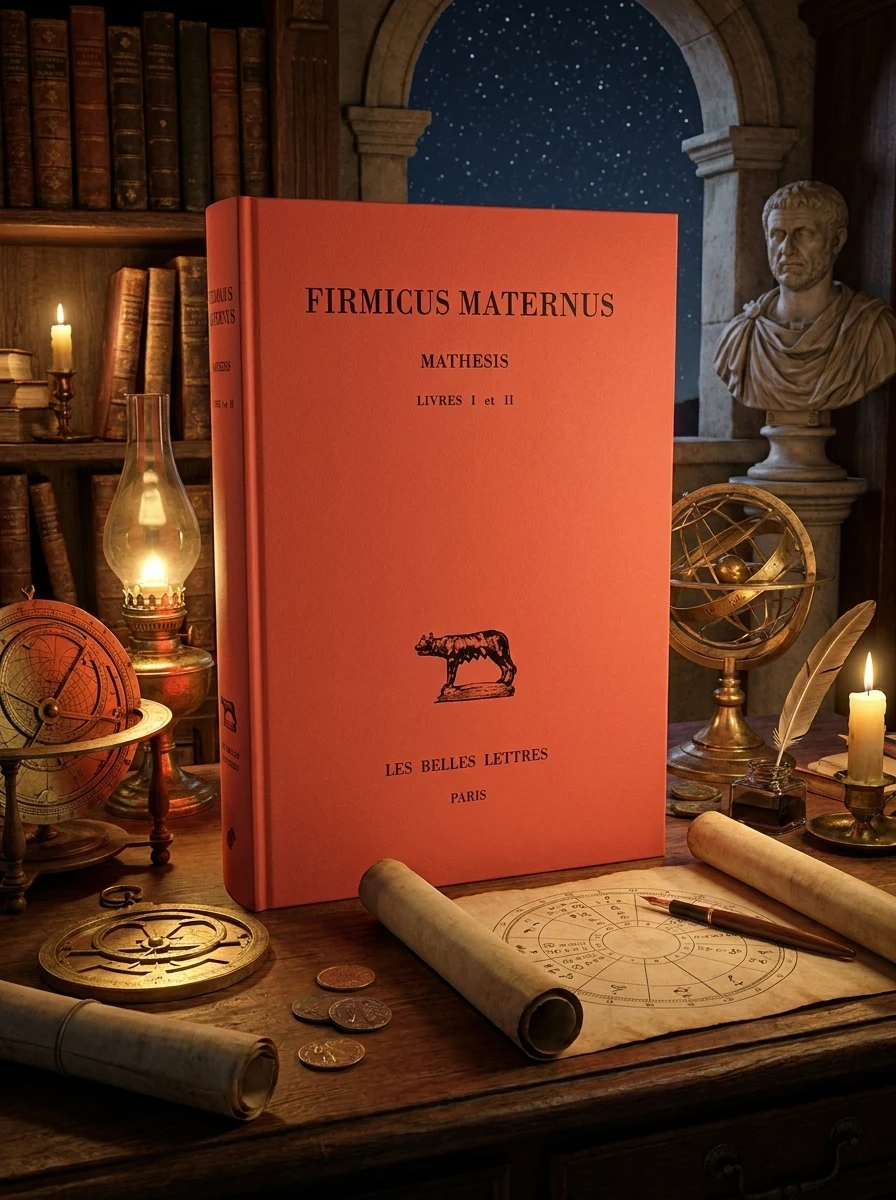


Firmicus Maternus: Tome I: Livres I Et II Firmicus Maternus
Firmicus Maternus; , Monat, Pierre; , Monat, PierreThis edition can be ordered. No arrival date is confirmed.
Unlock ancient cosmic secrets with a Roman master's guide.
Firmicus Maternus's monumental treatise, penned between 334 and 337 CE and addressed to the Emperor Constantine, stands as the most extensive astrological work inherited from classical antiquity. This foundational text serves a dual purpose: it functions as a comprehensive instructional guide for the aspiring student and as an essential reference for the seasoned practitioner. The initial sections also present a vigorous defense of astrological principles, solidifying its place in ancient thought.
This text represents the pinnacle of classical antiquity's astrological literature, serving as a primary bridge between ancient Roman intellectual traditions and later esoteric practices. It stands as a monumental treatise that defined the field for centuries.


📝 Description: Firmicus Maternus: Tome I: Livres I Et II Firmicus Maternus
💎 Expert review
📖 Why choose it
Why this book is worth reading
Scholars of antiquity and dedicated practitioners of traditional astrology will find immense value in this monumental treatise. It offers an unparalleled window into the intellectual landscape of the fourth century, providing both a rigorous instructional guide for students and a critical reference for seasoned experts. The text’s vigorous defense of astrological principles makes it essential for understanding how ancient thinkers justified their craft against contemporary skepticism. By addressing Emperor Constantine directly, the work also illuminates the intersection of cosmic philosophy and imperial power. Readers seeking to grasp the foundational theories that shaped Western esotericism will appreciate this comprehensive resource, which preserves the most extensive astrological knowledge inherited from classical antiquity.
⭐ Reader reviews
Reader rating
While Firmicus Maternus’s work is undeniably significant for its historical weight and completeness, it demands serious scholarly engagement rather than casual reading. The dense Latin prose and complex technical instructions may frustrate those seeking accessible introductions or modern interpretations of astrology. It is not suitable for readers interested in pop culture horoscopes or quick spiritual fixes. Only those with a strong background in classical studies or a deep commitment to historical astrological methods will navigate its arguments effectively. However, for the dedicated researcher, it remains an indispensable primary source that anchors our understanding of ancient cosmic theory.
❓ Frequently asked questions
📖 Who should read this
If you seek to understand the intellectual foundations of Western astrology, or wish to explore the practical methods employed by ancient Roman diviners, this historical cornerstone is an indispensable addition to your library. It's for serious students and practitioners of traditional astrology.
🎯 Key themes and symbolism
Ancient Astrological Practice
This volume offers an unparalleled glimpse into the methodologies and theoretical underpinnings of astrology as understood and practiced in the late Roman Empire. It meticulously details the systematic approach to celestial interpretation, from planetary positions to the significance of the zodiacal houses, providing a foundational understanding of classical techniques.
A Practitioner's Manual
More than just a philosophical discourse, Maternus crafted this work to be a practical companion. It functions as both a training manual for those learning the intricate art of horoscopy and as a dependable aide-mémoire for experienced diviners, filled with rules and interpretations essential for accurate celestial readings.
Defense of Astrology
The opening sections bravely advocate for the legitimacy and profound wisdom of astrology, offering robust arguments against skeptics and detractors of the era. It grounds the practice in philosophical and empirical observations, asserting its rightful place within the intellectual and spiritual traditions of Roman society.
💬 Quotes from the book
“For the celestial spheres, by their inexorable courses, weave the tapestry of human destiny, a design discernible to those who master their intricate language.”
“Let no man doubt the divine order inscribed in the heavens, for its wisdom guides kings and commoners alike, if only they possess the keys to its sacred script.”
📜 Historical context
📚 Glossary
- Astrology
- Horoscopy
- Antiquity
📔 Questions to reflect on
- How might the dedication of an astrological text to an emperor like Constantine have influenced its content or perceived authority?
- Reflect on the concept of astrology as both a 'training manual' and an 'aide-mémoire.' What does this duality suggest about the nature of ancient esoteric learning?
- Consider the 'defense of astrology' in the context of your own spiritual or scientific beliefs. How do ancient arguments for esotericism resonate or conflict with modern perspectives?
📖 From the series “Collection Des Universites de France Serie Latine”
All books in the series →

🏛 Books from this publisher Les Belles Lettres
All books from this publisher →You might also like
See more →

 91
91
 91
91
 91
91
 91
91