
US shipping Secure card payment Occult and esoteric books

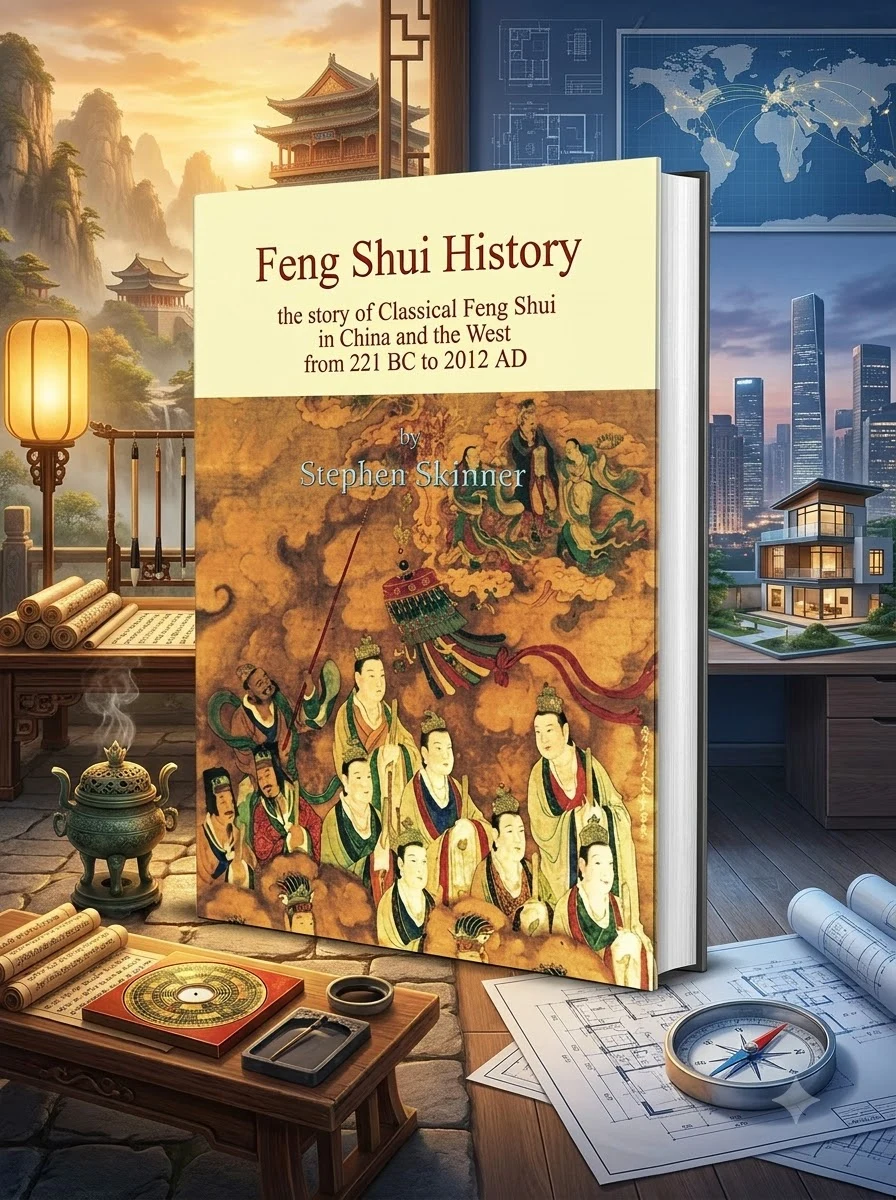
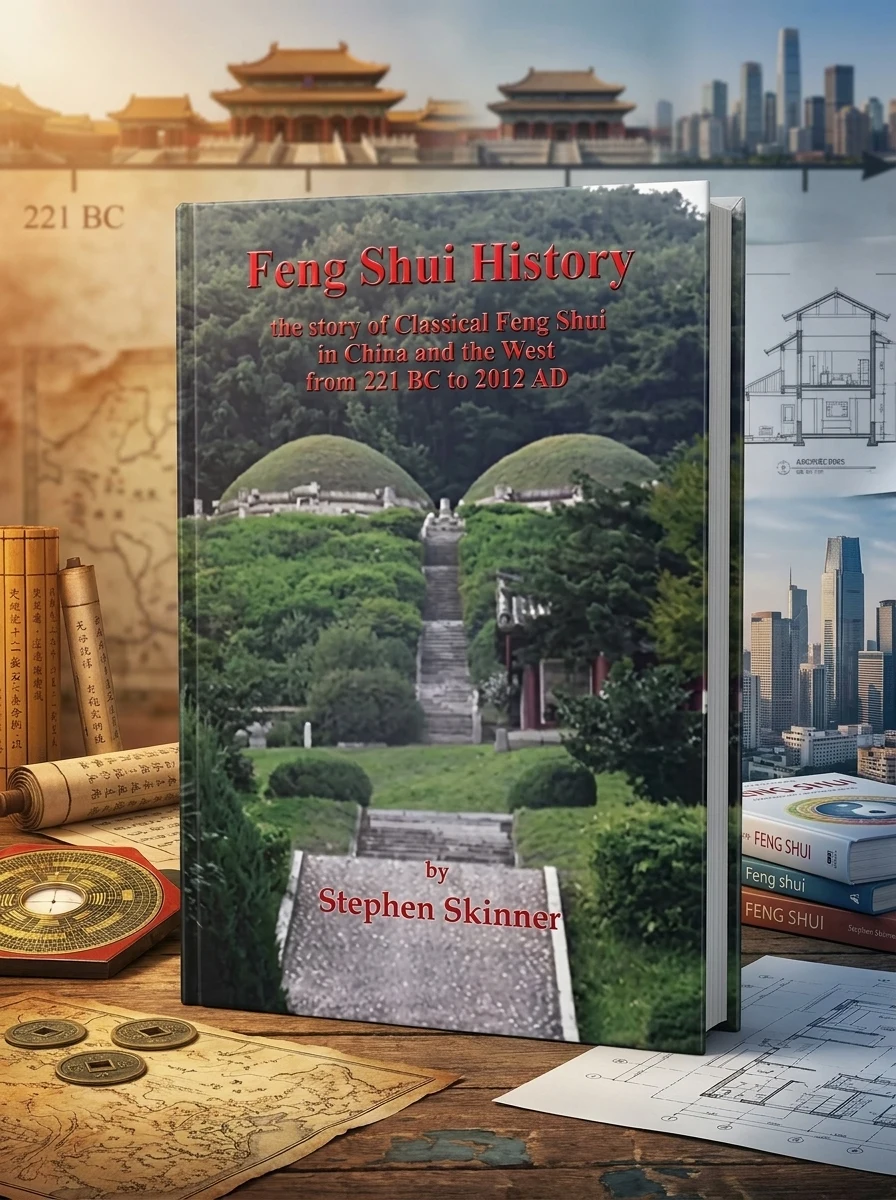
Feng Shui History: the story of Classical Feng Shui in China and the West from 221 BC to 2012 AD

Skinner, Stephen
Reader rating
4.5
(1 reviews) 23 sold
In stock

Stock reported in the catalog; fulfillment is confirmed with your request.

📚 ABOUT THE BOOK

Unearth the true lineage of Feng Shui, stripped of centuries of misinformation and folklore.

This groundbreaking volume meticulously charts the complete evolution of classical Feng Shui, from its earliest mentions in ancient China (221 BC) to its modern interpretations in the West (2012 AD). For the first time in English, readers are presented with a thoroughly researched, continuous narrative, correcting pervasive historical inaccuracies and dispelling long-held myths. It moves beyond scattered, often repetitive accounts, offering an authoritative and detailed historical journey based on primary Chinese texts. This is the definitive record of a complex, living tradition.

Key themes
Unveiling Ancient Roots Dispelling Enduring Myths East-West Journey
Historical context

This work situates the ancient Chinese practice of Feng Shui within a rigorous historical framework, tracing its continuous evolution from the Qin dynasty through to contemporary Western adoption. It serves as a scholarly bridge between traditional esoteric lineage and modern academic inquiry into Eastern geomancy.


Difficulty
●●● Demanding
Fans will love it
Laozi's Tao Te Ching · The I Ching (Book of Changes) · Feng Shui for Dummies by Steven Poulsen
🕯️ Occult Philosophy
🏛 Createspace Independent Publishing Platform 📅 2019 📖 222 pages 📔 Paperback 📐 Paperback ISBN: 9781984150028
Fun fact
Stephen Skinner's "Feng Shui History" is an indispensable scholarly achievement, finally providing the rigorous, evidence-based historical account that the field has long needed. It shines by meticulously correcting pervasive inaccuracies and offering a clear, chronological narrative. While it will undoubtedly disappoint those seeking quick-fix practical applications or perpetuating romanticized myths, it establishes itself as the definitive academic reference for anyone serious about understanding the true lineage of Feng Shui.

📝 Description: Feng Shui History: the story of Classical Feng Shui in China and the West from 221 BC to 2012 AD

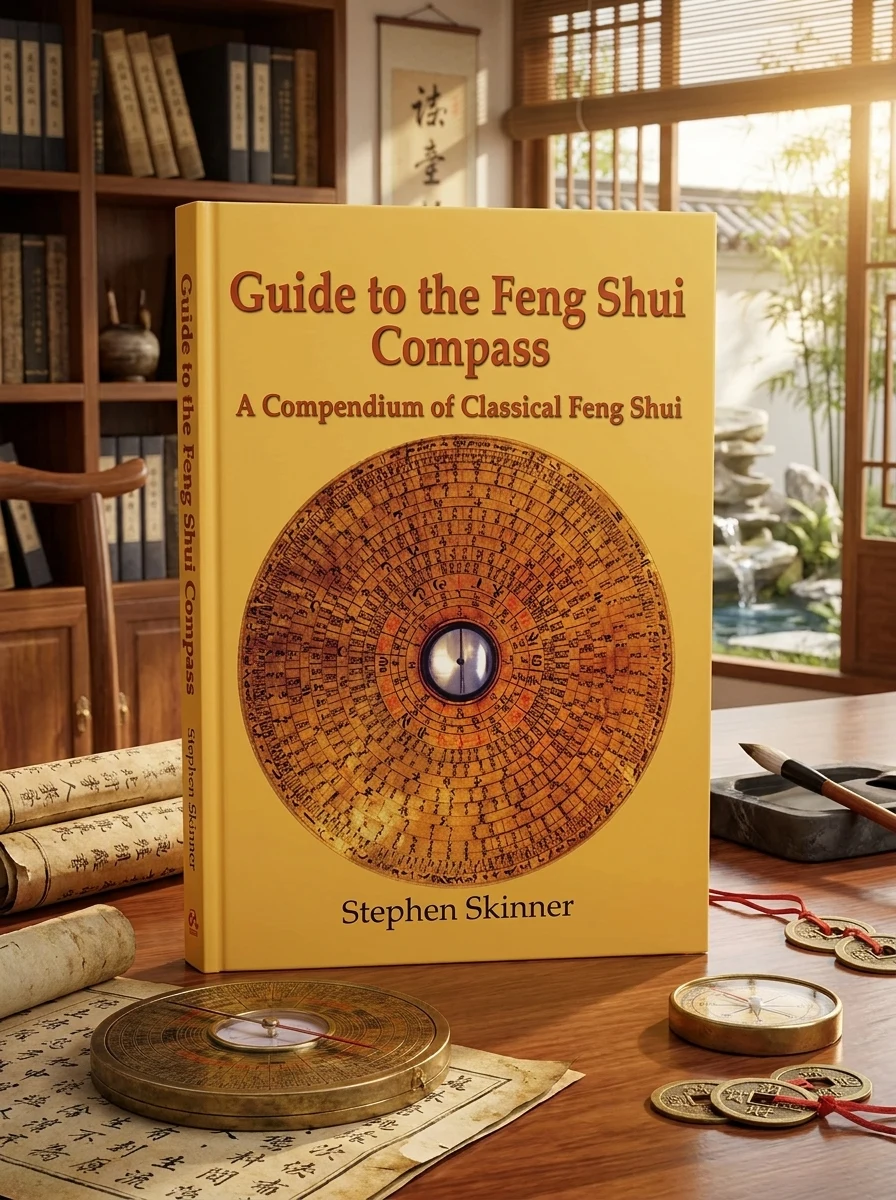
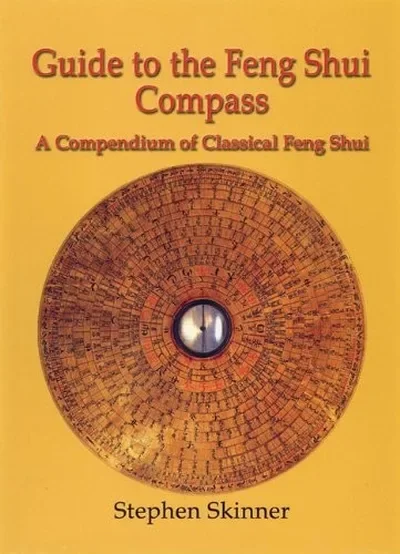
The History of Feng Shui tracks the evolution of feng shui in detail from China in 221 BC until the present day, both in China, and later in the West. This has never been done before in English. The only information on the history of feng shui occurs as scattered chapters in a number of books which often repeats the same vague and sometimes erroneous generalisations. These books include many erroneous statements such as:1."feng shui is 6000 years old." In fact the characters 'feng shui' were not used in this context before 320 CE. Even the older names (ti li, kan yu) for this practice do not occur in any texts before 220 BCE.2."feng shui derives from the Yi Jing." In fact, apart from the 8 trigrams being used as basic directional indicators, no feng shui compass shows 60 hexagrams till 1600 CE, and not the full 64 hexagrams till 1827 CE.3."the feng shui compass derives from a revolving magnetised spoon revolving on a plate." This incorrect deduction made by Wen Cheng To in 1946 (and later reluctantly repeated by Needham) was completely discredited in the 1990s, but people keep repeating it. This book has been meticulously researched, from authoritative Chinese texts and the analysis of many antique lo p'ans. It contains the details of many masters, and tracks the changes in theory and practice over time. There are modern chapters on feng shui in Singapore, Hong Kong, Taiwan, US and UK, bringing it totally up to date. Stephen Skinner introduced feng shui to the West with the first 20th century English book on feng shui in 1976. With the publication from 1998-2001 of the magazine "Feng Shui for Modern Living" in English and also in Chinese, Stephen has helped to spread interest in feng shui worldwide and outside of the Chinese speaking world. As interest has progressed further, there are now many more Westerners who not only know what traditional feng shui is, but also want to know how to use it practically. Feng shui is not a religion, but a discipline as precise in its practice as surveying, and more precise in its application and formulae than many Western sciences (such as psychology and sociology). Its history is therefore worthy of our attention. Stephen also documented the rings of the luopan in his comprehensive "Guide to the Feng Shui Compass: a Compendium of Classical Feng Shui." He has been a prime mover in both establishing feng shui as a precise discipline, and in bringing its benefits to the English speaking world.

💎 Expert review

💎
Esoterica Books editorial team
Occult literature desk
Skinner delivers a dense, academic chronicle that prioritizes historical accuracy over accessibility. This book is not suitable for casual readers seeking practical application tips or those who prefer lightweight, mystical interpretations of Feng Shui. It demands patience and an appreciation for detailed historiography. While it excels in correcting myths and providing a continuous narrative from primary sources, its scholarly tone may alienate beginners. It is strictly for those willing to wade through complex historical analysis to understand the tradition’s true scope, rather than for those looking for immediate, simplified guidance on home arrangement.
✓ EDITOR'S REVIEW

📖 Why choose it

📖

Why this book is worth reading

Readers seeking a deep, authoritative understanding of Feng Shui’s authentic roots will find this volume indispensable. Stephen Skinner strips away centuries of folklore and misinformation to reveal the true lineage of this complex tradition. It is ideal for serious practitioners, historians, and academics who require a meticulously researched narrative based on primary Chinese texts rather than superficial summaries. By correcting pervasive historical inaccuracies, the book offers a definitive record that empowers readers to engage with Feng Shui as a living, evolving philosophy. If you value rigorous scholarship over quick fixes, this continuous narrative from 221 BC to 2012 AD provides the clarity and depth necessary for genuine mastery of the subject.

⭐ Reader reviews

The starting rating comes from the team Esoterica Books —
⭐ Esoterica editorial review Editorial rating 4.5/5
★★★★
If you seek an intellectually rigorous and historically accurate understanding of Feng Shui, this book is essential. It's for serious students, practitioners, and scholars who are ready to move beyond popular misconceptions and delve into the meticulously researched truth of this ancient art.

Reader rating

4.5
Based on 1 reviews
5
0
4
1
3
0
2
0
1
0
E
Esoterica Books editorial team

Skinner delivers a dense, academic chronicle that prioritizes historical accuracy over accessibility. This book is not suitable for casual readers seeking practical application tips or those who prefer lightweight, mystical interpretations of Feng Shui. It demands patience and an appreciation for detailed historiography. While it excels in correcting myths and providing a continuous narrative from primary sources, its scholarly tone may alienate beginners. It is strictly for those willing to wade through complex historical analysis to understand the tradition’s true scope, rather than for those looking for immediate, simplified guidance on home arrangement.

❓ Frequently asked questions

No, this volume is a historical survey, not a practical guide. Its focus is exclusively on the evolution, origins, and historical accuracy of Feng Shui principles and practices.
Yes, it is explicitly stated that this is the first detailed, continuous historical account of Feng Shui published in English, based on extensive, original research.

📖 Who should read this

If you seek an intellectually rigorous and historically accurate understanding of Feng Shui, this book is essential. It's for serious students, practitioners, and scholars who are ready to move beyond popular misconceptions and delve into the meticulously researched truth of this ancient art.

🎯 Key themes and symbolism

Unveiling Ancient Roots

This work meticulously traces the origins of Feng Shui, challenging popularized but incorrect timelines. It distinguishes between the modern term and its earlier designations like Kan Yu and Ti Li, showing that the practice, under various names, evolved over millennia, but not always as commonly believed.

Dispelling Enduring Myths

A core contribution is its rigorous debunking of widespread fallacies. From the supposed 6,000-year age of Feng Shui to its direct derivation from the Yi Jing or the magnetic spoon origin of the compass, the book systematically corrects erroneous claims perpetuated in many other texts.

East-West Journey

The narrative follows Feng Shui’s transformation, not just within China, but also its migration and adaptation in the Western world. It illuminates how this ancient Chinese art has been understood, practiced, and sometimes misinterpreted across different cultural landscapes over time.

💬 Quotes from the book

“The assertion of a 6,000-year history for 'Feng Shui' is a modern construct; textual evidence firmly places the term's contextual usage no earlier than the 4th century CE.”

“While the Yi Jing provides foundational cosmological concepts, the direct integration of its hexagrams into the Feng Shui compass is a much later development, evolving significantly from the 17th century onwards.”

📜 Historical context

Feng Shui, an integral part of Chinese metaphysics, stands alongside disciplines like the Yi Jing and Traditional Chinese Medicine. Its historical trajectory reveals a dynamic practice, continually adapting and evolving rather than remaining static. This book firmly situates Feng Shui within its authentic historical and cultural landscape, distinguishing its documented development from later romanticized or simplified narratives.

📚 Glossary

Feng Shui
Kan Yu
Ti Li

📔 Questions to reflect on

  1. How might understanding the true historical evolution of Feng Shui change your perception or practice of the art?
  2. Reflect on a commonly held belief about a historical topic or practice that you later discovered to be inaccurate. How does this relate to the myths debunked in this book?
  3. Consider the journey of an ancient cultural practice from its origin to its adaptation in a new cultural context. What are the challenges and transformations involved?

✍️ More books by this author Skinner, Stephen

All books by this author →
🏛 Books from this publisher Createspace Independent Publishing Platform

All books from this publisher →

You might also like

See more →