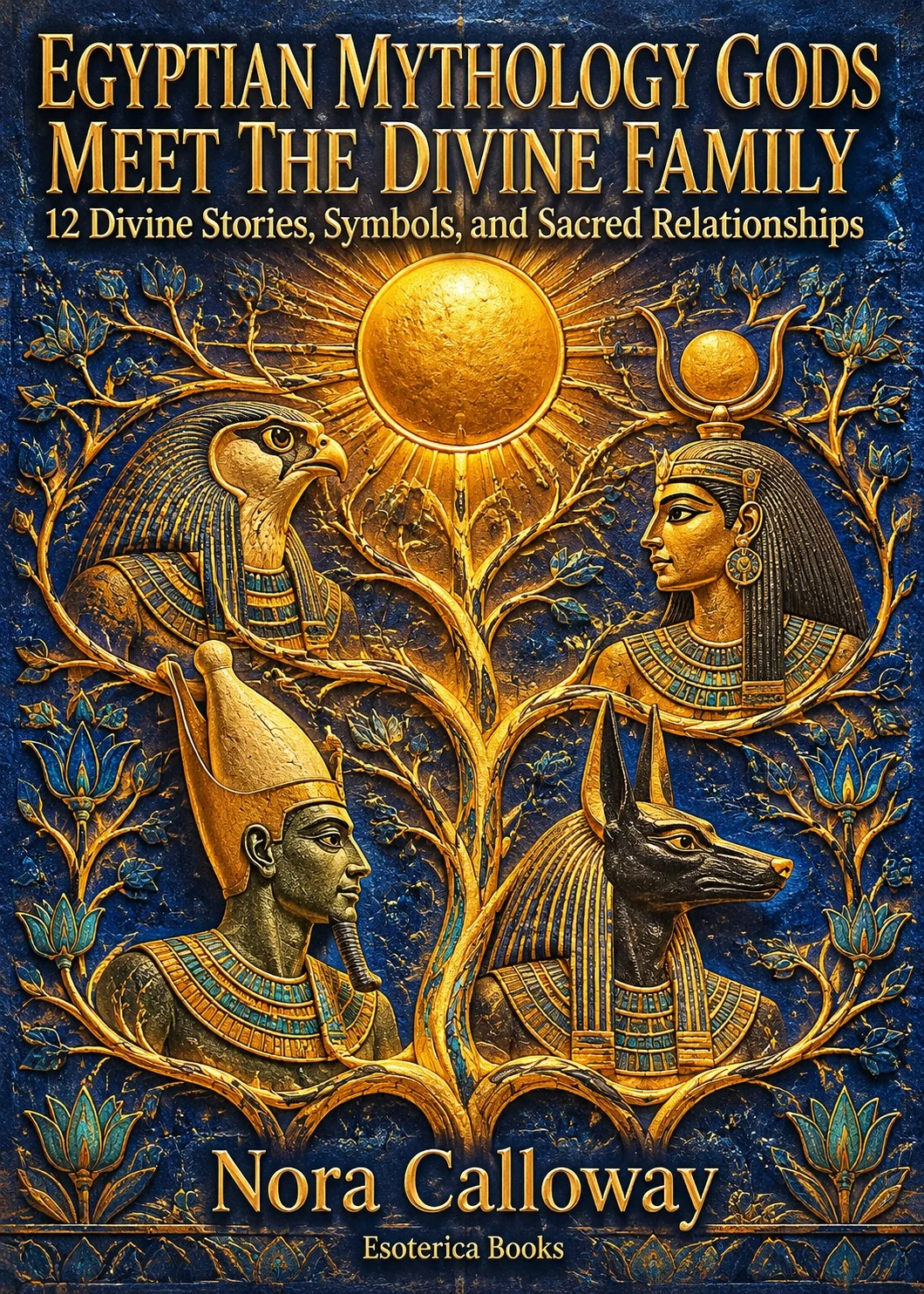
Egyptian Mythology Gods: Meet the Divine Family
Learn to recognize Egypt’s gods, decode their sacred symbols, and trace the family ties behind their greatest myths.
Egyptian mythology becomes easier to understand when you can recognize its gods and see how their stories connect. This beginner-friendly guide introduces twelve divine story themes through Ra, Isis, Osiris, Horus, Anubis, Thoth, Bastet, and other fascinating figures. Using the five-step Sacred Thread Method, you'll learn to identify divine appearances, interpret sacred symbols, follow family relationships, and explore creation, kingship, renewal, and the afterlife. A visual family tree, memorable mythological accounts, and practical identification exercises help you build a clear understanding of the Egyptian pantheon.
Ancient Egyptian mythology developed through interconnected religious traditions associated with different sacred centers, including Heliopolis, Memphis, and Hermopolis. Its gods, sacred animals, symbols, and family relationships expressed ideas about creation, kingship, life, death, and Ma'at, the principle of truth, balance, and cosmic order.


📝 Description: Egyptian Mythology Gods: Meet the Divine Family
📖 Why choose it
Why this book is worth reading
The Egyptian pantheon is memorable, but its many names, animal forms, symbols, and overlapping family relationships can make it difficult to follow. This book gives you a method for putting those pieces together. Rather than memorizing isolated descriptions, you'll connect a deity's appearance with its responsibilities, relatives, and place in familiar myths. The family tree and identification exercises are particularly useful for building a lasting visual reference, while the stories introduce the cultural ideas that give the gods their significance.
⭐ Reader reviews
Reader rating
This introduction succeeds by giving beginners a recognizable framework for approaching a complex pantheon. The Sacred Thread Method provides a logical progression from identifying ten familiar deities to understanding their symbols, family relationships, and interconnected myths. Particularly welcome is the attention to the different creation traditions and the distinction between Ma'at as a goddess and as a principle of cosmic order. The twelve-minute identification exercise also gives readers something concrete to do with the material. The main limitation is its introductory scope: readers seeking detailed translations of ancient texts, archaeological evidence, or extensive regional and historical analysis will need a more specialized reference. As a first guide, however, its structure is accessible and purposeful.
❓ Frequently asked questions
📖 Who should read this
Ideal for beginners, mythology enthusiasts, students of ancient Egyptian culture, and readers who enjoy understanding the relationships behind traditional stories. Especially useful for anyone who wants a visual, approachable introduction instead of an overwhelming collection of unfamiliar divine names.
🎯 Key themes and symbolism
Divine Family Relationships
Sacred Symbols and Powers
Creation and Renewal
Afterlife and Cosmic Order
📜 Historical context
📚 Glossary
- Ennead
- Ma'at
- Duat
- Ka
- Ba
- Heka
📔 Questions to reflect on
- Which Egyptian deity's appearance, symbols, or mythological role interests you most, and what draws your attention to that figure?
- How does tracing the family relationships between Atum, Osiris, Isis, Set, and Horus change your understanding of their stories?
- What does Ma'at's connection with truth, balance, and cosmic order suggest about the relationship between individual actions and the wider world in ancient Egyptian mythology?
📖 Read on the blog
✍️ More books by this author Nora Calloway


🏛 Books from this publisher Esoterica Books
All books from this publisher →
You might also like
See more →
Have a question about this item?
Ask about the edition, condition, delivery or anything else — we reply by email or phone, usually within a day.
