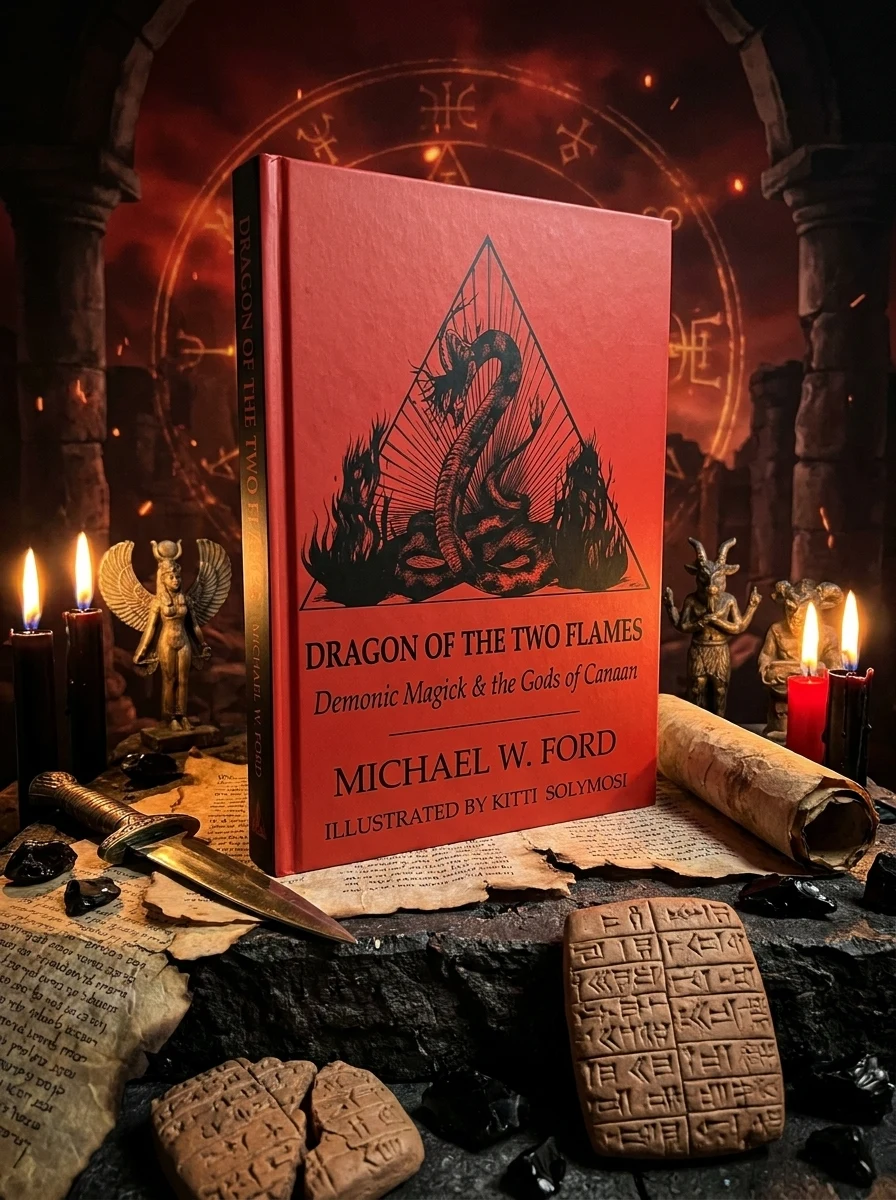

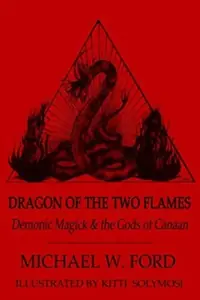
Dragon of the Two Flames: Demonic Magick & the Gods of Canaan
Ford, Michael WStock reported in the catalog; fulfillment is confirmed with your request.
Unearth the suppressed power of Canaanite deities and reclaim your sovereign mind from historical dogma.
Michael W. Ford’s work serves as a potent invocation of the ancient Canaanite pantheon, positioning these deities not as villains, but as liberated forces of nature and individual will. The text argues that early Judeo-Christianity systematically demonized these figures to enforce mass control. By examining archaeological and etymological evidence, the book seeks to restore the vitality of gods like Baal, Chemosh, and Anat. It frames Luciferianism as a tool for cognitive liberation, allowing the reader to shatter the 'slave-mentality' imposed by religious orthodoxy. This is a manual for self-excellence through the reclamation of dark, primal knowledge and the rejection of external moral authority.
This text belongs to the contemporary Left-Hand Path and Luciferian magick tradition, specifically within the niche of demonolatry and anti-Christian apologetics. It aligns with modern esoteric movements that seek to reclaim pre-Judeo-Christian deities from their historical vilification.


📝 Description: Dragon of the Two Flames: Demonic Magick & the Gods of Canaan
💎 Expert review
📖 Why choose it
Why this book is worth reading
This book is essential for the sovereign seeker who feels constrained by traditional religious dogma and seeks to reclaim their cognitive autonomy. It appeals to those interested in the historical demonization of Canaanite figures like Baal, Chemosh, and Anat, offering a framework to view them as liberated forces rather than villains. Readers seeking to dismantle the 'slave-mentality' imposed by orthodoxy will find value in its emphasis on self-excellence through dark, primal knowledge. It is ideal for practitioners of Luciferianism who desire a manual for rejecting external moral authority and embracing individual will as a tool for spiritual liberation and mental sovereignty.
⭐ Reader reviews
Reader rating
A friend in my study group recommended this one. The ideas are old but land with surprising force today. It's become a regular reference in my practice. A keeper.
Ford offers a provocative reclamation of Canaanite deities, framing them as allies in the fight against historical mass control. The argument that early Judeo-Christianity systematically demonized these figures is compelling for those skeptical of religious orthodoxy. However, this text is not suitable for readers seeking traditional historical objectivity or those comfortable with established Judeo-Christian narratives. It may alienate individuals who do not resonate with the aggressive rejection of external moral authority or the specific Luciferian framework presented. The etymological and archaeological evidence serves a polemical purpose rather than an academic one, making it a niche resource for dedicated practitioners of anti-dogmatic magick rather than casual observers of religious history.
❓ Frequently asked questions
📖 Who should read this
Seekers of left-hand path traditions, historians of religion, and those disillusioned by orthodox theology. It is for the intellectually bold who wish to explore the roots of Western spirituality outside the Judeo-Christian narrative.
🎯 Key themes and symbolism
Reclaiming Canaanite Deities
Ford re-evaluates gods like Baal and Astarte, stripping away centuries of demonization. He presents them as vital, powerful archetypes of natural law and human potential, urging readers to view them as sources of strength rather than objects of fear or condemnation.
Luciferian Self-Excellence
The text promotes Luciferianism as a path to individual mastery. It suggests that embracing the 'Adversarial Ideology' helps dismantle internalized guilt and fear. The goal is achieving a balanced, proud existence through the conscious utilization of knowledge and the rejection of submissive religious structures.
Deconstructing Religious Control
A central argument is that Christianity was adopted by the Roman Empire specifically to pacify the populace. The book details how the destruction of pagan cults was a political move to suppress the 'pride of self-excellence,' replacing it with a controlled, obedient mindset for the masses.
💬 Quotes from the book
“The enemies of the cult of Yahweh were of pantheons which inspired, excited and represented the possibilities in those who sought to overcome their obstacles.”
“The Canaanite Gods are awakened and restored to their former strength, beauty and power for the strong and wise.”
📜 Historical context
📚 Glossary
- Adversarial Ideology
- Slave-mentality
- Luciferianism
📔 Questions to reflect on
- Which societal rules have you internalized that might actually be limiting your personal power?
- How might you reframe a 'negative' trait or emotion as a source of strength?
- What does 'self-excellence' mean to you outside of traditional moral frameworks?
✍️ More books by this author Ford, Michael W
All books by this author →

🏛 Books from this publisher Createspace Independent Publishing Platform
All books from this publisher →


You might also like
See more →



 91
91