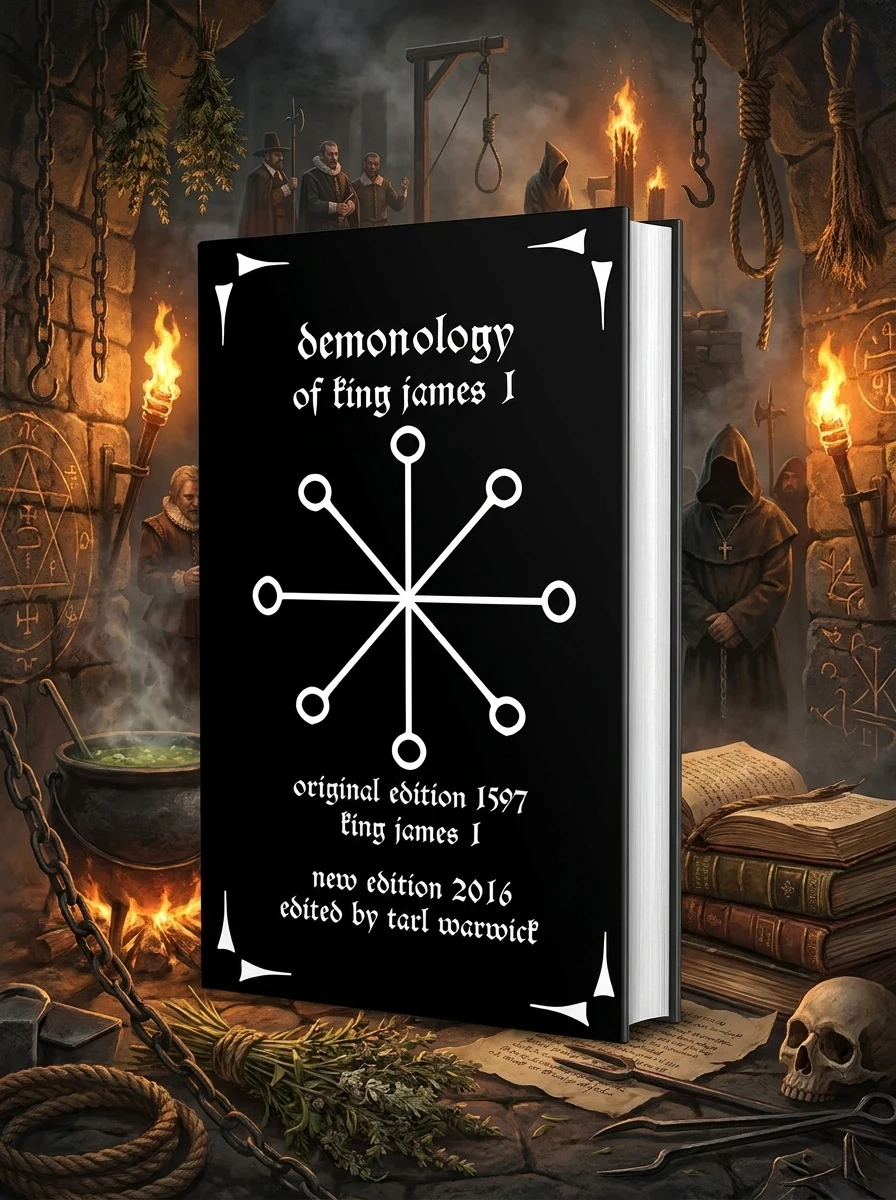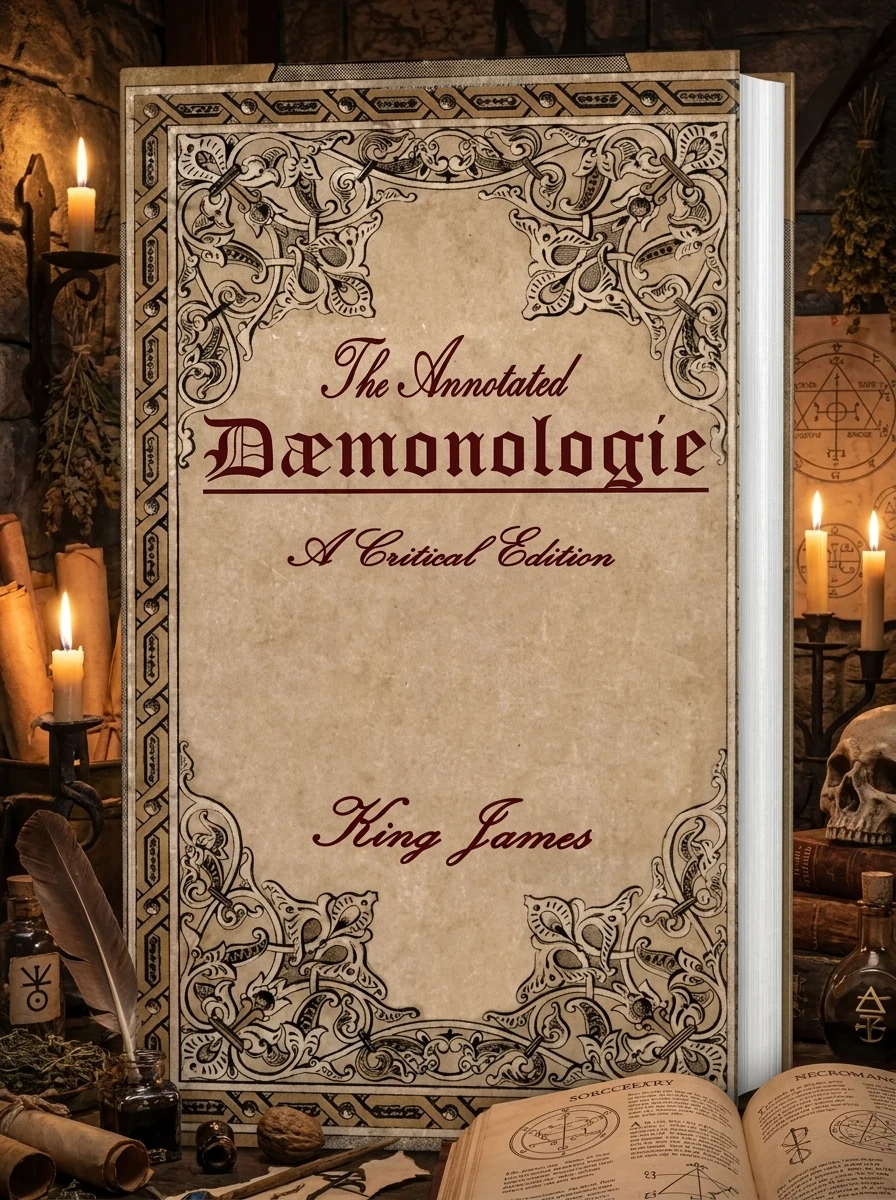

Daemonologie: A Critical Edition. Expanded. In Modern English with Notes
Stock reported in the catalog; fulfillment is confirmed with your request.
King James' terrifying manual on demons, witchcraft, and the dark arts that shaped history.
This expanded modern edition of King James VI and I's seminal text offers a raw, unfiltered look into the 17th-century obsession with the infernal. James meticulously catalogs the hierarchy of evil, distinguishing between ancient witchcraft, necromancy, and sorcery while detailing the specific torments of possession and obsession. More than a theological treatise, it served as a practical guide for witch-hunters like Matthew Hopkins, directly influencing the hysteria that led to hundreds of executions. This volume preserves the king’s terrifying insights into the mechanics of demonic influence, providing a chilling historical record of how fear of the occult was weaponized to justify persecution and control.
This work stands as a seminal theological and political treatise from the early modern period, deeply embedded in the era's intense fascination with the supernatural and the divine right of kings. It reflects the specific historical moment when royal authority intersected directly with the persecution of the occult, shaping legal and social norms regarding witchcraft.


📝 Description: Daemonologie: A Critical Edition. Expanded. In Modern English with Notes
💎 Expert review
📖 Why choose it
Why this book is worth reading
This expanded modern edition serves as an essential resource for historians, scholars of religious persecution, and readers fascinated by the intersection of politics and the occult. By rendering King James' original text accessible in contemporary language while retaining its raw intensity, it allows modern audiences to grasp the terrifying mechanics of demonic influence without the barrier of archaic syntax. It is particularly valuable for those seeking to understand how fear was weaponized to justify control and persecution. The critical notes provide necessary context for the hierarchy of evil and the practical guides used by witch-hunters, making this volume indispensable for anyone studying the cultural and legal foundations of early modern European society and its enduring legacy in our understanding of evil.
⭐ Reader reviews
Reader rating
My third book from this store and this one might be the best. It pairs well with more modern commentaries on the same tradition.
I collect works on this subject and this is a worthy addition. Challenging in places, but never needlessly obscure. It's become a regular reference in my practice. Highly recommend to serious students.
This edition is a vital historical document but demands careful navigation. It offers a chilling look at how theological fear justified brutal persecution, making it crucial for academic study. However, it does not suit readers seeking spiritual guidance or comfort; the content is purely analytical and historical, focusing on the mechanics of possession and the justification of executions. Those expecting a narrative adventure or a sympathetic portrayal of witches will find this dry and disturbing. It is best approached with scholarly detachment to appreciate its significance in shaping legal frameworks around witchcraft. Readers sensitive to accounts of torture or the systematic destruction of individuals will likely find the material too harsh and devoid of modern ethical reflection, serving instead as a stark reminder of past injustices.
❓ Frequently asked questions
📖 Who should read this
Readers fascinated by the historical roots of witch hunts, scholars of Renaissance theology, and those interested in the psychological impact of religious intolerance on early modern society.
🎯 Key themes and symbolism
Demonic Hierarchy
Witchcraft Prosecution
Possession Mechanics
💬 Quotes from the book
“The history and practices of ancient witchcraft... detailing the demonology of Satan, Spectra, and the infernal order.”
“It became the inspiration of Shakespeare's Macbeth and a 'how to' witch-hunter's manual.”
📜 Historical context
📚 Glossary
- Infernal Order
- Necromancy
- Familiar Spirit
📔 Questions to reflect on
- How does the fear of the 'unknown' manifest in your own cultural or historical context?
- What role does authority play in defining what is considered 'evil' or 'occult'?
- How might the classification of demons reflect the societal anxieties of the time in which they were written?
🏛 Books from this publisher Createspace Independent Publishing Platform
All books from this publisher →


You might also like
See more →
 91
91