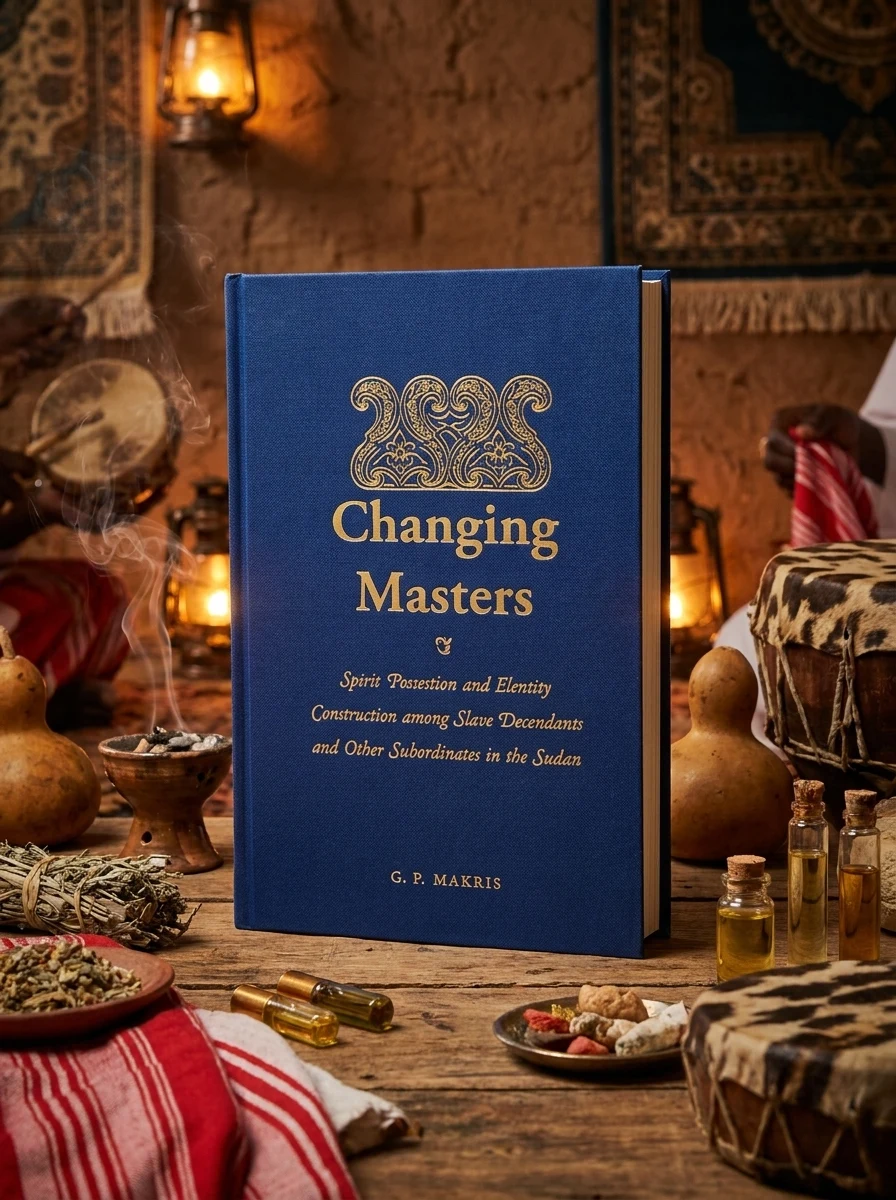
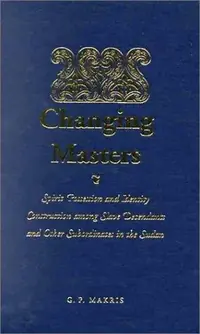
Changing Masters: Spirit Possession and Identity Construction Among the Descendants of Slaves in the Sudan
This edition can be ordered. No arrival date is confirmed.
Spirit possession as a vital act of resistance against historical erasure and social subordination.
This ethnographic study examines the Zar Tumbura cult among Sudan’s former slave descendants, revealing how ritual possession functions as a powerful tool for identity reconstruction. Makris argues that these ceremonies are not mere spiritual escapes but deliberate counter-discourses that challenge the dominant narratives imposed by ex-slaveholding elites. Through deep engagement with oral histories, ceremonial songs, and participant observation, the text demonstrates how practitioners actively rewrite their social standing. By embodying alternative identities through spirit contact, they transform victimization into agency, creating a resilient cultural framework that preserves dignity and autonomy in the face of systemic marginalization.
Situated within the ethnographic study of Sudanese slave-descendant communities, this work explores the Zar Tumbura cult as a mechanism for cultural preservation and social resistance. It bridges anthropological inquiry with esoteric practices of spirit possession to analyze identity construction among marginalized groups.


📝 Description: Changing Masters: Spirit Possession and Identity Construction Among the Descendants of Slaves in the Sudan
💎 Expert review
📖 Why choose it
Why this book is worth reading
Readers interested in the intersection of anthropology, history, and esoteric practice will find profound value in this text. It offers a compelling lens through which to view spirit possession not as mere superstition, but as a sophisticated political and social tool. Those seeking to understand how marginalized communities reclaim agency against historical erasure will appreciate Makris’s detailed analysis of the Zar Tumbura cult. It is essential for scholars and enthusiasts who wish to grasp how ritual acts serve as vital counter-discourses, allowing individuals to rewrite their social standing and preserve dignity amidst systemic marginalization.
⭐ Reader reviews
Reader rating
I collect works on this subject and this is a worthy addition. I appreciated how the argument builds steadily from first principles. I'd have loved an index, but that's on the original text. Solid, if not essential.
Been hunting for a decent copy of this text for ages. It connects ideas I'd only seen treated separately elsewhere. Challenging in places, but never needlessly obscure. If you're drawn to this subject, don't hesitate.
Needed this for my research. A text you study rather than simply read. You can tell why this work has endured. Already eyeing my next order.
This scholarly ethnography provides a rigorous examination of identity reconstruction through spirit possession among Sudan’s former slave descendants. While its academic depth offers rich insights into the Zar Tumbura cult’s role in resisting subordination, it demands patience from readers seeking accessible narratives. It does not suit those looking for practical magical instructions or light-hearted spiritual guides. The text is dense with anthropological theory and historical context, making it best suited for serious students of culture and power dynamics who are prepared to engage with complex arguments about social standing and autonomy.
❓ Frequently asked questions
📖 Who should read this
Scholars of African ethnography and post-colonial studies will find this essential. It is also vital for those interested in how marginalized communities use spiritual practice to reclaim agency, assert dignity, and construct positive selfhood against oppressive historical narratives.
🎯 Key themes and symbolism
Ritual as resistance
Post-slavery identity
Counter-discourse
💬 Quotes from the book
“Possession becomes a vehicle for rewriting history, turning the silence of the enslaved into a loud, embodied claim to existence.”
“The spirits do not just inhabit the body; they inhabit the gap between who the dominant culture says they are and who they know themselves to be.”
📜 Historical context
📚 Glossary
- Zar Tumbura
- Subaltern
- Counter-discourse
📔 Questions to reflect on
- How might ritual or symbolic practice serve as a form of resistance in your own community or personal history?
- In what ways do dominant narratives attempt to define identity, and how do marginalized groups subvert them?
- Consider the concept of 'counter-discourse.' Where do you see alternative narratives challenging the 'main story' in contemporary society?
You might also like
See more →
 91
91