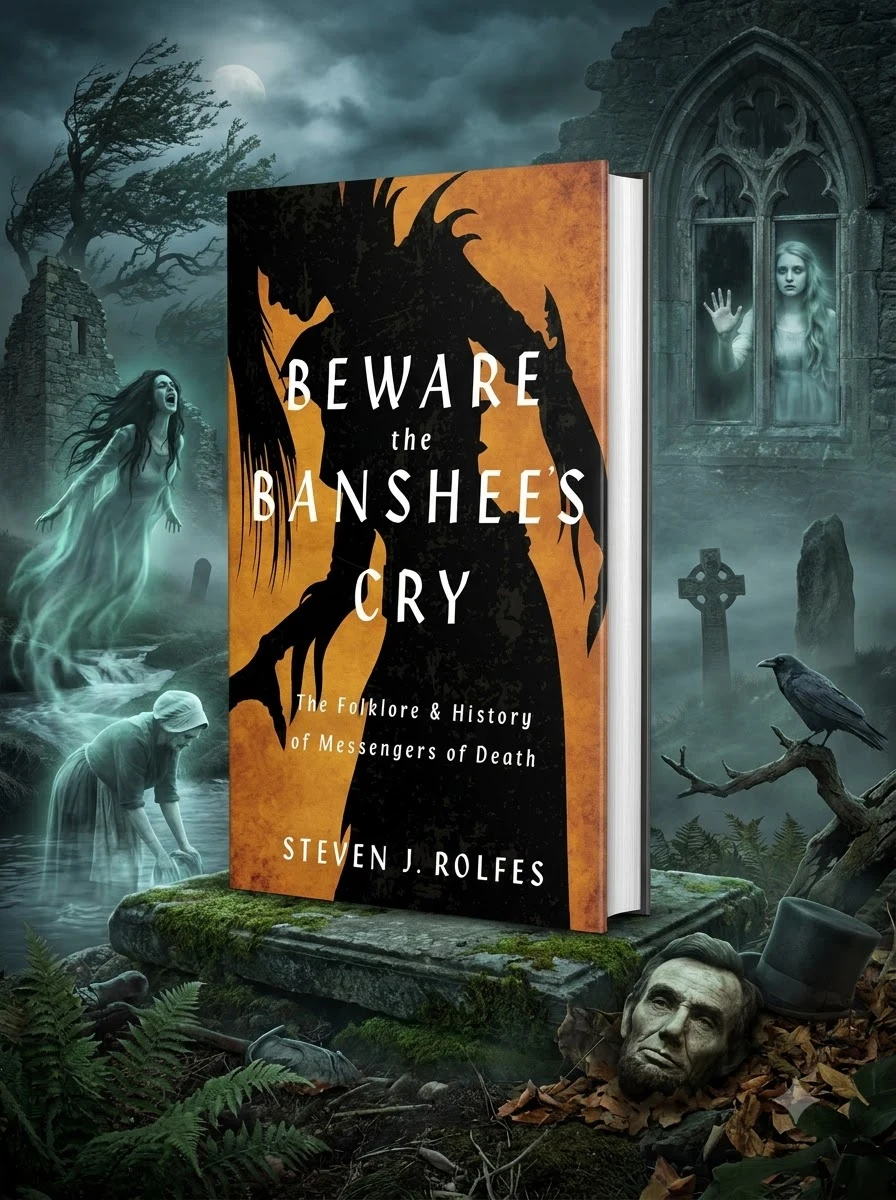
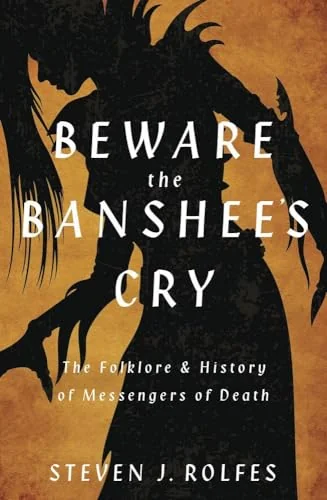
Beware the Banshee's Cry: The Folklore & History of Messengers of Death
✍️ Rolfes, Steven JA historical study of worldwide banshee folklore, death omens, and spectral messengers.
Steven J Rolfes traces messengers of death across myth and history, opening with Irish tradition before expanding to worldwide folklore. The book moves from the legendary figure of C Chulainn and the goddess Morrigan through the evolution of the banshee into the women of the mound, the phantom cry, the sight of the spirit, and the saga of the comb. Subsequent sections cover spirit accounts in North America, Scotland, Wales, and additional Irish death heralds, alongside global spectral entities, the doppelgänger, and omens of mortality.
Rooted in Irish myth, Breton lore, and Celtic spirituality, this work tracks how death messenger folklore spread across European regions, Asian traditions, and North American history.


📝 Description: Beware the Banshee's Cry: The Folklore & History of Messengers of Death
📑 What's inside
- Acknowledgments xiii
- Preface xv
- Introduction 1
- Chapter 1: C Chulainn and Morrigan 7
- Chapter 2: From Goddess to Banshee 23
- Chapter 3: The Women of the Mound 41
- Chapter 4: The Cry of the Banshee 61
- Chapter 5: The Sight of the Banshee 101
- Chapter 6: The Saga of the Comb 121
- Chapter 7: The Banshees in the United States and Canada 133
- Chapter 8: The Banshees in Scotland and Wales 149
- Chapter 9: Other Death Messengers in Ireland 171
- Chapter 10: Other Death Messengers 189
- Chapter 11: The Dopplegänger 223
- Chapter 12: Omens of Death 237
- Conclusion 251
- Bibliography 253
💎 Expert review
📖 Why choose it
Why this book is worth reading
Readers with a deep curiosity about the supernatural intersections of life and death will find this book particularly rewarding. It offers a comprehensive global expedition into the psyche of humanity’s fear and fascination with demise, moving beyond the well-trodden path of Celtic banshee lore to include lesser-known entities like Japan's ikiryo and the Welsh death hag. For those who appreciate meticulous historical chronicles and cultural significance analysis, Rolfes provides a rich tapestry of spectral figures that bridge our world and the afterlife. It is ideal for folklorists, occult enthusiasts, and anyone seeking to understand the universal patterns in how different cultures interpret these ethereal messengers.
⭐ Reader reviews
Reader rating
Rolfes delivers a compelling and well-researched exploration of death omens, successfully broadening the scope from familiar Celtic myths to global spectral phenomena. The work shines in its ability to trace the historical appearances and cultural weight of these liminal beings. However, readers seeking narrative-driven horror or fictionalized accounts will find this text dry and academic. It is not suited for those looking for quick, sensationalist ghost stories or purely theological debates on the soul. Instead, it appeals to the patient scholar or serious enthusiast willing to engage with comparative mythology and historical analysis of psychopomps across varied cultures without expecting dramatic flair.
❓ Frequently asked questions
📖 Who should read this
If you are drawn to the eerie beauty of folklore, curious about cross-cultural death traditions, or fascinated by the supernatural entities that bridge our world with the unknown, this book is an essential read. Prepare to journey through chilling tales and ancient beliefs, uncovering the universal human encounter with mortality.
🎯 Key themes and symbolism
Folklore and History Intertwined
The author expertly blends mythological accounts with historical records, showcasing how these supernatural entities have influenced human beliefs and even historical events. By examining specific sightings and their contexts, Rolfes illuminates the enduring power of these stories and their impact on cultural memory and collective fear throughout the ages.
Liminality and the Veil
At its core, the book explores the thin boundary between life and death, and how these spectral figures serve as potent symbols of transition. Rolfes delves into how societies perceive and interact with beings that occupy this threshold, offering insights into human existential anxieties and the universal quest to understand the ultimate mystery.
📜 Historical context
📚 Glossary
- Banshee
- Ikiryo
- Psychopomp
📔 Questions to reflect on
- Reflect on any cultural death omens or superstitions you are familiar with. How do they compare to the figures described in this book?
- If you encountered a messenger of death, how do you imagine you would react? Would you interpret it as a warning, a comfort, or something else entirely?
- How do stories of death omens shape our collective understanding and acceptance of mortality, both historically and in contemporary society?