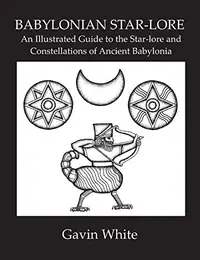
Babylonian Star-Lore. an Illustrated Guide to the Star-Lore and Constellations of Ancient Babylonia
Stock reported in the catalog; fulfillment is confirmed with your request.
Unearth the cosmic secrets of ancient Babylon and redefine your understanding of the stars.
Step beyond the familiar zodiac to explore the expansive celestial wisdom of ancient Babylonia. This groundbreaking work unveils how early civilizations perceived the heavens, not merely as a map of destiny, but as an intricate 'pictorial calendar.' It reveals how constellations were intertwined with seasonal rites, agricultural cycles, royal ceremonies, and funerary traditions, forming a profound cosmic narrative. Delving into the origins of celestial divination and ominous signs, this book offers unparalleled insight into the worldview of a culture deeply connected to the night sky, making complex ancient knowledge accessible to all.
This work sits within the tradition of comparative mythology and ancient history, specifically focusing on the intersection of Babylonian cosmology and early astrology. It explores how ancient civilizations viewed the heavens as a pictorial calendar intertwined with seasonal rites and agricultural cycles.


📝 Description: Babylonian Star-Lore. an Illustrated Guide to the Star-Lore and Constellations of Ancient Babylonia
💎 Expert review
📖 Why choose it
Why this book is worth reading
Readers with a deep curiosity about the roots of Western astrology will find this book an essential resource for understanding the origins of celestial divination. It is particularly valuable for those seeking to move beyond the familiar zodiac and grasp the expansive celestial wisdom of ancient Babylonia. The author makes complex ancient knowledge accessible, revealing how constellations were linked to royal ceremonies, funerary traditions, and ominous signs. For anyone fascinated by the profound cosmic narrative of a culture deeply connected to the night sky, this guide offers unparalleled insight into their worldview without overwhelming technical jargon.
⭐ Reader reviews
Reader rating
Gavin White provides a compelling overview of Babylonian star-lore, effectively bridging the gap between academic history and esoteric interest. The book succeeds in presenting intricate pictorial calendars and seasonal rites in an accessible manner. However, it does not suit readers seeking rigorous astronomical data or technical astrological calculations for modern chart interpretation. Those looking for pure mythological storytelling may find the focus on agricultural cycles and royal ceremonies slightly dry. It is best appreciated by those interested in the historical context of celestial divination rather than practical application.
❓ Frequently asked questions
📖 Who should read this
If you're drawn to the mysteries of ancient civilizations, the origins of astrology, or the profound ways humanity has interpreted the cosmos, this book is for you. It offers a clear, accessible path into a rich, complex history that will fascinate anyone interested in Middle Eastern culture or esoteric traditions.
🎯 Key themes and symbolism
Beyond the Zodiac
While the zodiac is a familiar remnant, this book reveals it as only a fraction of a far grander Babylonian star-lore system. It meticulously reconstructs the broader context of celestial observations, showing how ancient sky-watchers interpreted the cosmos in a comprehensive way that deeply informed their daily lives and spiritual beliefs, moving past modern simplifications.
The Cosmic Calendar
Discover the revolutionary concept that Babylonian constellations functioned as a sophisticated 'pictorial calendar.' This system integrated seasonal festivals, the mythic journey of the sun, farming seasons, the institution of kingship, and rites for the departed, creating an elegant framework that chronicled the passage of time and the cyclical nature of existence itself.
Ancient Sky Interpretation
Gain essential background on how ancient Near Eastern cultures viewed the heavens. The book explores their unique writing systems and the profound significance they attached to ominous signs and celestial divination. It illuminates the methods by which these early civilizations sought to understand the will of the gods and the universe through the movements of celestial bodies.
💬 Quotes from the book
“The stars were not merely points of light, but living symbols, weaving the fabric of time and destiny into a grand cosmic tapestry.”
“Far from a simple astrological chart, the Babylonian sky was a dynamic calendar, dictating the rhythm of life from harvest to royal ascension.”
📜 Historical context
📚 Glossary
- Star-lore
- Pictorial Calendar
- Celestial Divination
📔 Questions to reflect on
- How does viewing constellations as a 'pictorial calendar' change your perception of time and human connection to nature's cycles?
- Reflect on how modern society's relationship with the night sky differs from that of ancient Babylonia. What have we gained, and what might we have lost?
- Consider the role of 'ominous signs' and celestial divination in ancient cultures. How do contemporary beliefs or practices mirror this ancient quest for meaning in the cosmos?
You might also like
See more →
 91
91
 91
91
 91
91
 91
91

 91
91