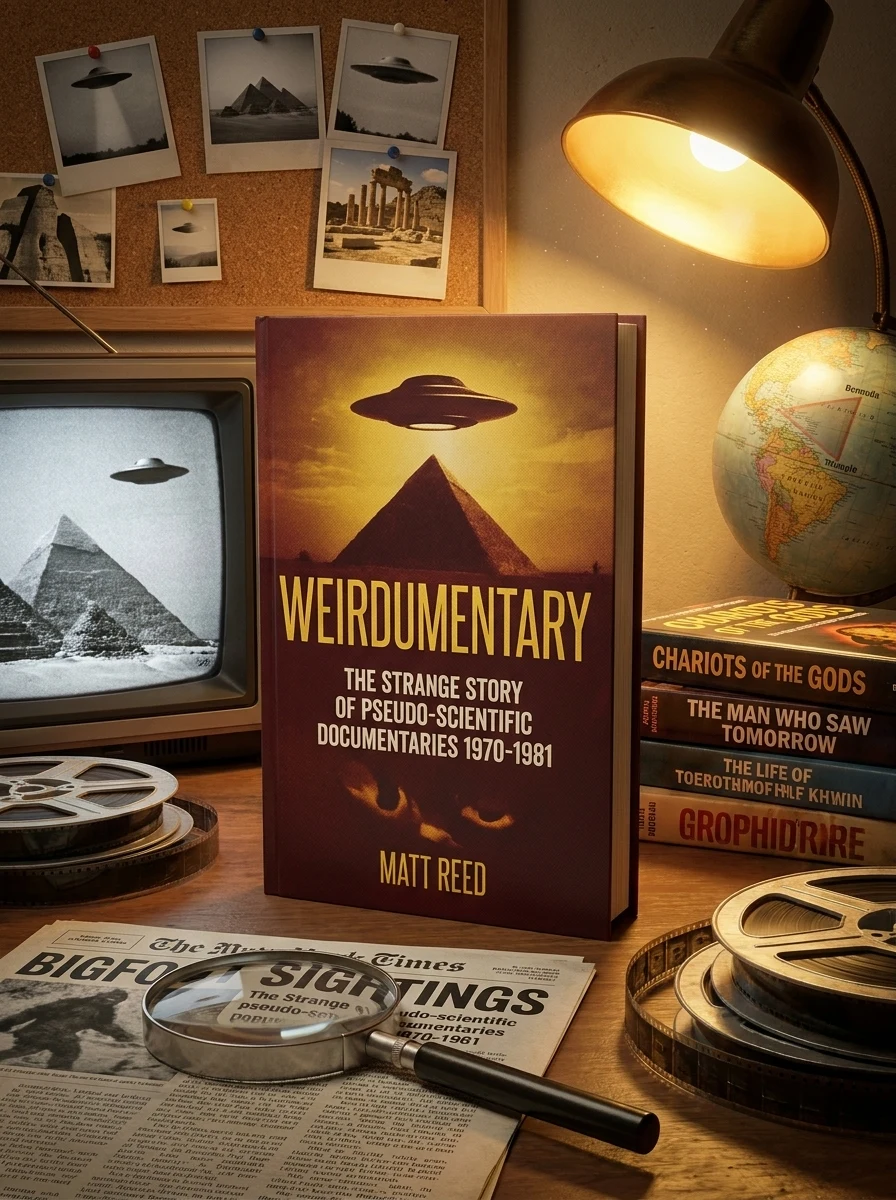

Weirdumentary: Ancient Aliens, Fallacious Prophecies, and Mysterious Monsters from 1970s Documentaries
Gary D. Rhodes unveils the captivating history of "weirdumentaries," a unique film genre that dominated 1970s cinema before its television resurgence. From *Chariots of the Gods* (1970) to *The Man Who Saw Tomorrow* (1981), this volume explores over 45 pseudo-scientific films. These cinematic curiosities, often relying on questionable experts and dramatic reenactments, delved into everything from UFOs and Bigfoot to the Bermuda Triangle. They captivated millions, shaping public perception of the paranormal. Rhodes offers an entertaining, comprehensive look at these influential, often bizarre, cultural artifacts.


📝 Description: Weirdumentary: Ancient Aliens, Fallacious Prophecies, and Mysterious Monsters from 1970s Documentaries
💎 Expert review
📖 Why choose it
Why this book is worth reading
Readers fascinated by the intersection of cinema history and esoteric culture will find this book indispensable. It offers an entertaining, comprehensive look at over forty-five pseudo-scientific films that shaped public perception of the unknown. Gary D. Rhodes provides a captivating history of these cinematic curiosities, detailing how they relied on questionable experts and dramatic reenactments to delve into topics like Bigfoot and the Bermuda Triangle. This work is perfect for those who enjoy analyzing cultural artifacts that fueled widespread fascination with the paranormal, offering insight into how these bizarre media landscapes influenced societal beliefs about UFOs and ancient mysteries.
⭐ Reader reviews
Reader rating
Rhodes delivers a thorough survey of a niche film genre, appealing to enthusiasts of esoteric cinema and pop culture history. The book excels in cataloging the sheer volume of weirdumentaries from the seventies, providing context for their massive cultural impact. However, readers seeking rigorous academic critique or scientific debunking may find the tone too celebratory. It is not suited for those who prefer hard science over cinematic speculation. Instead, it serves as a vibrant tribute to the era's strange spectacles, making it ideal for collectors of occult media history rather than skeptics looking for factual verification.
❓ Frequently asked questions
📖 Who should read this
For devotees of 1970s pop culture, film historians exploring niche genres, or anyone captivated by conspiracy theories, UFOs, and cryptids, this book offers an essential, engaging journey. If you ever wondered about the truth behind those grainy Bigfoot videos, this is for you.
🎯 Key themes and symbolism
1970s Cultural Zeitgeist
This book illuminates the era's fascination with the unexplained, demonstrating how these "weirdumentaries" became wildly popular. They offered audiences a thrilling escape into mysteries both ancient and modern, often with a conspiratorial edge, perfectly capturing the speculative curiosity of the decade.
Pseudoscience on Screen
Rhodes dissects the distinct methodology of these cinematic explorations, which frequently presented sensational claims as fact. He highlights their reliance on dubious "experts," selective evidence, and dramatic, low-budget reconstructions, revealing how they crafted compelling, albeit misleading, narratives around mysterious subjects.
Cataloging the Unexplained
Delve into the vast array of mysterious phenomena that captivated 1970s audiences. From the enigmatic disappearances of the Bermuda Triangle to legendary cryptids like Bigfoot, and from ancient astronaut theories to various paranormal occurrences, the book meticulously catalogs the diverse and often outlandish topics these films tackled.
📜 Historical context
📚 Glossary
- Weirdumentary
- Pseudo-scientific
- Cryptids
📔 Questions to reflect on
- If you watched these films in the 1970s, how did they influence your perception of the unexplained? If not, what modern media fills a similar niche for you today?
- Consider the societal anxieties or hopes of the 1970s. How might these "weirdumentaries" have served as a reflection or an escape from those realities?
- Reflect on the ethical implications of presenting speculative theories as fact. How do these films compare to contemporary discussions around "fake news" or misinformation?