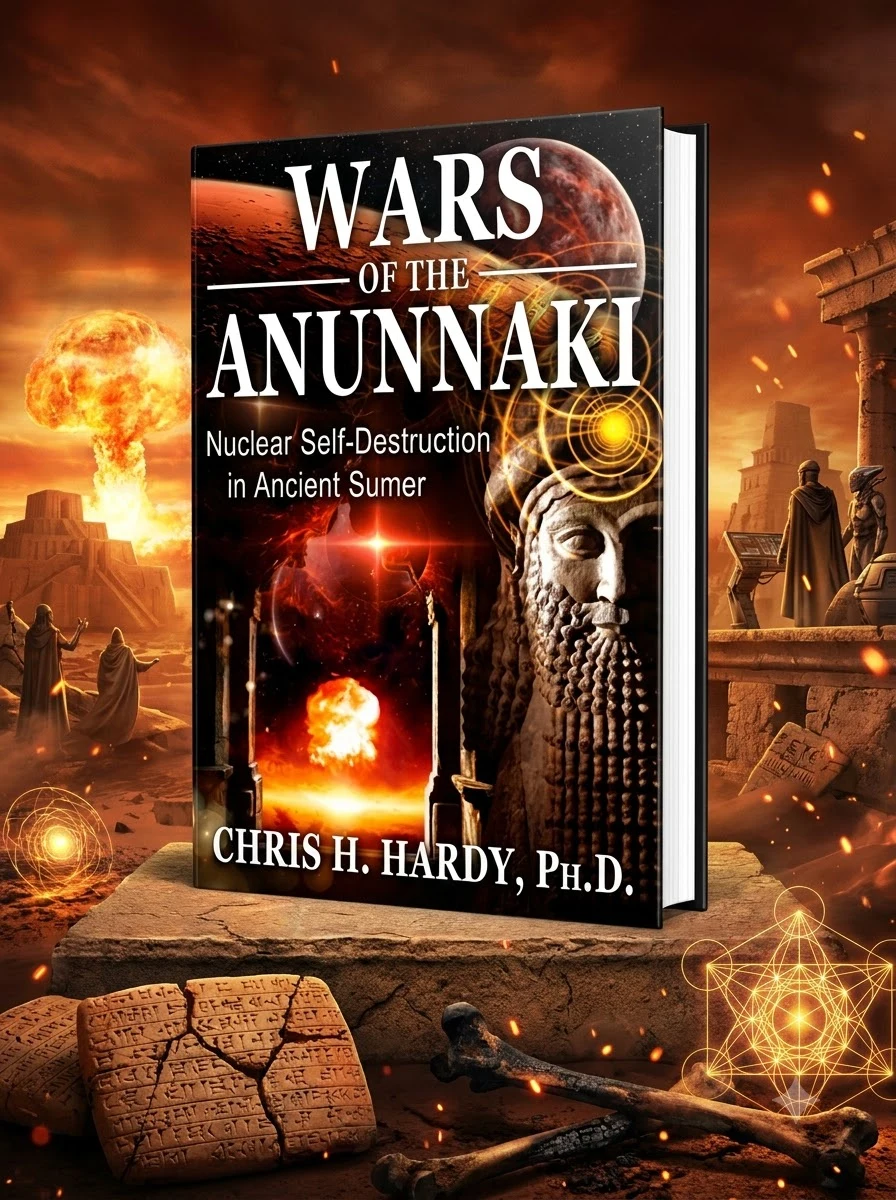
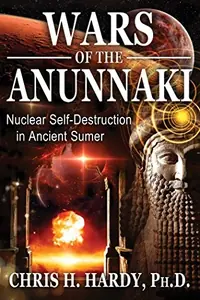
Wars of the Anunnaki: Nuclear Self-Destruction in Ancient Sumer
Hardy, Chris H

This edition can be ordered. No arrival date is confirmed.
Did ancient gods wield nuclear fire, obliterating early human civilizations?
Delve into Chris Hardy's provocative exploration of the Anunnaki, tracing their complex interactions with early humanity and the cataclysmic conflicts that culminated in a devastating nuclear war on Earth. This work meticulously details the motivations behind the Anunnaki's decision to unleash atomic weapons on five cities in the Jordan plain, irrevocably erasing Sumerian civilization. Hardy synthesizes controversial research, including Sitchin's theories, biblical narratives, ancient cuneiform, and anomalous archaeological findings like radioactive skeletal remains, to reconstruct a forgotten history.
This work resides firmly within the modern esoteric tradition of ancient astronaut theory and alternative history, blending pseudoscientific interpretation with mythological analysis. It aligns with literature that reinterprets Sumerian cuneiform through a speculative lens to propose controversial origins for human civilization.


📝 Description: Wars of the Anunnaki: Nuclear Self-Destruction in Ancient Sumer
💎 Expert review
📖 Why choose it
Why this book is worth reading
Readers fascinated by the intersection of mythology, archaeology, and speculative science will find this book compelling. Chris Hardy offers a provocative narrative that challenges conventional historical understanding by suggesting ancient gods wielded nuclear weapons. Those intrigued by the mysteries of Sumerian civilization and the potential for lost technological eras will appreciate the synthesis of biblical narratives and anomalous archaeological findings. It appeals to those who enjoy exploring controversial theories about human origins and catastrophic events in antiquity, providing a unique perspective on how early civilizations might have been destroyed.
⭐ Reader reviews
Reader rating
Hardy presents a bold, albeit controversial, thesis that merges Sitchin’s theories with nuclear history. While the narrative is engaging for enthusiasts of alternative archaeology, it lacks rigorous academic scrutiny and relies heavily on speculative interpretation of cuneiform texts. Skeptics or readers seeking peer-reviewed historical analysis will likely find the claims unsubstantiated and frustrating. The book is best suited for those already open to non-mainstream explanations of ancient history who enjoy dramatic reconstructions of past cataclysms rather than factual documentation.
❓ Frequently asked questions
📖 Who should read this
For seekers intrigued by ancient mysteries, alternative histories, and extraterrestrial intervention in human development. If you question conventional narratives about civilization's origins and are open to radical theories supported by diverse evidence, this deep dive into the Anunnaki's legacy will undoubtedly provoke and fascinate.
🎯 Key themes and symbolism
Ancient Nuclear Cataclysm
Hardy meticulously reconstructs the horrific events leading to an ancient atomic war. He presents evidence suggesting that not only did advanced beings orchestrate this conflict, but their destructive power fundamentally reshaped Earth's early civilizations, particularly the Sumerians, leaving behind a legacy of obliteration often misinterpreted or forgotten by modern historians.
Anunnaki & Human Origins
This book explores the contentious relationship between the Anunnaki and humanity, positing that these extraterrestrial entities profoundly influenced early human development and societal structures. It examines their technological prowess, ethical shortcomings, and the profound impact their presence—and eventual conflict—had on the trajectory of human civilization, from genetic manipulation to cultural foundations.
Unconventional Historical Evidence
Hardy challenges mainstream historical narratives by integrating diverse and often-dismissed sources. From Zecharia Sitchin's interpretations of Sumerian texts and the Book of Genesis to archaeological discoveries like ancient radioactive skeletons, the book champions a multidisciplinary approach to uncover suppressed truths about antiquity, suggesting a sophisticated, yet self-destructive, past.
💬 Quotes from the book
“The echoes of nuclear fire, once dismissed as myth, resonate through the very dust of Sumer, demanding a re-evaluation of our most ancient historical foundations.”
“Their technological prowess was undeniable, yet the Anunnaki's moral compass, their 'higher consciousness,' was tragically underdeveloped, leading to self-destruction on an epic scale.”
📜 Historical context
📚 Glossary
- Anunnaki
- Sumerian Civilization
- Nibiru
📔 Questions to reflect on
- If ancient civilizations were indeed obliterated by advanced, non-human entities, how might this knowledge change our understanding of human history and our place in the cosmos?
- Consider the concept of "gods" as advanced extraterrestrial beings. What implications does this have for religious belief systems and the search for spiritual meaning?
- The book suggests advanced technology without "higher consciousness" leads to self-destruction. How might this apply to contemporary society and our own technological advancements?
✍️ More books by this author Hardy, Chris H
All books by this author →
🏛 Books from this publisher Bear & Company
All books from this publisher →
You might also like
See more →