US shipping Secure card payment Occult and esoteric books

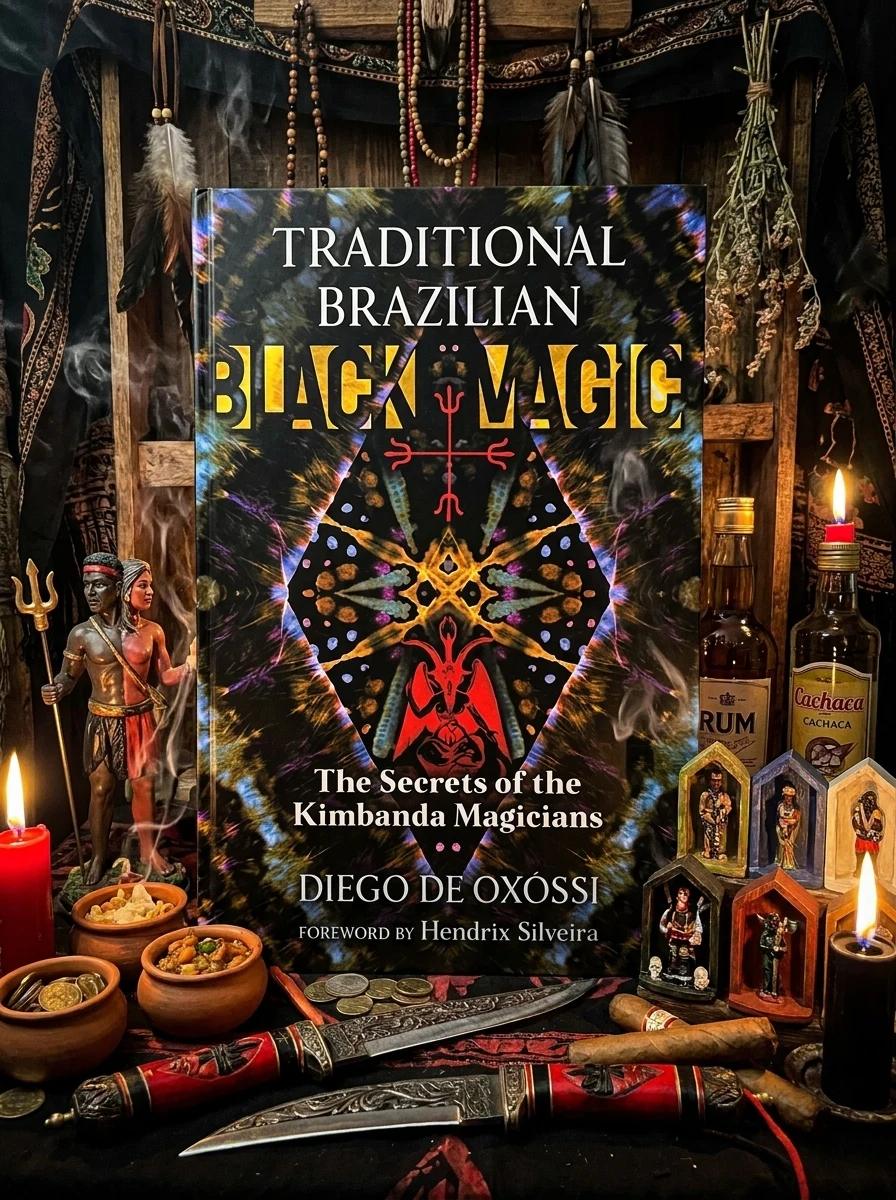
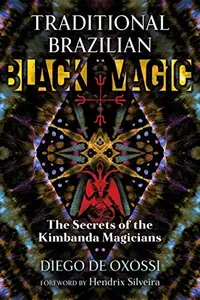
Traditional Brazilian Black Magic: The Secrets of the Kimbanda Magicians

de Oxóssi, Diego; , Silveira, Hendrix
Reader rating
4.6
(1 reviews) 169 sold
Availability to be confirmed

This edition can be ordered. No arrival date is confirmed.

📚 ABOUT THE BOOK

Unveil the complex, often misunderstood world of Brazilian Kimbanda magic.

Delve into the intricate history and spiritual practices of Kimbanda, the Afro-Brazilian tradition often mislabeled as 'black magic.' This book meticulously traces its origins from 17th-century slavery through its modern evolution, revealing how Kimbanda embraces life's full spectrum through the veneration of Eshu and Pombajira. Explore its unique cosmology, initiation rituals, sacred tools, and the profound philosophy that views divinity as inherently dualistic, mirroring the human soul's complex tapestry of virtues and vices.

Key themes
Duality in Divinity Kimbanda Practices Revealed Reclaiming a Tradition
Historical context

This text situates the Afro-Brazilian tradition of Kimbanda within its historical lineage, tracing its evolution from the era of 17th-century slavery to its contemporary spiritual practices. It serves as a scholarly bridge between colonial history and modern esoteric philosophy regarding the duality of the divine.

Difficulty
●●● Demanding
Fans will love it
Works on Afro-diasporic religions · Scholarly texts on syncretic magic · Anthropological studies of Brazilian spirituality · Comparative mythology collections
🕯️ Occult Philosophy
🏛 Destiny Books 📅 2021 📖 128 pages 📔 Paperback 📐 Paperback ISBN: 9781644112267
Fun fact
This is an indispensable guide for anyone seeking a genuine, scholarly, yet accessible understanding of Kimbanda. It masterfully demystifies a tradition frequently obscured by prejudice, offering historical depth and practical insight without sensationalism. While it might disappoint those seeking a superficial or 'how-to' guide for quick spells, it will profoundly satisfy serious students of Afro-Brazilian religions and the occult. A truly vital contribution to the field, challenging misconceptions and celebrating a rich spiritual heritage.

📝 Description: Traditional Brazilian Black Magic: The Secrets of the Kimbanda Magicians

A guide to the history and practice of Kimbanda, the black magic tradition of Brazil - Explains how Kimbanda's presiding deity Eshu embodies both masculine and feminine principles, both god and devil, and thus represents human nature itself with all its vices and virtues - Discusses Kimbanda's magical practices, initiation rites, sacred knives, and sacrificial offerings - Details the seven realms and the entities that inhabit and govern each of them Although it has been demonized as a form of Satanic cult, Kimbanda--the tradition of Afro-Brazilian black magic--is a spiritual practice that embraces both the light and dark aspects of life through worship of the entities known as Eshu and Pombajira. Exploring the history and practice of Kimbanda, also known as Quimbanda, Diego de Oxóssi builds a timeline from the emergence of Afro-Brazilian religions in the 17th century when African slaves were first brought to Brazil, through the development of Orisha cults and the formation of Candomblé, Batuque, Macumba, and Umbanda religious practices, to the modern codification of Kimbanda by Mãe Ieda do Ogum in the 1960s. He explains how Kimbanda's presiding deity Eshu Mayoral embodies both masculine and feminine principles, both god and devil, and thus represents human nature itself with all its vices and virtues. Discussing the magical practices, initiation rites, and spiritual landscape of Kimbanda, the author explains how there are seven realms, each with nine dominions, and he discusses the entities that inhabit and govern each of them. The author explores spirit possession and Kimbanda's sacrificial practices, which are performed in order to honor and obtain the blessing of the entities of the seven realms. He discusses the sacred knives of the practice and the role each plays in it. He also explores the 16 zimba symbols and sigils used to attract the spirits most apt to realizing the magician's will as well as traditional enchantment songs to summon and work with those spirits. Offering an accessible guide to Kimbanda, the author shows that this religion of the people is popular because it recognizes the dark and light sides of human morality and provides a way to interact with the deities to produce direct results. DIEGO DE OXÓSSI is a Chief of Kimbanda and Orishas Priest. For more than 20 years he has been researching and presenting courses, lectures, and workshops on pagan and African-Brazilian religions. He writes a weekly column at CoreSpirit.com and is the publisher at Arole Cultural. He lives in São Paulo, Brazil.

💎 Expert review

💎
Esoterica Books editorial team
Occult literature desk
This volume provides a necessary corrective to common misconceptions surrounding Kimbanda, offering a rigorous examination of its dualistic philosophy and historical roots. However, it is not suited for casual readers seeking quick spells or simple entertainment; the text demands patience with its academic tone and complex cosmological explanations. Those expecting a sensationalist guide to 'dark arts' will likely find the focus on spiritual duality and historical context dry or overly scholarly. It is best reserved for serious students of esoteric history who appreciate nuanced discussions on how slavery shaped modern spiritual practices. The authors succeed in demystifying the tradition, but the density of information requires a dedicated reader willing to engage with deep philosophical concepts rather than superficial allure.
✓ EDITOR'S REVIEW

📖 Why choose it

📖

Why this book is worth reading

Readers seeking to move beyond superficial stereotypes will find immense value in this meticulous exploration of Kimbanda’s true nature. It is essential for those who recognize that the label 'black magic' often obscures profound spiritual depth and historical resilience. By understanding the veneration of Eshu and Pombajira, readers gain insight into a cosmology that embraces life's full spectrum rather than rejecting it. This book offers a respectful, detailed look at initiation rituals and sacred tools, providing context for those interested in how divinity mirrors the human soul’s complex tapestry of virtues and vices. It is a vital resource for anyone wishing to appreciate the intricate history and philosophical underpinnings of this often-misunderstood tradition without judgment or bias.

⭐ Reader reviews

The starting rating comes from the team Esoterica Books —
⭐ Esoterica editorial review Editorial rating 4.6/5
★★★★
For those genuinely seeking to understand Afro-Brazilian spiritual traditions beyond sensationalism, this book offers an invaluable, authoritative guide. If you are a student of occult history or a practitioner curious about the profound depths of Kimbanda, this is an essential addition to your…

Reader rating

4.6
Based on 1 reviews
5
0
4
1
3
0
2
0
1
0
E
Esoterica Books editorial team

This volume provides a necessary corrective to common misconceptions surrounding Kimbanda, offering a rigorous examination of its dualistic philosophy and historical roots. However, it is not suited for casual readers seeking quick spells or simple entertainment; the text demands patience with its academic tone and complex cosmological explanations. Those expecting a sensationalist guide to 'dark arts' will likely find the focus on spiritual duality and historical context dry or overly scholarly. It is best reserved for serious students of esoteric history who appreciate nuanced discussions on how slavery shaped modern spiritual practices. The authors succeed in demystifying the tradition, but the density of information requires a dedicated reader willing to engage with deep philosophical concepts rather than superficial allure.

❓ Frequently asked questions

No. The book clarifies that while often demonized, Kimbanda is a complex spiritual system that embraces life's full spectrum, including both light and dark aspects, through its unique deities and practices, not a 'Satanic cult.'
Eshu and Pombajira are central deities in Kimbanda, representing the multifaceted nature of existence. Eshu embodies both masculine and feminine principles, mirroring human nature with its virtues and vices, acting as a crucial intermediary between realms.

📖 Who should read this

For those genuinely seeking to understand Afro-Brazilian spiritual traditions beyond sensationalism, this book offers an invaluable, authoritative guide. If you are a student of occult history or a practitioner curious about the profound depths of Kimbanda, this is an essential addition to your library.

🎯 Key themes and symbolism

Duality in Divinity

The text illuminates how Kimbanda's primary deity, Eshu, embodies both masculine and feminine principles, representing the intertwined forces of creation and destruction, virtue and vice. This profound concept challenges simplistic moral binaries, offering a spiritual framework that acknowledges and integrates the full breadth of human experience and the cosmos.

Kimbanda Practices Revealed

Readers will gain insight into the specific rituals and traditions that define Kimbanda. This includes a detailed look at its initiation rites, the significance of sacred knives in its ceremonies, the role of sacrificial offerings, and an exploration of the seven distinct spiritual realms and the powerful entities that preside over each of them.

Reclaiming a Tradition

This book serves as a vital corrective to the historical demonization of Kimbanda, often mischaracterized as a Satanic cult. It meticulously presents Kimbanda as a legitimate spiritual path rooted in Afro-Brazilian heritage, emphasizing its embrace of life's light and dark aspects through the reverent worship of Eshu and Pombajira, fostering a deeper, more accurate understanding.

💬 Quotes from the book

“To truly comprehend Eshu is to confront the multifaceted nature of existence itself, where light and shadow dance in perpetual, necessary embrace.”

“The sacred knife is not merely a tool, but a conduit of power, a focused intention, and a bridge between the seen and unseen worlds in our rites.”

📜 Historical context

This essential work charts Kimbanda's journey from the arrival of enslaved Africans in Brazil during the 17th century. It details the emergence of Orisha cults, Candomblé, and Umbanda, demonstrating how Kimbanda forged its distinct identity within these spiritual currents, culminating in its formal codification by Mãe Ieda do Ogum in the 1960s. It’s a vital chronicle of resilience and adaptation.

📚 Glossary

Kimbanda
Eshu
Pombajira

📔 Questions to reflect on

  1. Reflect on a personal experience where you recognized the interplay of 'light' and 'shadow' within yourself or a situation. How does this resonate with Kimbanda's embrace of duality?
  2. Consider a spiritual or cultural tradition that is often misunderstood or demonized. What steps can be taken to foster a more accurate and respectful understanding of it?
  3. How do you view the role of ritual or offerings in connecting with spiritual forces or manifesting intentions in your own life or beliefs?

🏛 Books from this publisher Destiny Books

All books from this publisher →

You might also like

See more →


Cover unavailablePyramid PowerToth, Max; , Nielsen, Greg Pyramid Power
Toth, Max; , Nielsen, Greg
Pyramid Power
$15.00
91