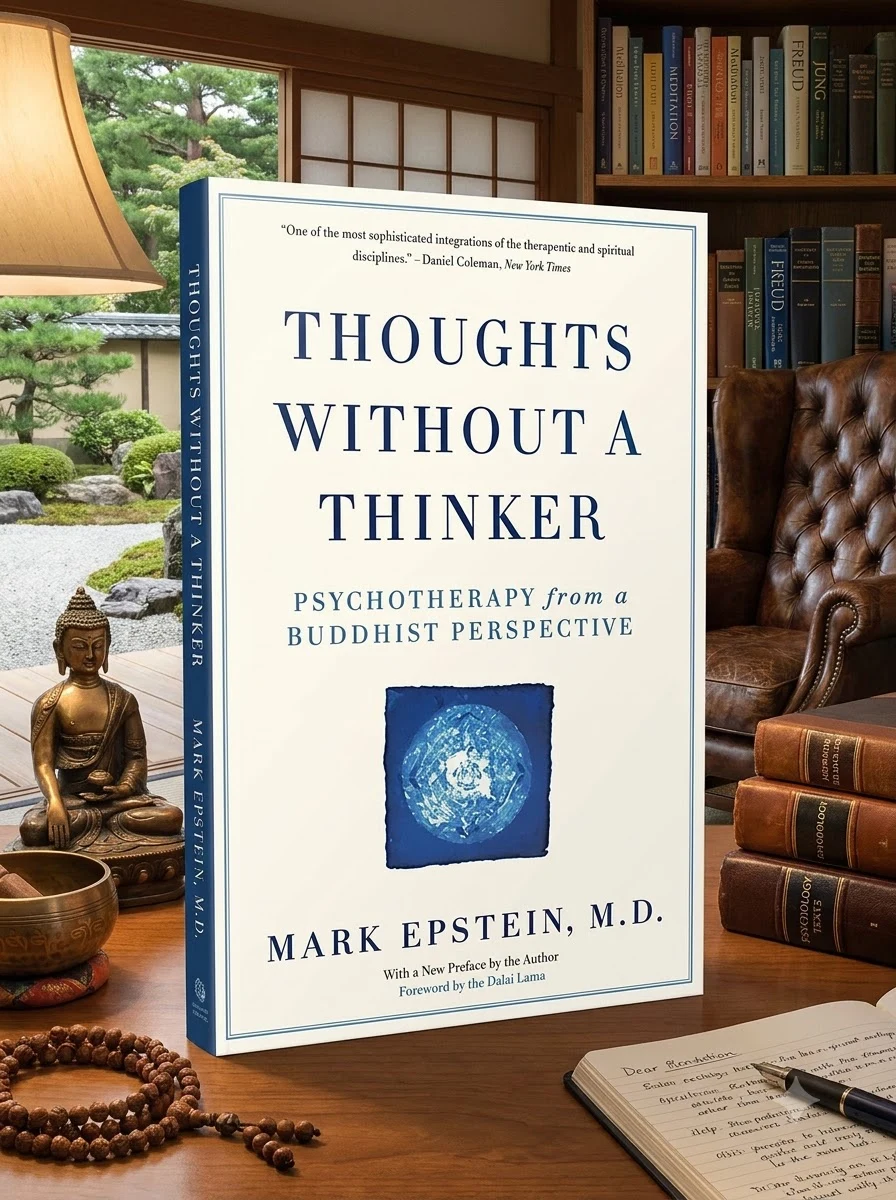
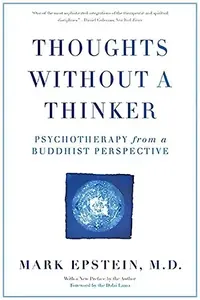
Thoughts Without a Thinker: Psychotherapy from a Buddhist Perspective (Revised)


Stock reported in the catalog; fulfillment is confirmed with your request.
Unravel the illusion of self and discover profound emotional liberation through ancient wisdom and modern insight.
Mark Epstein, a distinguished psychiatrist, presents a profound integration of contemplative Buddhist philosophy with the practices of Western psychotherapy. This seminal work explores how our deeply ingrained concept of a fixed "self" often fuels emotional distress. Epstein meticulously illustrates how both traditions, when interwoven, can illuminate the path to dismantling this illusory construct. By loosening our tenacious grip on self-identity, readers are guided towards a more authentic experience of joy and freedom, offering a transformative blueprint for emotional well-being.
This work sits at the intersection of contemporary contemplative Buddhism and modern clinical psychology, reflecting the late twentieth-century trend of integrating Eastern spiritual practices with Western mental health frameworks.


📝 Description: Thoughts Without a Thinker: Psychotherapy from a Buddhist Perspective (Revised)
💎 Expert review
📖 Why choose it
Why this book is worth reading
Readers seeking to understand the roots of their emotional distress will find this book profoundly liberating. It is ideal for those interested in how ancient Buddhist wisdom can inform modern psychiatric practice, offering a unique lens through which to view the self. Anyone feeling trapped by rigid identity constructs or struggling with the illusion of a fixed ego will benefit from Epstein’s compassionate guidance. The text provides a transformative blueprint for emotional well-being, helping individuals loosen their grip on self-identity to discover authentic joy and freedom. It bridges the gap between clinical insight and spiritual awakening, making it essential for seekers of holistic healing.
⭐ Reader reviews
Reader rating
Epstein skillfully weaves together psychiatric expertise and Buddhist philosophy to challenge the notion of a fixed self. While intellectually stimulating, this book may not suit readers seeking quick fixes or those uninterested in theoretical discussions about identity. It requires patience with abstract concepts rather than practical, step-by-step exercises. Readers who prefer empirical data over contemplative insight might find the integration of these two distinct traditions too speculative. However, for those open to exploring the illusory nature of ego and its impact on mental health, it offers a compelling, albeit dense, exploration of emotional liberation through the dismantling of ingrained self-concepts.
❓ Frequently asked questions
📖 Who should read this
If you're seeking a sophisticated yet accessible guide to integrating spiritual practice with psychological healing, this book is for you. It offers profound insights for therapists, meditators, and anyone grappling with self and emotional suffering, providing tools for deep transformation.
🎯 Key themes and symbolism
The Illusory Self
Epstein delves into the Buddhist concept of anatman, or no-self, demonstrating how our habitual identification with a separate, permanent self is a primary source of suffering. He shows how psychotherapy can help individuals recognize and gradually disengage from this deeply ingrained, yet ultimately false, construct, leading to greater mental spaciousness.
East Meets West Therapy
This book masterfully bridges the contemplative wisdom of Buddhism with the practical therapeutic approaches of Western psychology. Epstein reveals how principles like mindfulness and compassion, central to Buddhist practice, can be seamlessly integrated into psychotherapeutic frameworks to foster profound emotional healing and a more robust understanding of the human psyche.
Path to Emotional Freedom
Beyond intellectual understanding, Epstein offers a tangible roadmap for transforming emotional suffering into genuine joy. By applying insights from both traditions, readers learn to observe thoughts and feelings without attachment, thereby reducing their reactive power. This process cultivates inner resilience and unlocks a more liberated, fulfilling emotional landscape.
💬 Quotes from the book
“True freedom emerges not from perfecting the self, but from recognizing its fundamental lack of inherent existence. This insight alone can dissolve mountains of suffering.”
“Our thoughts, like clouds, drift across the sky of consciousness. We suffer when we mistakenly believe ourselves to be the clouds, rather than the boundless sky itself.”
📜 Historical context
📚 Glossary
- Mindfulness
- Anatta (No-Self)
- Illusion of Self
📔 Questions to reflect on
- Reflect on a recent emotional struggle. How might the belief in a fixed "self" have contributed to your experience of it?
- Consider a moment of profound joy. Was your sense of self-identity particularly strong or diffuse during that experience?
- How might approaching your thoughts as "without a thinker" change your relationship to anxiety or self-judgment?
🏛 Books from this publisher Basic Books
All books from this publisher →


You might also like
See more →