US shipping Secure card payment Occult and esoteric books

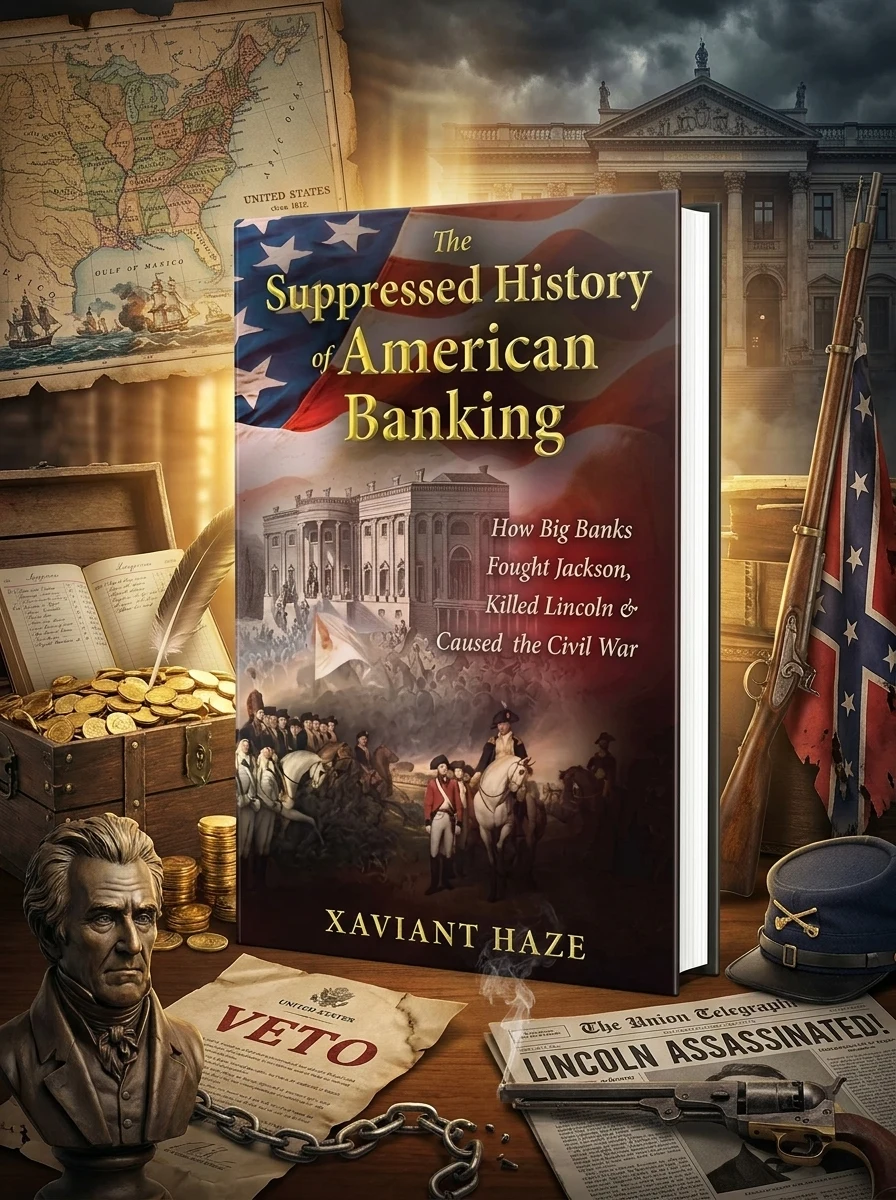
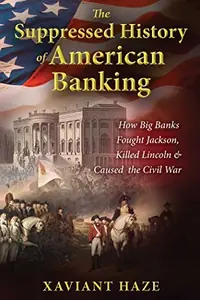
The Suppressed History of American Banking: How Big Banks Fought Jackson, Killed Lincoln, and Caused the Civil War

Haze, Xaviant
Reader rating
4.4
(1 reviews) 167 sold
In stock

Stock reported in the catalog; fulfillment is confirmed with your request.

📚 ABOUT THE BOOK

Uncover the shadowy banking cabal that shaped American history through conflict and intrigue.

Delve into a startling reinterpretation of 19th-century American history, exposing the persistent influence of a powerful banking dynasty. This provocative work traces the Rothschild family's alleged role from instigating the War of 1812 to Andrew Jackson's fierce opposition to central banks, ultimately connecting their machinations to the very outbreak of the Civil War and the tragic demise of Abraham Lincoln. Discover a hidden narrative linking financial power to pivotal national events, challenging conventional understandings of American sovereignty and destiny.

Key themes
Presidential Battles Against Banks Unveiling Hidden American History
Historical context

This title firmly resides within the esoteric and alternative history tradition, specifically aligning with occult-philosophy shelving where hidden narratives of power are explored. It reflects a genre that seeks to uncover suppressed truths about historical events through the lens of financial and cabalistic influence.


Difficulty
●● Moderate
Fans will love it
Alternative history enthusiasts · Readers interested in banking conspiracies · Fans of esoteric political analysis
🕯️ Occult Philosophy
🏛 Bear & Company 📅 2016 📖 240 pages 📔 Paperback 📐 Paperback ISBN: 9781591432333
Fun fact
Xaviant Haze delivers a relentlessly provocative narrative, masterfully weaving a compelling, if controversial, tapestry of hidden financial influence. This book excels at igniting critical thought and offering a radical reinterpretation of American history. While it may frustrate those seeking traditional academic rigor, it will undoubtedly thrill readers eager to explore the shadowy undercurrents of power. It firmly establishes itself within the tradition of alternative historical inquiry.

📝 Description: The Suppressed History of American Banking: How Big Banks Fought Jackson, Killed Lincoln, and Caused the Civil War

Reveals how the Rothschild Banking Dynasty fomented war and assassination attempts on 4 presidents in order to create the Federal Reserve Bank - Explains how the Rothschild family began the War of 1812 because Congress failed to renew a 20-year charter for their Central Bank as well as how the ensuing debt of the war forced Congress to renew the charter - Details Andrew Jackson's anti-bank presidential campaigns, his war on Rothschild agents within the government, and his successful defeat of the Central Bank - Reveals how the Rothschilds spurred the Civil War and were behind the assassination of Lincoln In this startling investigation into the suppressed history of America in the 1800s, Xaviant Haze reveals how the powerful Rothschild banking family and the Central Banking System, now known as the Federal Reserve Bank, provide a continuous thread of connection between the War of 1812, the Civil War, the financial crises of the 1800s, and assassination attempts on Presidents Jackson and Lincoln. The author reveals how the War of 1812 began after Congress failed to renew a 20-year charter for the Central Bank. After the war, the ensuing debt forced Congress to grant the central banking scheme another 20-year charter. The author explains how this spurred General Andrew Jackson--fed up with the central bank system and Nathan Rothschild's control of Congress--to enter politics and become president in 1828. Citing the financial crises engineered by the banks, Jackson spent his first term weeding out Rothschild agents from the government. After being re-elected to a 2nd term with the slogan "Jackson and No Bank," he became the only president to ever pay off the national debt. When the Central Bank's charter came up for renewal in 1836, he successfully rallied Congress to vote against it. The author explains how, after failing to regain their power politically, the Rothschilds plunged the country into Civil War. He shows how Lincoln created a system allowing the U. S. to furnish its own money, without need for a Central Bank, and how this led to his assassination by a Rothschild agent. With Lincoln out of the picture, the Rothschilds were able to wipe out his prosperous monetary system, which plunged the country into high unemployment and recession and laid the foundation for the later formation of the Federal Reserve Bank--a banking scheme still in place in America today.

💎 Expert review

💎
Esoterica Books editorial team
Occult literature desk
While the narrative offers a bold challenge to conventional American history, it is strictly for readers open to esoteric interpretations of financial influence. Those expecting rigorous academic historiography or verified primary source documentation will likely find this work unsatisfying and overly speculative. It does not suit skeptics who demand traditional evidentiary standards over thematic connection. However, for those comfortable with the occult-philosophy framework, it presents a coherent, if controversial, alternative view. The book succeeds in its aim to provoke thought about banking power but fails as objective history. Readers must approach it as speculative philosophy rather than factual record.
✓ EDITOR'S REVIEW

📖 Why choose it

📖

Why this book is worth reading

This book is designed for the intellectually curious reader who suspects that mainstream historical accounts omit crucial details about power dynamics. It offers a compelling, albeit provocative, reinterpretation of American history, inviting you to explore the alleged influence of the Rothschild family on pivotal events like the Civil War and Lincoln's assassination. If you enjoy uncovering shadowy connections between financial dynasties and national sovereignty, this work provides a startling narrative that challenges conventional understanding. It is ideal for those seeking to understand how banking power may have shaped destiny through conflict and intrigue, offering a hidden perspective on the nation's past.

⭐ Reader reviews

The starting rating comes from the team Esoterica Books —
⭐ Esoterica editorial review Editorial rating 4.5/5
★★★★
If you suspect official histories often conceal deeper truths, or if you're drawn to narratives of hidden power structures influencing global events, this book is for you. Prepare to reconsider everything you thought you knew about American financial and political development.

Reader rating

4.4
Based on 1 reviews
5
0
4
1
3
0
2
0
1
0
E
Esoterica Books editorial team

While the narrative offers a bold challenge to conventional American history, it is strictly for readers open to esoteric interpretations of financial influence. Those expecting rigorous academic historiography or verified primary source documentation will likely find this work unsatisfying and overly speculative. It does not suit skeptics who demand traditional evidentiary standards over thematic connection. However, for those comfortable with the occult-philosophy framework, it presents a coherent, if controversial, alternative view. The book succeeds in its aim to provoke thought about banking power but fails as objective history. Readers must approach it as speculative philosophy rather than factual record.

❓ Frequently asked questions

While presenting a highly controversial perspective, the author aims to support claims with historical details, inviting readers to critically re-evaluate established narratives rather than dismissing them outright.
The central thesis posits that the Rothschild banking family systematically orchestrated wars and political crises throughout the 19th century to establish and maintain a powerful central banking system in the United States.

📖 Who should read this

If you suspect official histories often conceal deeper truths, or if you're drawn to narratives of hidden power structures influencing global events, this book is for you. Prepare to reconsider everything you thought you knew about American financial and political development.

🎯 Key themes and symbolism

Presidential Battles Against Banks

Explore the courageous, yet ultimately tragic, struggles of American presidents like Andrew Jackson and Abraham Lincoln against the encroaching influence of private central banks. The narrative portrays their valiant efforts to preserve national financial independence as direct clashes with powerful, hidden economic forces determined to shape the nation's destiny.

Unveiling Hidden American History

The author challenges mainstream historical accounts, presenting an alternative perspective that reveals a continuous, covert thread woven through significant 19th-century events. This work invites readers to question established truths and reconsider the underlying motivations behind pivotal moments, suggesting a deeper, more conspiratorial layer to American development.

💬 Quotes from the book

“Behind every seemingly random act of national tragedy, one finds the cold, calculating hand of financial ambition orchestrating the grand design.”

“The battle for America's soul was fought not on battlefields, but in the clandestine halls where bankers pulled the strings of presidents and parliaments alike.”

📜 Historical context

This work aligns with a long tradition of revisionist historical inquiry, particularly within esoteric circles, that seeks to expose hidden hands behind major world events. It echoes earlier critiques of financial power, drawing parallels with secret societies and power brokers who, it's argued, manipulate global affairs for their own ends, often through financial control.

📚 Glossary

Rothschild Dynasty
Central Bank
Federal Reserve Bank

📔 Questions to reflect on

  1. How might our understanding of American democracy change if powerful, unelected financial entities consistently shaped its trajectory?
  2. What historical events, beyond those mentioned, might also be reinterpreted through the lens of covert financial manipulation?
  3. Consider the implications of a hidden power struggle for national sovereignty. How does this resonate with contemporary global power dynamics?

🏛 Books from this publisher Bear & Company

All books from this publisher →
You might also like

See more →