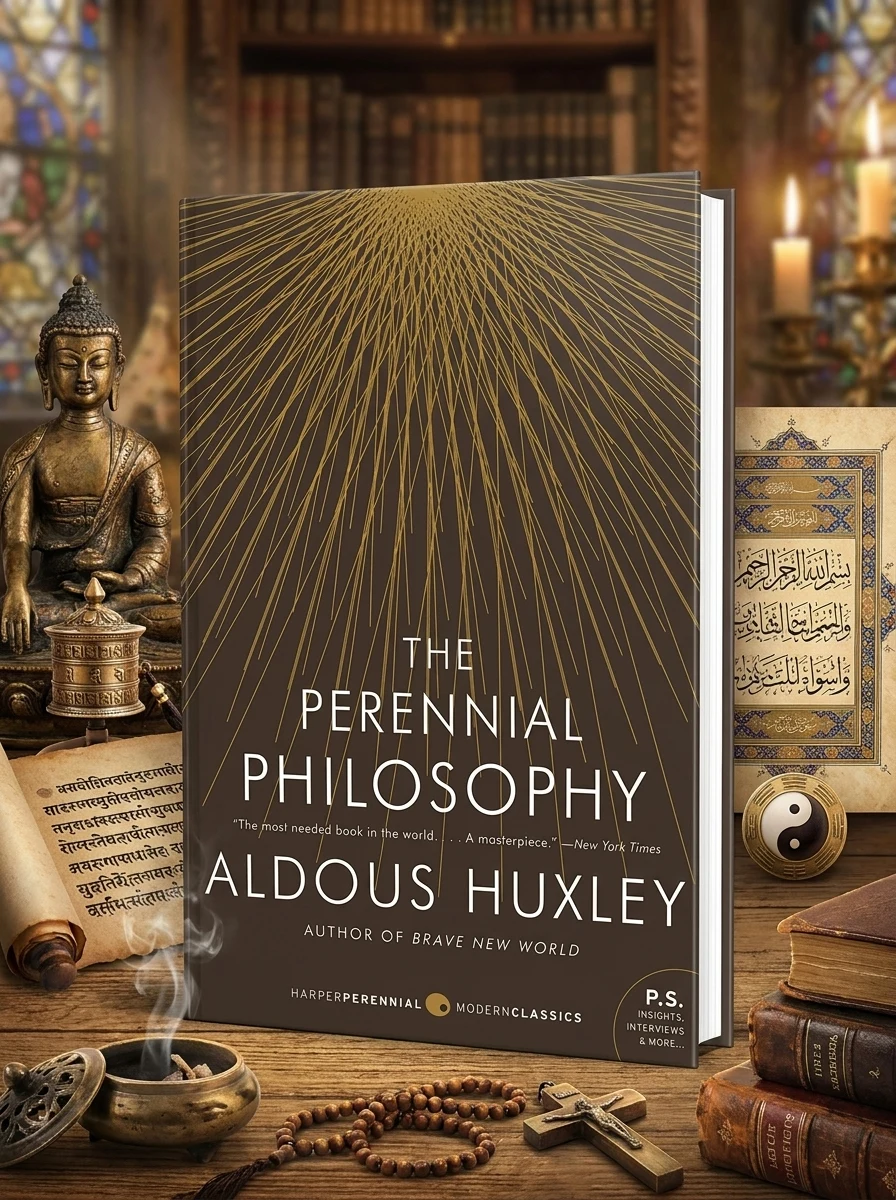
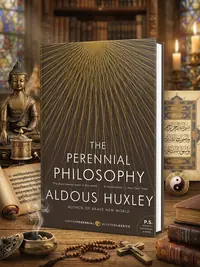
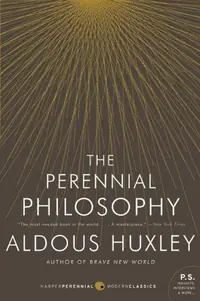
The Perennial Philosophy
Huxley, Aldous

Stock reported in the catalog; fulfillment is confirmed with your request.
Unearth the universal spiritual truths woven through humanity's diverse wisdom traditions.
Aldous Huxley masterfully compiles and synthesizes the core principles of what he terms the "Perennial Philosophy." This seminal work posits that a fundamental divine reality, accessible through direct mystical experience, underpins all major spiritual paths across cultures and ages. Drawing from an astonishing breadth of Eastern and Western thought—from Zen to Christian mysticism, Hinduism to Islam—Huxley illuminates the common aspiration for transcendence and the shared insights into the nature of ultimate truth, offering a unified perspective on humanity's spiritual quest.
Aldous Huxley synthesizes the core principles of the Perennial Philosophy, positing that a fundamental divine reality underpins all major spiritual paths across cultures and ages. This seminal work unites Eastern and Western thought, from Zen to Christian mysticism, into a unified perspective on humanity's spiritual quest.


📝 Description: The Perennial Philosophy
💎 Expert review
📖 Why choose it
Why this book is worth reading
Readers seeking the universal spiritual truths woven through humanity's diverse wisdom traditions will find profound resonance in this text. Huxley masterfully compiles insights from an astonishing breadth of thought, revealing the common aspiration for transcendence shared by Hindus, Muslims, Christians, and Zen practitioners alike. It offers a unified perspective on the nature of ultimate truth, making it ideal for those curious about the underlying unity of global mysticism. If you desire to understand the direct mystical experience accessible across ages, this book illuminates the shared insights into divine reality. It serves as a compass for anyone wishing to explore the perennial philosophy that connects disparate spiritual paths into one coherent whole.
⭐ Reader reviews
Reader rating
This volume stands as a monumental synthesis of global esotericism, yet it demands an open mind regarding doctrinal specifics. Huxley’s approach is comparative rather than dogmatic, focusing on the experiential core of mysticism over institutional theology. While this broad scope creates a rich tapestry of shared spiritual insights, it may alienate readers seeking strict adherence to a single religious tradition or those skeptical of syncretism. It is not for those who prefer sectarian exclusivity. However, for the intellectually curious seeker, it provides an unparalleled map of the mystical landscape. The work is dense with references but ultimately rewarding for those willing to look beyond surface differences to find the common root of human spiritual aspiration.
❓ Frequently asked questions
📖 Who should read this
If you seek the common thread binding the world’s great spiritual traditions, or yearn for a deeper, unified understanding of the divine, this foundational text offers profound insights and a rich tapestry of wisdom. It's essential reading for anyone interested in comparative religion or mystical philosophy.
🎯 Key themes and symbolism
Universal Spiritual Truths
Huxley meticulously demonstrates how core spiritual insights consistently emerge across diverse cultures and historical periods. He argues that fundamental wisdom regarding the divine and human nature is not exclusive to any single faith but is a recurring theme, pointing to a shared underlying reality accessible to all seekers.
Direct Mystical Experience
The book places significant emphasis on the unmediated, intuitive experience of ultimate reality as the apex of spiritual endeavor. Huxley explores how various traditions, despite their differing rituals and doctrines, converge on the idea that true understanding comes from a direct apprehension of the divine, transcending intellectual dogma.
Comparative Wisdom Traditions
This work is a profound exercise in comparative religion, bringing together voices from Christianity, Buddhism, Hinduism, Taoism, and Islam. By presenting passages from figures like Rumi, Meister Eckhart, and Lao Tzu alongside texts such as the Bhagavad Gita, Huxley reveals a harmonious chorus of spiritual understanding.
💬 Quotes from the book
“Across all ages and cultures, among diverse peoples, the 'Perennial Philosophy' arises, finding its most complete expression within the world's higher spiritual paths.”
“The yearning for a direct apprehension of the divine, a transcendence of the ego, forms the silent, unifying current beneath the diverse expressions of sacred tradition.”
📜 Historical context
📚 Glossary
- Perennial Philosophy
- Mysticism
- Divine Reality
📔 Questions to reflect on
- Consider a spiritual teaching from your own tradition or one you are familiar with. How does it echo themes found in other faiths as described by Huxley?
- Huxley suggests a 'divine reality' common to all. What implications does this have for interfaith dialogue and understanding in today's world?
- Reflect on a personal experience of transcendence or profound insight. How might this connect to the 'perennial' truth Huxley explores in this work?
✍️ More books by this author Huxley, Aldous
All books by this author →
🏛 Books from this publisher Harper Perennial
All books from this publisher →

![Anam Cara [Twenty-Fifth Anniversary Edition]: A Book of Celtic Wisdom](/img/anam-cara-twenty-fifth-anniversary-edition-a-book-of-celtic-wisdom.webp)


You might also like
See more →
![Anam Cara [Twenty-Fifth Anniversary Edition]: A Book of Celtic Wisdom](/img/anam-cara-twenty-fifth-anniversary-edition-a-book-of-celtic-wisdom-scene.webp)