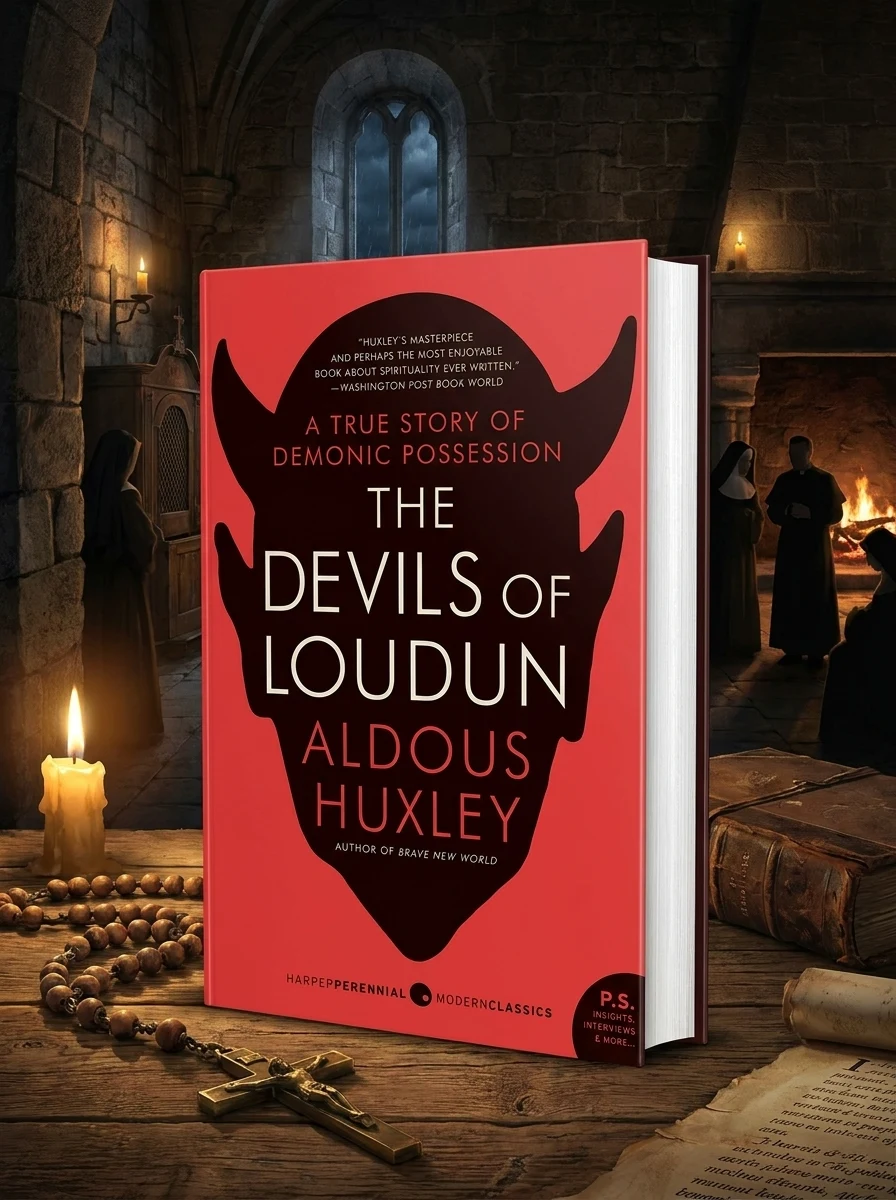
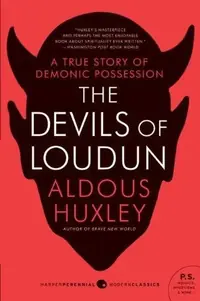
The Devils of Loudun
Huxley, AldousStock reported in the catalog; fulfillment is confirmed with your request.
Huxley dissects the Loudun possession case, revealing the dark intersection of faith, politics, and madness.
This work chronicles the 1632 Loudun possessions, where nuns claimed demonic affliction. Huxley examines the trial of Father Grandier, whose charisma masked a web of political intrigue and ecclesiastical rivalry. The narrative traces the path from spiritual crisis to public execution, analyzing how mass hysteria and theological dogma converged. It is not merely a historical record but a profound inquiry into the nature of belief, the mechanisms of persecution, and the fragile boundary between divine ecstasy and psychological collapse in seventeenth-century France.
This text situates itself within the rich tradition of occult history and esoteric inquiry, examining the intersection of faith, politics, and madness during the seventeenth century. It serves as a critical analysis of how theological dogma and mass hysteria influenced the spiritual landscape of early modern France.


📝 Description: The Devils of Loudun
💎 Expert review
📖 Why choose it
Why this book is worth reading
Readers fascinated by the dark intersections of faith, politics, and madness will find this book profoundly illuminating. It offers a deep dive into the mechanisms of persecution and the fragile boundary between divine ecstasy and psychological collapse. Aldous Huxley’s narrative is not merely a historical record but a profound inquiry into the nature of belief. Those interested in how charisma can mask political intrigue and ecclesiastical rivalry will gain valuable insights. This work challenges readers to consider how mass hysteria converges with theological dogma. It is essential for anyone seeking to understand the complex dynamics of seventeenth-century France and the human capacity for both spiritual crisis and public execution. Huxley dissects these events with precision, revealing the hidden forces at play.
⭐ Reader reviews
Reader rating
Ordered this after seeing it referenced in another book I was studying. It reads better in small doses — a chapter at a time with notes. Shipping was quick too.
Was skeptical at first. The symbolism is layered and generous to patient readers. Solid, if not essential.
This exceeded my expectations. Some chapters demand a slow, careful read, and that's exactly the point. Highly recommend to serious students.
Bought this as a gift for my sister and ended up ordering a second copy for myself. I appreciated how the argument builds steadily from first principles. The font runs small in the appendices.
Huxley’s dissection of the Loudun possession case is a masterful exploration of the dark intersection between faith and political maneuvering. By examining Father Grandier’s trial, he reveals how ecclesiastical rivalry fueled public hysteria. The book succeeds as a profound inquiry into belief and persecution mechanisms. However, it may not suit readers seeking straightforward historical chronicles or those uninterested in psychological analysis. It demands attention to the subtle interplay of theology and madness. While intellectually stimulating, it lacks narrative action for some tastes. It is best appreciated by those who enjoy dense, analytical examinations of historical events through a philosophical lens rather than light entertainment.
❓ Frequently asked questions
📖 Who should read this
Readers fascinated by the history of witchcraft, those interested in the psychology of mass hysteria, and fans of Huxley’s critical analysis of religion will find this essential. It appeals to anyone seeking to understand the historical roots of spiritual persecution.
🎯 Key themes and symbolism
Hysteria and Control
The text explores how mass psychosis was weaponized by church authorities to consolidate power. It details the psychological mechanisms that allowed entire communities to accept supernatural explanations for social and political tensions.
The Church and State
Huxley illustrates the complex rivalry between religious orders and the monarchy. The narrative shows how spiritual accusations were often proxies for secular disputes, with the church using demonic lore to eliminate rivals.
Seduction and Power
The book analyzes the erotic undertones of religious devotion. It questions whether Grandier’s downfall stemmed from genuine misconduct or the church's fear of a priest whose influence threatened their hierarchical control.
💬 Quotes from the book
“The Devil is a good fellow; he can be very entertaining.”
“Every age has its own demons.”
📜 Historical context
📚 Glossary
- Exorcism
- Ursuline Convent
- Inquisitorial Process
📔 Questions to reflect on
- How might political instability influence the way a community interprets religious experiences?
- In what ways does the fear of the 'other' drive collective hysteria?
- Where do you draw the line between genuine spiritual devotion and psychological disturbance?
✍️ More books by this author Huxley, Aldous
All books by this author →
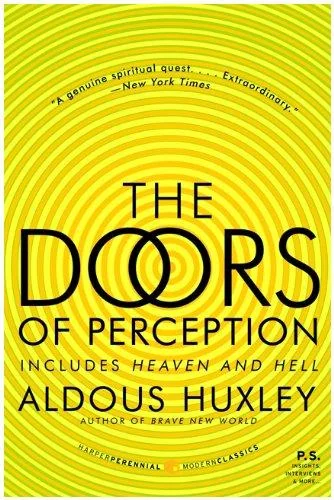
🏛 Books from this publisher Harper Perennial
All books from this publisher →

![Anam Cara [Twenty-Fifth Anniversary Edition]: A Book of Celtic Wisdom](/img/anam-cara-twenty-fifth-anniversary-edition-a-book-of-celtic-wisdom.webp)



You might also like
See more →
 91
91