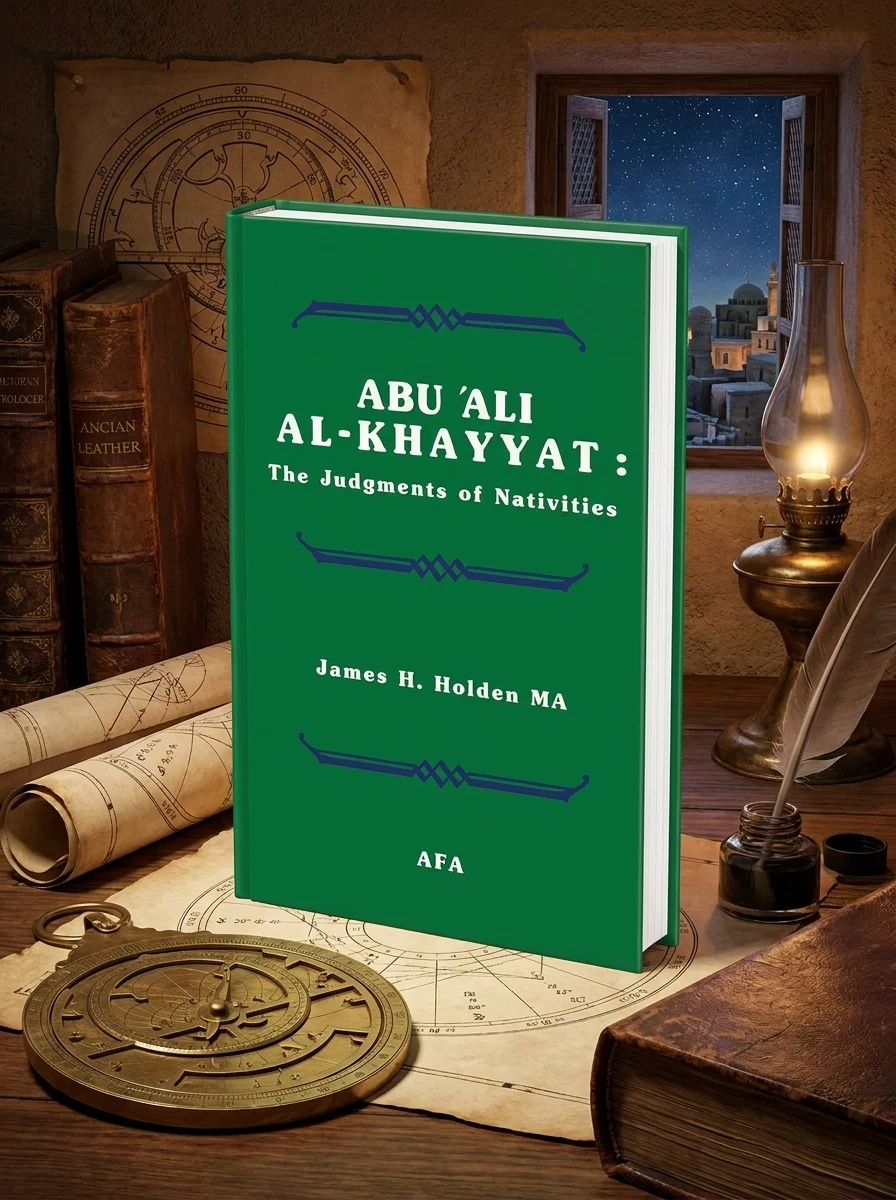
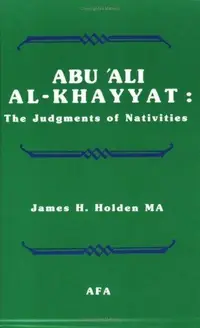
The Judgments of Nativities Abu Ali Al-Khayyat
Stock reported in the catalog; fulfillment is confirmed with your request.
Uncover the celestial blueprints of fate through a master's ancient wisdom.
Step into the intricate world of medieval predictive astrology with "The Judgments of Nativities." Penned by the esteemed 9th-century Arabian astrologer Abu Ali Al-Khayyat, known in Western tradition as Albohali, this volume offers a rare glimpse into the foundational methods of interpreting birth charts. This particular edition is a crucial English rendition, derived from the 1546 Latin translation by John of Seville, making accessible the complex techniques used to divine an individual's life path, character, and destiny through stellar configurations at the moment of birth. An essential text for serious students.
This text anchors itself in the rich heritage of medieval predictive astrology, specifically bridging the gap between 9th-century Arabian astrological traditions and later Western esoteric practices through its lineage from John of Seville's Latin translation.


📝 Description: The Judgments of Nativities Abu Ali Al-Khayyat
💎 Expert review
📖 Why choose it
Why this book is worth reading
Serious students of astrology will find immense value in this rare English rendition of foundational methods for interpreting birth charts. Readers seeking to understand the historical underpinnings of stellar configurations and their impact on life paths will appreciate the direct access to Abu Ali Al-Khayyat's ancient wisdom. It serves as an essential resource for those who wish to move beyond modern interpretations and engage with the complex techniques used to divine destiny, character, and fate through celestial blueprints at the moment of birth.
⭐ Reader reviews
Reader rating
While this volume offers a crucial glimpse into medieval predictive astrology, it is strictly an academic tool rather than a casual guide. It does not suit readers seeking quick horoscope readings or simplified self-help advice. Those unfamiliar with technical astrological terminology may find the content dense and inaccessible without prior study. However, for dedicated practitioners interested in the 1546 Latin translation lineage, it provides unparalleled insight into the intricate world of nativity judgments and historical esoteric practices.
❓ Frequently asked questions
📖 Who should read this
If you are a dedicated student of traditional or Hellenistic astrology, or a scholar of medieval esotericism, this book is indispensable. It offers direct access to the source material that shaped centuries of astrological practice, providing profound insights into its historical and technical foundations.
🎯 Key themes and symbolism
Foundational Natal Judgments
This work meticulously details the intricate rules and calculations for interpreting an individual's birth chart. It lays out the systematic process by which ancient astrologers derived profound insights into a person's life, from character traits and health to financial prospects and relationships, all based on the precise planetary positions at their moment of arrival.
Medieval Astrological Transmission
The book exemplifies the vital role of Arabic scholars in preserving and developing Hellenistic astrological knowledge during the Middle Ages. Its journey from Arabic to Latin, and now English, underscores the unbroken chain of wisdom that allowed these complex techniques to be passed down through centuries, influencing subsequent European astrological thought profoundly.
Classical Predictive Techniques
Al-Khayyat's text is a masterclass in the traditional, deterministic approach to astrology. It doesn't merely describe influences but offers definitive "judgments" or predictions about life events. Readers will encounter the rigorous, often stark, methodology that sought to forecast fortunes and misfortunes with remarkable specificity, rooted in a highly structured cosmic order.
💬 Quotes from the book
“When the Lord of the Ascendant is combust and in aversion to the Sun, the native's vitality shall be diminished, and their spirit frequently troubled.”
“Observe the disposition of Venus in the tenth house, for it signifies honor derived from artistic endeavors or agreeable associations in matters of public renown.”
📜 Historical context
📚 Glossary
- Nativities
- Albohali
- John of Seville
📔 Questions to reflect on
- How does the concept of predestination implied in 'judgments' differ from or align with modern astrological perspectives on free will and influence?
- Reflect on the journey of this text from Arabic to Latin to English. What does this tell us about the enduring human quest for understanding destiny?
- Consider the difference between a 'judgment' (as in this text) and a 'reading' (as in modern astrology). How might this shift in terminology reflect evolving philosophies of self and cosmos?
🏛 Books from this publisher American Federation of Astrologers
All books from this publisher →
 86
86
You might also like
See more →
 91
91
 90
90