The Encyclopedia of Ghosts and Spirits
Guiley, Rosemary EllenStock reported in the catalog; fulfillment is confirmed with your request.
Six hundred spectral entries illuminate the shadowy history of hauntings and the theories behind them.
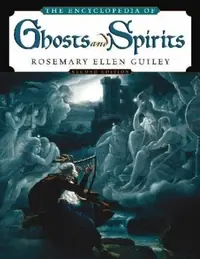
Rosemary Ellen Guiley has compiled an exhaustive compendium of the unseen world, offering over six hundred distinct entries that explore the landscape of ghosts, spirits, and hauntings. This volume serves as both a historical archive and a theoretical framework, dissecting the various explanations for paranormal activity from folkloric accounts to modern investigations. Enhanced by black-and-white imagery that captures the eerie essence of these phenomena, and a curated bibliography for deeper study, this reference work is an essential tool for understanding the persistent human fascination with the afterlife and its manifestations.
This work sits firmly within the tradition of modern spiritualism and parapsychology, serving as a comprehensive reference for those interested in the academic and folkloric study of the supernatural. It bridges the gap between historical archive and theoretical framework regarding hauntings.


📝 Description: The Encyclopedia of Ghosts and Spirits
💎 Expert review
📖 Why choose it
Why this book is worth reading
Readers with a serious interest in the shadowy history of hauntings will find this volume indispensable. It offers over six hundred distinct entries that illuminate the theories behind paranormal activity, making it perfect for researchers and curious enthusiasts alike. The inclusion of black-and-white imagery adds an eerie depth to the text, while the curated bibliography supports deeper academic inquiry. If you seek to understand the persistent human fascination with the afterlife through both folkloric accounts and modern investigations, this exhaustive compendium provides the necessary tools and context for a thorough exploration of the unseen world.
⭐ Reader reviews
Reader rating
Perfect companion for my morning study sessions. It reads better in small doses — a chapter at a time with notes. Deserves a place on any esoteric bookshelf.
Ordered this after seeing it referenced in another book I was studying. The language takes some getting used to, but it becomes part of the charm. It's become a regular reference in my practice. Highly recommend to serious students.
I've read excerpts online before, but having the full text is different. Solid binding, decent paper — holds up to heavy use. My only quibble is the cover feels thinner than expected. Recommended with reservations.
Guiley’s encyclopedia is a robust resource for those seeking structure in the chaotic field of ghost lore. It succeeds as both a historical archive and a theoretical guide, dissecting explanations for paranormal activity with clarity. However, it may not suit readers looking for narrative thrillers or personal anecdotal collections; this is a reference work, not a storybook. Those expecting sensationalist horror will find its tone analytical and detached. The black-and-white imagery supports the text but does not replace the need for critical engagement with the material. It is best utilized as a desk reference for understanding the landscape of spirits rather than a leisurely bedtime read.
❓ Frequently asked questions
📖 Who should read this
Ideal for serious researchers, paranormal enthusiasts, and writers seeking authentic terminology and historical context. It suits those who prefer structured, reference-style information over anecdotal storytelling, offering a scholarly approach to the supernatural for both skeptics and believers alike.
🎯 Key themes and symbolism
Spectral Phenomenology
The text categorizes ghostly appearances not as mere superstition, but as distinct phenomena with specific characteristics. It examines how spirits manifest, the environments that attract them, and the sensory details reported by witnesses, creating a taxonomy of the uncanny that helps readers identify and understand specific types of haunting experiences across different cultures and eras.
Paranormal Investigation
Guiley details the methodologies used by investigators to document and analyze supernatural events. This section covers the evolution of ghost hunting from Victorian séance circles to modern technological detection, providing context for how researchers approach the unknown. It highlights the rigorous, albeit often controversial, efforts to prove the existence of non-corporeal entities through empirical observation and data collection.
Theoretical Frameworks
The encyclopedia delves into the competing theories that attempt to explain the origin of ghosts. From residual energy imprints to intelligent remnants of the deceased, the book presents a balanced overview of scientific, psychological, and metaphysical explanations. This theoretical diversity allows readers to navigate the complex debate between materialist skepticism and spiritualist belief regarding the nature of consciousness after death.
💬 Quotes from the book
“The boundary between the living and the dead is porous, allowing echoes of the past to bleed into the present.”
“To understand the ghost is to understand the unresolved grief and memory of the culture that summons it.”
📜 Historical context
📚 Glossary
- Poltergeist
- Residual Haunting
- Ectoplasm
📔 Questions to reflect on
- Which specific historical event or location resonates with your personal intuition, and why might it hold a 'spiritual' weight for you?
- How do the theoretical explanations in this text challenge or confirm your own beliefs about consciousness and death?
- If you were to document a haunting, what specific sensory details would you prioritize to distinguish a residual echo from an intelligent presence?
✍️ More books by this author Guiley, Rosemary Ellen
All books by this author →
You might also like
See more →
 91
91