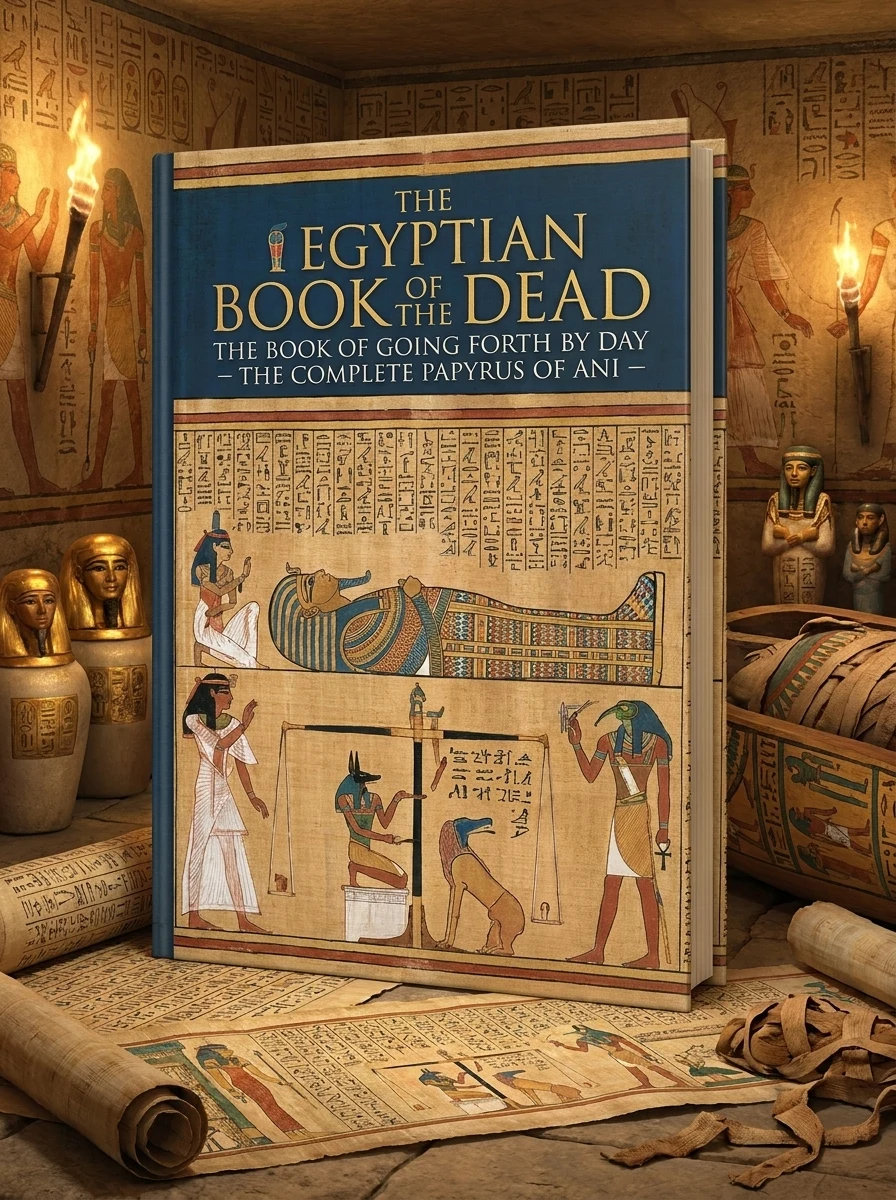
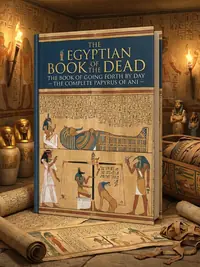

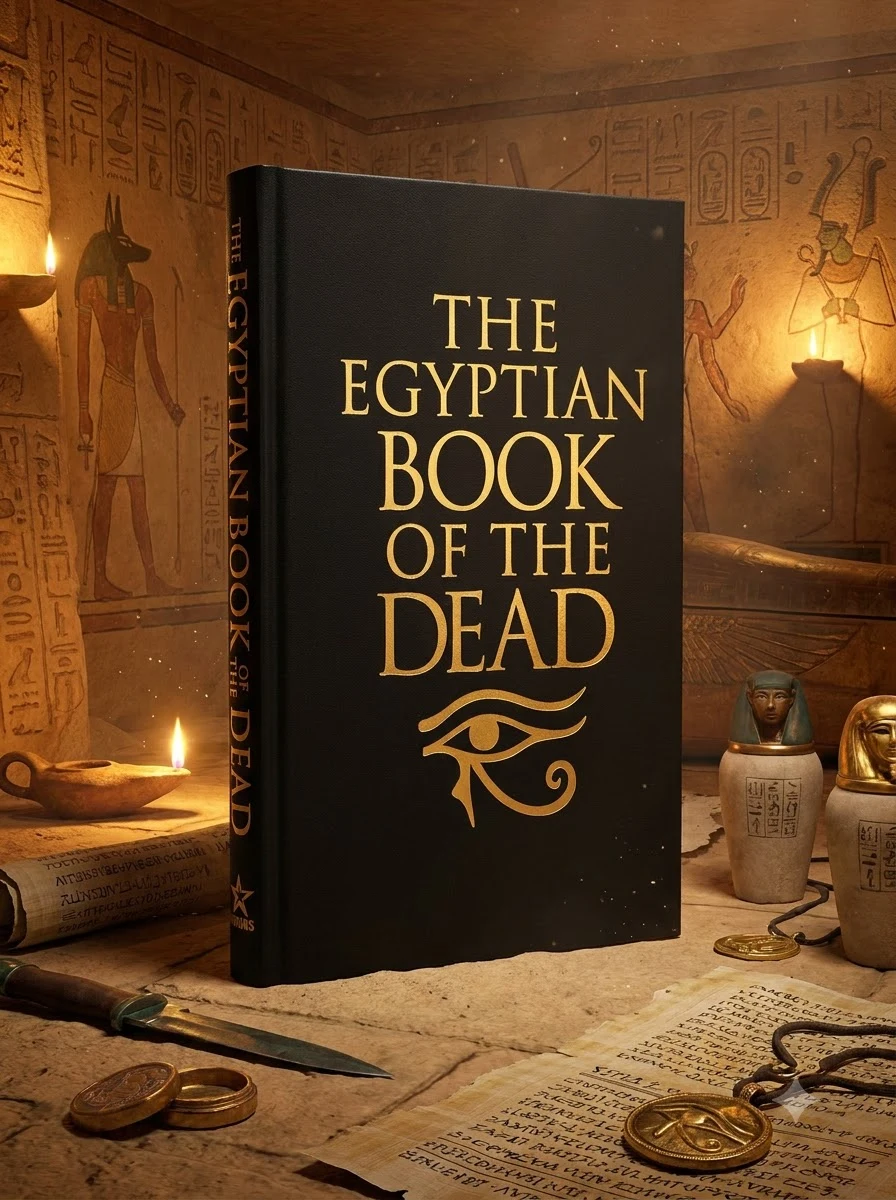
The Egyptian Book of the Dead: The Complete Papyrus of Ani
Budge, E a WallisStock reported in the catalog; fulfillment is confirmed with your request.
Navigate the ancient pathways of the Egyptian afterlife with this timeless spiritual guide.
Uncover the profound wisdom of one of history's most pivotal texts. This ancient Egyptian guide meticulously outlines the rituals and spiritual journey for the deceased, charting the soul's perilous path through the underworld. For three millennia, its sacred verses dictated religious authority and defined the cosmos. This specific edition presents E.A. Wallis Budge's monumental 1888 discovery: the impeccably preserved Papyrus of Ani, a 1500 B.C. manuscript crafted for a high-ranking Theban scribe, offering unparalleled insight into these mystical traditions.
This work anchors itself in ancient Egyptian spiritual traditions, specifically detailing the rituals and cosmology surrounding death and the afterlife as understood by high-ranking scribes of Thebes. It serves as a primary source for understanding the religious authority that defined the cosmos for three millennia.


📝 Description: The Egyptian Book of the Dead: The Complete Papyrus of Ani
💎 Expert review
📖 Why choose it
Why this book is worth reading
Readers seeking a direct, unmediated connection to ancient Egyptian spirituality will find immense value in this complete presentation of the Papyrus of Ani. It offers unparalleled insight into the mystical traditions that guided souls through the perilous underworld, making it essential for scholars and enthusiasts of esoteric history. By preserving the rituals and sacred verses that dictated religious authority for thousands of years, the book allows modern seekers to navigate these ancient pathways with clarity. It is particularly rewarding for those who appreciate meticulous scholarship and wish to uncover the profound wisdom embedded in one of history’s most pivotal texts without the distortion of later interpretations.
⭐ Reader reviews
Reader rating
This edition stands as a monumental resource for serious students of Egyptology, faithfully presenting E.A. Wallis Budge's 1888 discovery of the impeccably preserved manuscript from 1500 B.C. However, it is not suited for casual readers seeking a simplified narrative or quick spiritual fixes; the dense academic approach and ancient ritualistic focus may alienate those expecting accessible modern commentary. Furthermore, individuals uncomfortable with the stark realities of ancient funerary practices might find the content too grim. It demands patience and a scholarly mindset, rewarding only those willing to engage deeply with its historical weight and complex spiritual framework.
❓ Frequently asked questions
📖 Who should read this
Curious explorers of ancient civilizations, budding Egyptologists, and anyone fascinated by the profound mysteries of death and rebirth will find this volume indispensable. Delve into the spiritual heart of a civilization that meticulously prepared for eternity, guided by its most sacred texts.
🎯 Key themes and symbolism
Historical Preservation
The discovery and meticulous preservation of the Papyrus of Ani by E.A. Wallis Budge stand as a testament to archaeological endeavor. This particular scroll, dating from the 18th Dynasty, offers an exceptionally complete and vivid rendering of the Book of the Dead, making it an invaluable primary source for scholars and enthusiasts alike.
💬 Quotes from the book
“Homage to thee, O great God, Lord of Ma'at! I have come unto thee, O my Lord, I have brought myself hither to behold thy beauties. I know thee, and I know thy name, and I know the names of the two and forty gods who are with thee in this Great House of Ma'at.”
“May my soul come to me from wherever it is. May my body live, and my spirit be mighty. May I not be imprisoned by those who would restrain me, but may I go forth and come in at my will.”
📜 Historical context
📚 Glossary
- Papyrus of Ani
- Field of Reeds
- Ma'at
📔 Questions to reflect on
- How do the ancient Egyptian concepts of judgment and the afterlife compare to your own spiritual or philosophical understandings of what lies beyond death?
- Considering the intricate preparation for the afterlife detailed in this text, what aspects of your present life would you deem most essential to carry forward into an eternal existence?
- Reflect on the significance of names and knowing divine identities in ancient Egyptian thought. How does this connect to your own understanding of identity and power?
✍️ More books by this author Budge, E a Wallis
All books by this author →
You might also like
See more →
 90
90