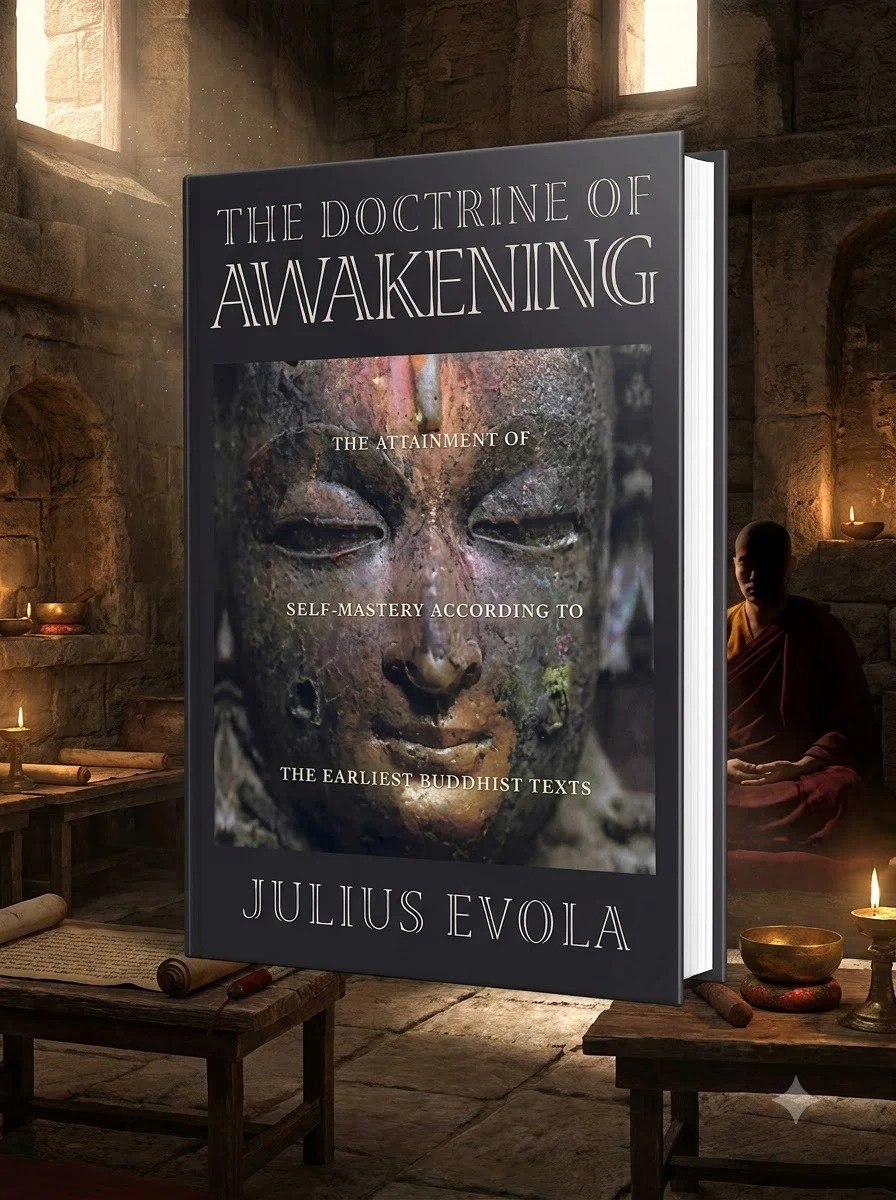
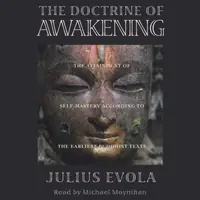
The Doctrine of Awakening: The Attainment of Self-Mastery According to the Earliest Buddhist Texts
This edition can be ordered. No arrival date is confirmed.
Uncover the forgotten path to inner liberation through ancient Buddhist wisdom, fiercely re-examined.
Julius Evola’s "The Doctrine of Awakening" presents a rigorous re-evaluation of early Buddhist teachings, drawing directly from the most ancient texts. He meticulously extracts a vision of liberation centered on active self-mastery, asserting that the original doctrine was a challenging, heroic path rather than a passive spiritual endeavor. This work serves as a provocative counterpoint to many modern interpretations, urging the reader to embrace a demanding, conscious journey towards inner sovereignty and profound awakening.
This work sits at the intersection of esoteric philosophy and early Buddhist studies, offering a distinct reinterpretation of ancient texts within the context of Western occultism. It challenges conventional spiritual narratives by presenting a rigorous, non-traditional view of liberation rooted in self-mastery.


📝 Description: The Doctrine of Awakening: The Attainment of Self-Mastery According to the Earliest Buddhist Texts
💎 Expert review
📖 Why choose it
Why this book is worth reading
Readers seeking a robust, active approach to spiritual development will find profound value in this text. It is ideal for those who feel modern interpretations of Buddhism have become too passive or diluted, craving instead a path defined by heroic effort and conscious sovereignty. If you are drawn to rigorous philosophical inquiry that demands personal responsibility and inner discipline, this book offers a fierce re-examination of ancient wisdom. It appeals to seekers who view awakening not as a gentle surrender but as a demanding journey toward self-mastery, providing a refreshing counterpoint to contemporary spiritual trends.
⭐ Reader reviews
Reader rating
Evola delivers a provocative, albeit polarizing, analysis that strips away comforting illusions about Buddhist practice. This is not a guide for those seeking peace or comfort; it is a manual for the stern and disciplined. Readers expecting a gentle, devotional experience will likely find its tone harsh and its demands excessive. It suits only those with a strong philosophical backbone who appreciate rigorous, albeit controversial, reinterpretations of religious history. Those preferring established, orthodox commentaries may feel alienated by this fierce assertion of active self-mastery over passive enlightenment.
❓ Frequently asked questions
📖 Who should read this
This book is for those seeking a challenging, non-conformist perspective on Eastern spirituality. If you question mainstream interpretations of Buddhism and are ready to engage with a demanding philosophy of self-overcoming, Evola offers a potent, albeit controversial, guide.
🎯 Key themes and symbolism
Active Spiritual Path
Evola resurrects an interpretation of early Buddhist teachings emphasizing rigorous self-discipline and conscious effort, contrasting it sharply with contemporary, often perceived as passive, spiritual practices. It’s a call to proactive inner transformation, demanding unwavering will rather than gentle surrender to external forces or simplistic meditation.
Primal Buddhist Wisdom
Delves into the foundational scriptures of Buddhism, meticulously extracting what Evola argues are the core principles of liberation. This approach seeks to strip away later accretions, revealing a starker, more potent philosophy focused on individual awakening and self-overcoming, unburdened by later scholastic or devotional layers.
Attaining Inner Sovereignty
Explores the profound journey towards complete self-possession and freedom from conventional constraints. Evola presents Buddhist liberation not as an escape from the world, but as a rigorous internal conquest, leading to a state of ultimate spiritual autonomy and mastery over one's own being and destiny.
💬 Quotes from the book
“True liberation is not a gentle surrender, but a fierce conquest of the self, forged in the fires of unwavering will.”
“The ancient texts speak not of solace, but of sovereignty – a dominion over inner realms achieved through relentless introspection.”
📜 Historical context
📚 Glossary
- Doctrine of Awakening
- Active Spirituality
- Self-Mastery
📔 Questions to reflect on
- How do my current spiritual practices align with, or diverge from, the concept of "active spirituality" as presented by Evola?
- What aspects of "self-mastery" do I find most challenging, and how might I approach them with greater intentionality and discipline?
- If modern spiritual paths are often perceived as passive, what does an engaged, proactive path truly entail for me in my own life?
🏛 Books from this publisher Simon & Schuster/ Inner Traditions
All books from this publisher →


You might also like
See more →

 91
91