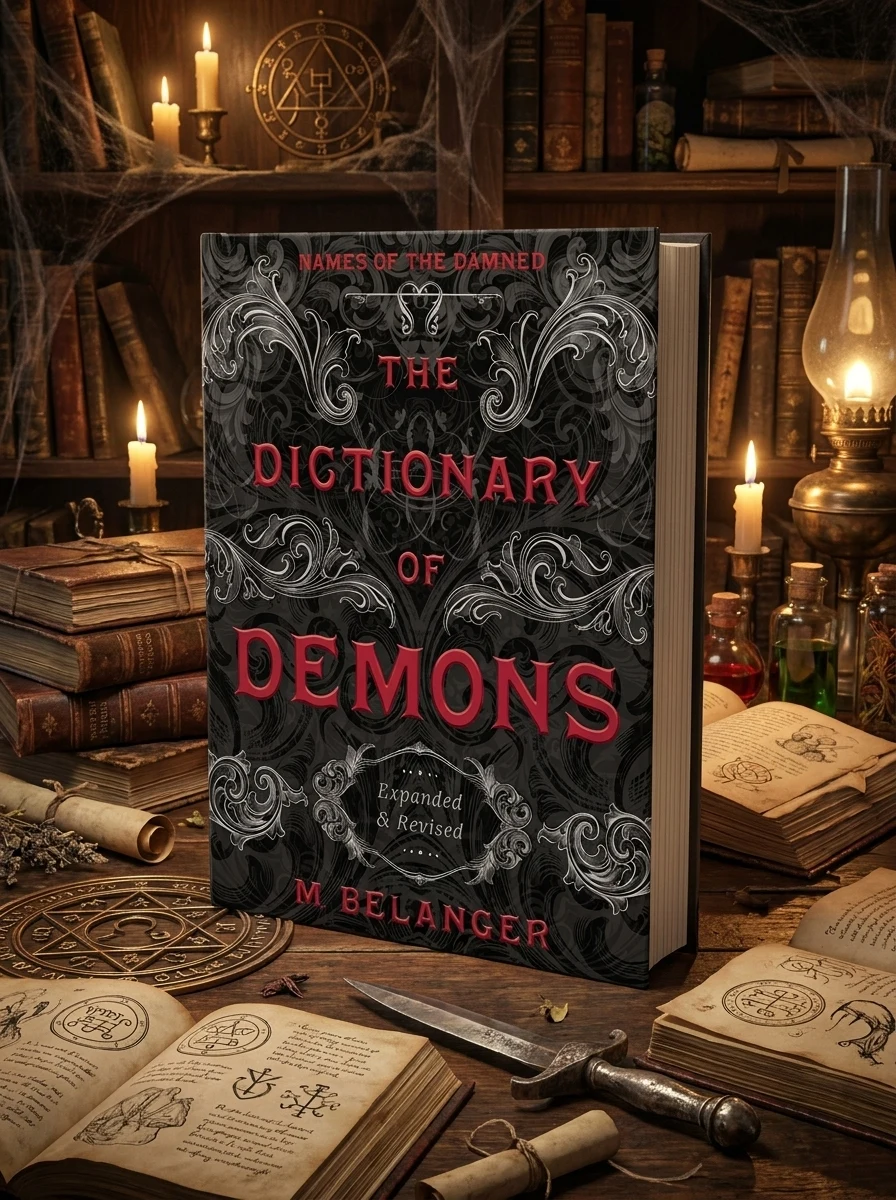
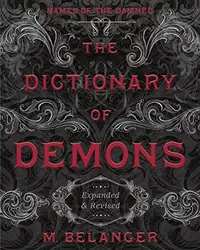
The Dictionary of Demons: Expanded & Revised: Names of the Damned
Stock reported in the catalog; fulfillment is confirmed with your request.
Uncover the infernal hierarchy, from ancient lore to modern grimoires, in this essential compendium of the damned.
Delve into the shadowy depths of demonology with this meticulously updated and significantly expanded reference work. This second edition, a decade in the making, presents a vast compendium of over 1,700 infernal entities, mythical figures, and malevolent spirits drawn from diverse traditions worldwide. Authored by M. Belanger, this volume goes beyond mere listings, incorporating insightful articles on demonology's history and practice, alongside a wealth of new illustrations. It serves as an indispensable guide for anyone seeking to understand the complex tapestry of the demonic, from the obscure to the infamous, offering unparalleled detail.
This volume serves as a comprehensive reference within the Western occult and esoteric tradition, bridging ancient lore with contemporary grimoire studies. It functions as a scholarly yet accessible compendium for those interested in the historical and mythological aspects of demonology.


📝 Description: The Dictionary of Demons: Expanded & Revised: Names of the Damned
💎 Expert review
📖 Why choose it
Why this book is worth reading
This book is an essential resource for serious students of the occult who require a reliable, expanded reference for infernal entities. Readers will appreciate the meticulous updates and the inclusion of over 1,700 entries, which provide unparalleled detail on both obscure and infamous figures. It offers not just names, but insightful articles on the history and practice of demonology, making it valuable for writers, researchers, and practitioners seeking to understand the complex tapestry of the demonic world from diverse global traditions.
⭐ Reader reviews
Reader rating
M. Belanger’s second edition is a robust addition to any esoteric library, offering significant expansion and new illustrations that enhance its utility as a reference work. It successfully maps the infernal hierarchy with impressive breadth. However, readers seeking narrative-driven horror stories or practical spell-casting instructions will find it lacking in those specific genres. It is strictly a compendium of names and historical context, not a manual for immediate magical application. Those expecting a thrilling fictional account may be disappointed by its academic and encyclopedic tone.
❓ Frequently asked questions
📖 Who should read this
If you're a serious student of the occult, a researcher into comparative mythology, or simply captivated by the darker currents of esoteric knowledge, this expanded compendium is for you. It offers a structured and thorough exploration of demonic entities from across cultures and ages, providing a crucial resource.
🎯 Key themes and symbolism
Comprehensive Demonic Lore
Explores the vast array of demonic entities from global mythologies and occult traditions. It categorizes and details their origins, attributes, and roles, providing a structured approach to understanding the infernal pantheon beyond simple enumeration. This depth allows for a nuanced appreciation of each entity's significance.
Evolution of Demonology
Traces the historical development of demonological thought and practice. The book delves into how perceptions of demons have shifted across cultures and eras, offering essential context for their various manifestations and the magical or ritualistic associations connected with them over time.
Illustrative Occult Art
Features a rich collection of visual representations, providing a deeper understanding of how these entities have been depicted and imagined throughout history. These illustrations serve as both historical documents and powerful visual aids for the study of the demonic, enhancing the textual descriptions.
💬 Quotes from the book
“The entity known as Bael, often depicted with three heads—man, cat, and toad—commands sixty-six legions of spirits, appearing typically as a squat king.”
“Beyond simple categorization, understanding the nuanced cultural shifts in demonic perception reveals profound insights into human fears and the evolution of esoteric thought.”
📜 Historical context
📚 Glossary
- Demonology
- Grimoire
- Decans of the Zodiac
📔 Questions to reflect on
- How do cultural perceptions of "demons" reflect societal anxieties or moral codes in different eras, as suggested by the book's entries?
- Consider a specific demonic entity from the book. How might its attributes or origin story relate to historical events or philosophical concepts you are familiar with?
- In what ways does the study of demonology, as presented in this compendium, contribute to a broader understanding of mythology, spirituality, or the human psyche?
- Reflect on the book's updated sections. How do new discoveries or insights change our understanding of historical demonological traditions?
🏛 Books from this publisher Llewellyn Publications
All books from this publisher →

 89
89
You might also like
See more →
 91
91