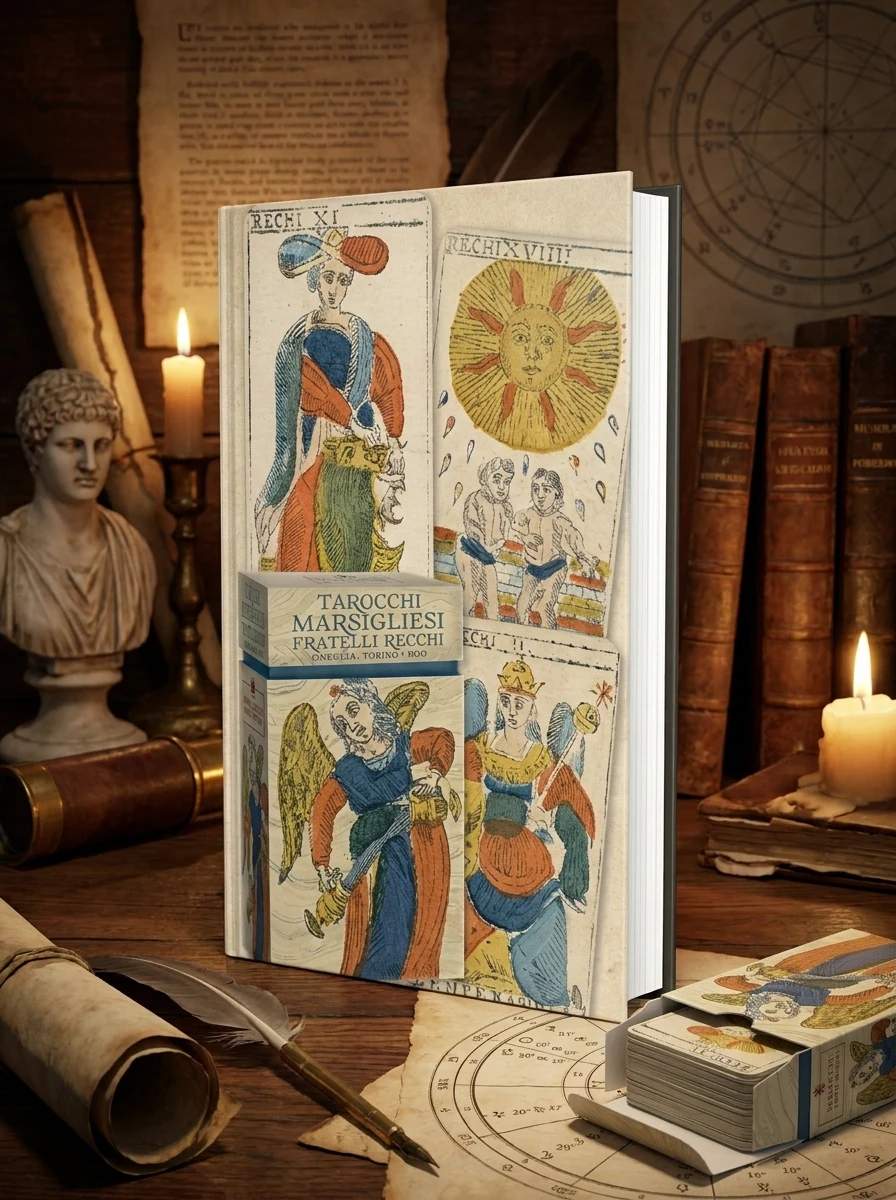
Tarocchi Marsigliesi Fratelli Recchi: Oneglia, Torino 1830: Anima Antiqua Lo Scarabeo
Lo ScarabeoThis edition can be ordered. No arrival date is confirmed.
Unearth a rare glimpse into Italy's esoteric heart, captured in 1830.
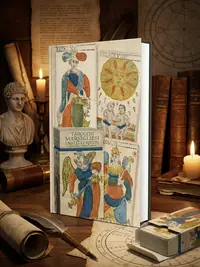
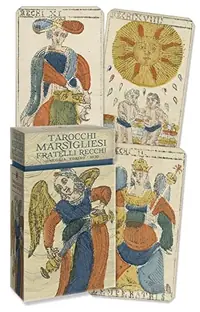
This exquisite reproduction transports you to 1830s northwest Italy, unveiling a meticulously crafted Marseille-style tarot. Likely designed by the Recchi brothers, it embodies the region's rich mystical heritage. More than just a divination tool, it's a historical artifact, reflecting the cultural undercurrents of the post-Napoleonic era. Its robust linework and classic iconography offer a direct connection to a pivotal period in tarot's evolution, presenting an authentic window into ancestral divinatory practices.
This volume serves as a historical artifact reflecting the rich mystical heritage and cultural undercurrents of post-Napoleonic northwest Italy, specifically Turin in 1830. It captures the pivotal evolution of Marseille-style tarot during this specific regional period.


📝 Description: Tarocchi Marsigliesi Fratelli Recchi: Oneglia, Torino 1830: Anima Antiqua Lo Scarabeo
💎 Expert review
📖 Why choose it
Why this book is worth reading
This book is essential for the serious scholar of occult history and the dedicated tarot enthusiast seeking an authentic connection to the past. By offering a meticulous reproduction of the 1830 Recchi brothers' deck, it provides more than just divination tools; it offers a direct window into ancestral practices. Readers will gain a tangible link to Italy's esoteric heart, appreciating the robust linework and classic iconography that defined the era. It is ideal for those who value historical accuracy and wish to understand the cultural currents of the post-Napoleonic age through its visual language. If you desire a pristine artifact that embodies regional mysticism rather than a modern interpretation, this reproduction fulfills that specific scholarly and aesthetic need with exceptional fidelity.
⭐ Reader reviews
Reader rating
This publication excels as a high-fidelity historical document, preserving the robust linework and classic iconography of the 1830 Recchi Marseille-style tarot. It is a treasure for historians and collectors who prioritize archival integrity over modern usability. However, it does not suit casual diviners seeking contemporary guidebooks or interpretive essays. Readers looking for practical instruction on reading techniques will find this volume lacking in instructional content. Furthermore, those preferring vibrant, full-color reproductions may find the monochromatic nature of the historical artifact less visually engaging. It is strictly for the academic or serious enthusiast who values the raw, unadorned aesthetic of early 19th-century Italian esotericism over modern accessibility.
❓ Frequently asked questions
📖 Who should read this
If you're a serious tarot scholar, a collector of historical decks, or someone seeking a deeper connection to the roots of cartomancy, this deck offers an unparalleled journey. It's for those who appreciate the interplay of art, history, and spiritual tradition.
🎯 Key themes and symbolism
Marseille Tradition Preserved
This deck serves as a prime example of the classic Tarot de Marseille lineage, preserving its iconic visual language and symbolic structure. It demonstrates how core archetypes were interpreted and rendered in a specific regional style, maintaining the integrity of the system while adding local flavor and historical nuance to its design.
Italian Esoteric Roots
Hailing from a region steeped in mystical lore, the Recchi deck highlights Italy's profound contribution to esoteric arts. It showcases the indigenous artistic traditions that fused with tarot iconography, reinforcing Italy's role as a crucible for alchemical, divinatory, and hermetic knowledge, offering a unique regional perspective on the craft.
Post-Napoleonic Influence
Created in the wake of significant European upheaval, this deck subtly reflects the restoration period. Its design elements and underlying energies can be seen as a cultural response to changing political landscapes, offering insights into how esoteric practices adapted during times of societal flux and renewal, bridging tradition with evolving eras.
💬 Quotes from the book
“The Recchi brothers' hand brings a robust, almost earthy quality to the familiar archetypes, grounding the ethereal in tangible Italian artistry.”
“To hold these cards is to touch the very fabric of a time when ancient wisdom was re-examined through the lens of a newly defined European identity.”
📜 Historical context
📚 Glossary
- Tarot de Marseille
- Cartomancy
- Restoration Period
📔 Questions to reflect on
- How might the political and social climate of post-Napoleonic Italy have influenced the subtle symbolism or mood of this tarot deck?
- Reflect on the idea of 'esoteric tradition' in a specific geographical region (northwest Italy). What unique insights might such a localized tradition offer?
- Consider the timeless archetypes of the Tarot de Marseille. How does a specific historical rendition, like the Recchi deck, deepen your understanding of these universal symbols?
📖 From the series “Lo Scarabeo Anima Antiqua”
All books in the series →
✍️ More books by this author Lo Scarabeo
All books by this author →
 86
86
 88
88
 90
90
 79
79
![Quantum Tarot Kit: Version 2.0 [With Paperback Book]](/img/quantum-tarot-kit-version-2-0-with-paperback-book.webp)
![Wicca Sealing Wax [With Sealing Wax and Stamp Designs] Lo Scarabeo](/img/wicca-sealing-wax-with-sealing-wax-and-stamp-designs-lo-scarabeo.webp)
🏛 Books from this publisher Llewellyn Publications
All books from this publisher →

 89
89



You might also like
See more → 91
91
 88
88
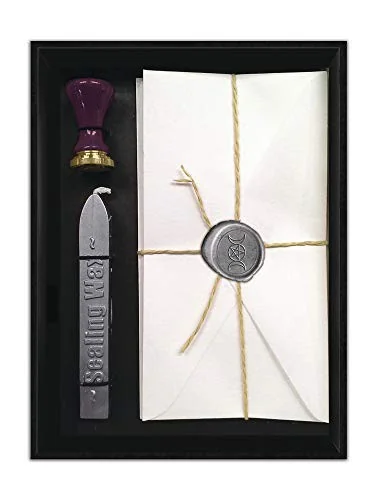
![Celtic Sealing Wax [With Sealing Wax and Stamp Designs] Lo Scarabeo](/img/celtic-sealing-wax-with-sealing-wax-and-stamp-designs-lo-scarabeo-scene.webp)