The 12th Planet (Book I)
Sitchin, Zecharia; , Lownds, PeterThis edition can be ordered. No arrival date is confirmed.
Unearth forbidden truths about humanity's cosmic genesis and ancient extraterrestrial architects.
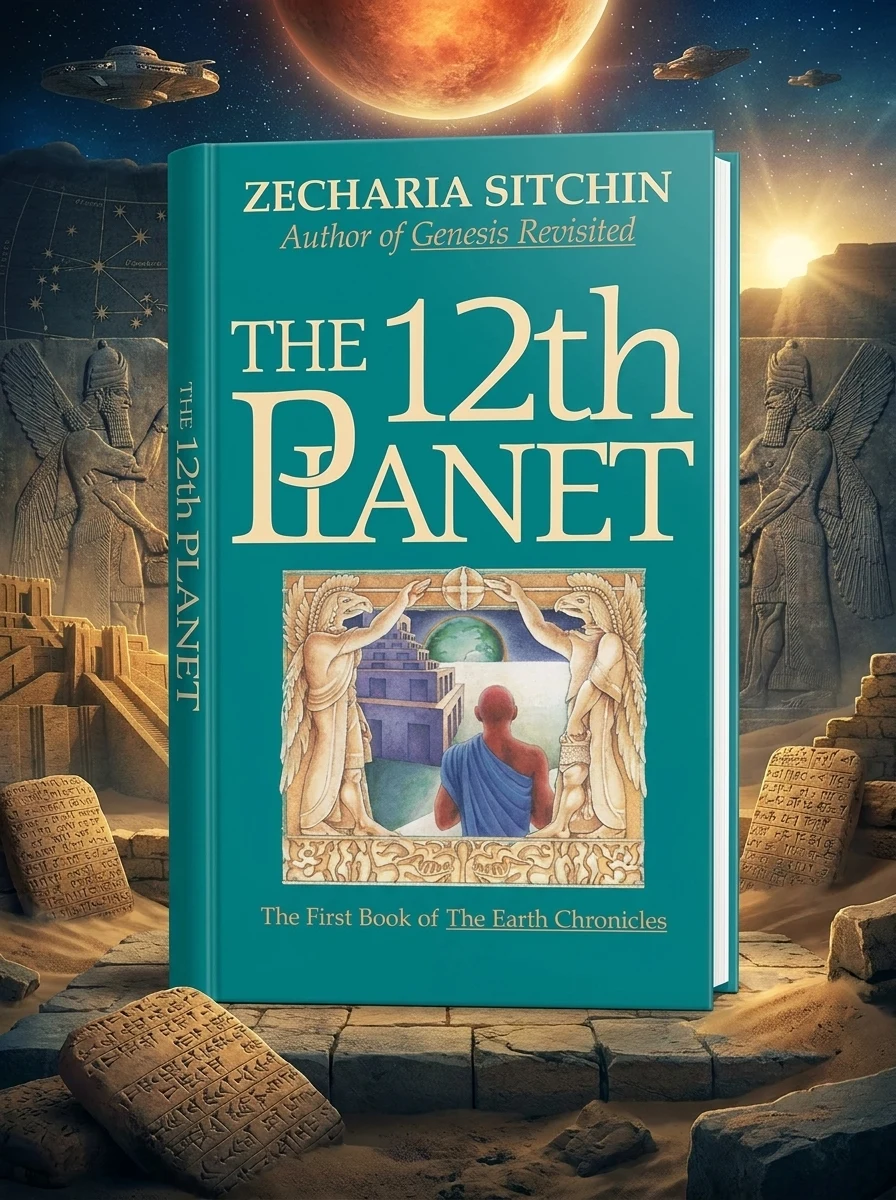
Zecharia Sitchin's groundbreaking "The 12th Planet" introduces readers to his controversial "Earth Chronicles" series, proposing a radical reinterpretation of human origins. Drawing from meticulous study of ancient Sumerian cuneiform, Sitchin posits that advanced extraterrestrial beings, the Anunnaki, journeyed from their home planet Nibiru to Earth millennia ago. He argues these cosmic visitors were not only instrumental in seeding human civilization but also genetically engineered humanity. This seminal work presents a compelling, if unconventional, narrative of our solar system's history and the enigmatic forces that shaped our past.
This work sits firmly within the tradition of alternative history and ancient astronaut theories, challenging mainstream archaeological consensus with speculative interpretations of Sumerian texts. It represents a pivotal moment in esoteric literature where ancient mythology is recontextualized through a pseudo-scientific lens.


📝 Description: The 12th Planet (Book I)
💎 Expert review
📖 Why choose it
Why this book is worth reading
Readers with a fascination for the intersection of mythology, archaeology, and speculative science will find this book deeply engaging. It offers a provocative alternative narrative that challenges conventional understanding of human origins by suggesting extraterrestrial involvement in our genetic history. Those who enjoy unraveling complex historical mysteries through unconventional sources will appreciate Sitchin's meticulous, albeit controversial, analysis of Sumerian cuneiform. The book provides a compelling framework for viewing ancient civilizations not as isolated developments but as part of a broader cosmic story, inviting readers to question established historical timelines and consider the possibility of advanced ancient contacts that shaped our cultural genesis.
⭐ Reader reviews
Reader rating
Sitchin’s seminal text is essential for enthusiasts of alternative history, yet it remains firmly rooted in fringe theory rather than accepted academia. Readers seeking rigorous peer-reviewed archaeological evidence or strict adherence to mainstream scientific consensus will likely find the arguments unconvincing or purely speculative. The narrative relies heavily on unique linguistic interpretations that many scholars reject, making it more suitable for those open to radical reinterpretations of ancient texts. It is a stimulating read for believers in ancient astronaut theories but may frustrate skeptics or those preferring established historical methodologies over imaginative reconstruction.
❓ Frequently asked questions
📖 Who should read this
If you've ever questioned humanity's conventional origins or are drawn to audacious alternative histories, this book is for you. It offers a paradigm-shifting perspective for anyone ready to challenge established scientific and historical narratives about our place in the cosmos.
🎯 Key themes and symbolism
Cosmic Architects of Humanity
This book challenges conventional anthropology by asserting that an advanced alien race, the Anunnaki, deliberately engineered humankind. It delves into how these extraterrestrial visitors influenced early human development, providing a provocative alternative to evolutionary theories and offering a new lens through which to view our ancient past.
Sumerian Secrets Unveiled
Sitchin meticulously examines ancient Sumerian cuneiform tablets, presenting them as historical records rather than myth. He deciphers these age-old texts to reveal accounts of celestial beings and their interactions with early Earth civilizations, proposing that these writings contain verifiable historical data about our true origins.
The Enigmatic Planet Nibiru
Central to Sitchin's thesis is the concept of Nibiru, a hypothesized twelfth planet in our solar system and the alleged home of the Anunnaki. The book explores its cyclical orbit, claiming it brings its inhabitants into contact with Earth every 3,600 years, profoundly impacting our planet's history and the development of life.
💬 Quotes from the book
“The texts reveal that humanity's true lineage is not solely terrestrial, but intricately interwoven with the celestial voyagers who arrived from beyond our world.”
“Millennia-old cuneiform tablets are not mere myths, but detailed chronicles of cosmic history and the systematic interventions of the Anunnaki on Earth.”
📜 Historical context
📚 Glossary
- Anunnaki
- Nibiru
- Sumerian
📔 Questions to reflect on
- How might the acceptance of extraterrestrial intervention in human genesis fundamentally alter our understanding of spirituality, evolution, and societal development?
- If ancient texts are literal historical accounts of cosmic visitors, what does this imply about the nature of myth, religion, and archaeological interpretation?
- Consider the implications for contemporary science if a planet like Nibiru, with a 3,600-year orbit, were definitively proven to exist. How would this reshape astronomy?
✍️ More books by this author Sitchin, Zecharia; , Lownds, Peter
All books by this author →
🏛 Books from this publisher Simon & Schuster/ Inner Traditions
All books from this publisher →





You might also like
See more →
 83
83
 81
81
 91
91