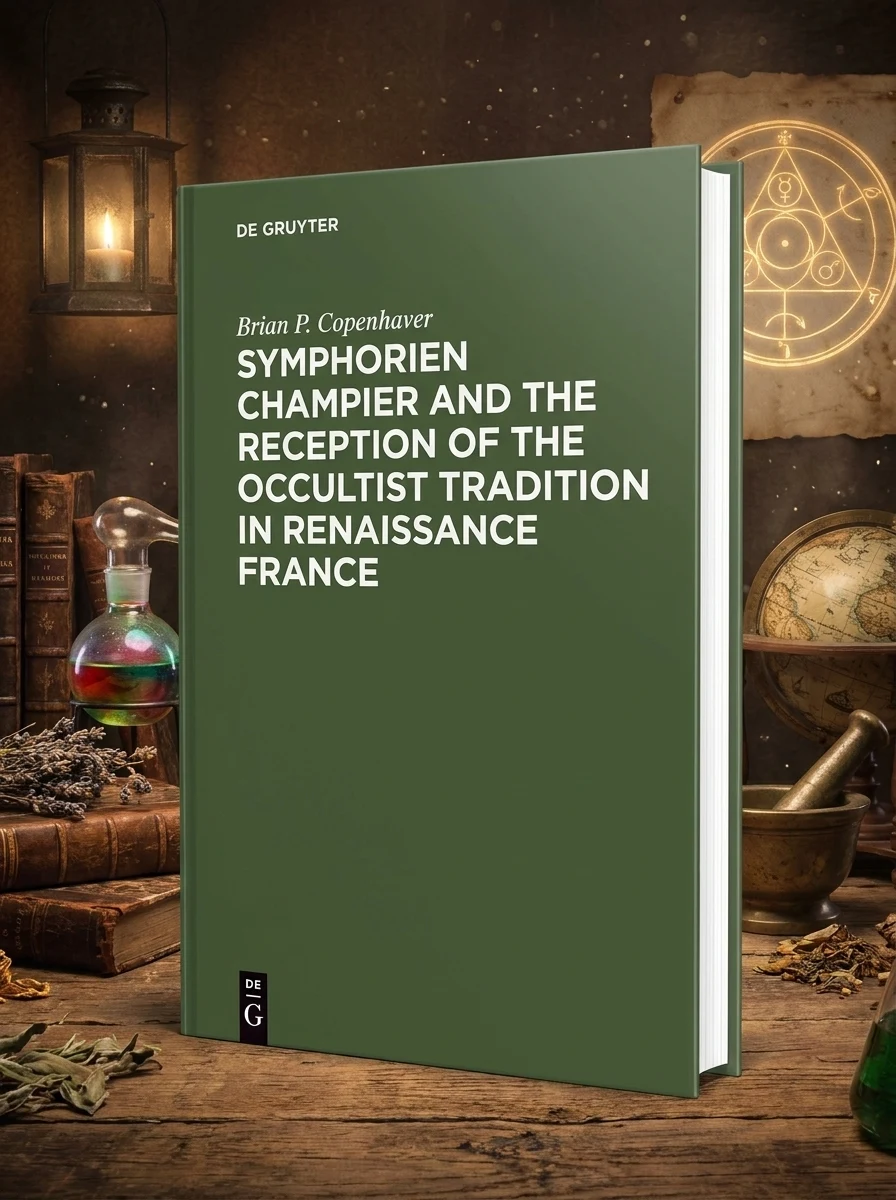
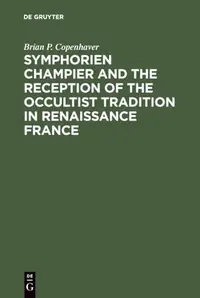
Symphorien Champier and the Reception of the Occultist Tradition in Renaissance France (Reprint 2010)
Copenhaver, Brian P 91
91
 Editorial score
How we rate
Editorial score
How we rate
Stock reported in the catalog; fulfillment is confirmed with your request.
Uncover the hidden currents of Renaissance thought through a pivotal figure.
This book meticulously explores the intellectual landscape of Renaissance France, focusing on Symphorien Champier, a significant but often overlooked figure. It delves into how the esoteric and occult traditions were assimilated and interpreted by scholars, physicians, and thinkers of the era. Rather than merely listing magical practices, this study examines the societal and philosophical integration of these ideas into the prevailing worldview. Readers will gain insight into the complex interplay between emerging scientific understanding and enduring spiritual beliefs, revealing the subtle ways ancient wisdom shaped a new age.
This work situates itself within the intellectual history of Renaissance France, examining how esoteric traditions were assimilated by scholars and physicians of that era. It bridges the gap between emerging scientific understanding and enduring spiritual beliefs in early modern thought.


📝 Description: Symphorien Champier and the Reception of the Occultist Tradition in Renaissance France (Reprint 2010)
💎 Expert review
📖 Why choose it
Why this book is worth reading
This book is essential for scholars and enthusiasts who wish to understand the nuanced integration of occult ideas into the Renaissance worldview. Readers will gain profound insight into how pivotal figures like Symphorien Champier shaped the era's intellectual landscape, moving beyond mere listings of magical practices to explore societal acceptance. It is ideal for those seeking to trace the subtle currents where ancient wisdom influenced emerging scientific and spiritual paradigms, offering a rich context for understanding the complex interplay of knowledge during this transformative period.
⭐ Reader reviews
Reader rating
Copenhaver provides a meticulous exploration of Renaissance France’s intellectual landscape, focusing on Symphorien Champier as a lens for broader esoteric assimilation. The text is rigorous, detailing how scholars and physicians interpreted these traditions within their prevailing worldview. However, it may not suit readers seeking practical magical instructions or casual narratives about alchemy. This is a dense academic study best appreciated by those interested in the philosophical and societal integration of occultism rather than its performative aspects. It stands as a crucial resource for understanding the historical context of esoteric thought.
❓ Frequently asked questions
📖 Who should read this
If you're fascinated by the intellectual history of the Renaissance, particularly its less-explored mystical dimensions, this scholarly work is for you. Dive into how foundational esoteric thought shaped the minds of its most influential thinkers, offering a unique perspective on a pivotal historical period.
🎯 Key themes and symbolism
Renaissance Occultism's Integration
This book illuminates how esoteric ideas, far from being fringe, were woven into the intellectual fabric of Renaissance France. It explores the mechanisms by which figures like Champier synthesized Hermetic, Neoplatonic, and alchemical concepts with medical and philosophical thought, demonstrating their perceived relevance to understanding the natural world and human condition.
Symphorien Champier's Legacy
Discover the profound influence of Symphorien Champier, a physician and humanist, whose writings became a conduit for ancient occult traditions into mainstream scholarship. The text analyzes his role in systematizing and disseminating knowledge that bridged the gap between mystical philosophy and practical medicine, showcasing his pivotal contribution to the era's intellectual discourse.
Mind-Body-Spirit Synthesis
Explore the Renaissance's holistic approach to existence, where the boundaries between mind, body, and spirit were fluid. The book examines how occult traditions informed understandings of health, cosmic connections, and psychic phenomena, presenting a worldview where human well-being was intricately linked to broader universal forces and unseen influences.
💬 Quotes from the book
“Champier's synthesis was not a mere compilation; it represented a deliberate attempt to reconcile the nascent empirical spirit with the enduring allure of cosmic correspondences.”
“The Renaissance mind, far from divorcing itself from the mystical, sought actively to integrate it, perceiving in the 'occult' not superstition but a deeper stratum of natural law.”
📜 Historical context
📚 Glossary
- Hermetism
- Neoplatonism
- Occultist Tradition
📔 Questions to reflect on
- How might a more holistic, mind-body-spirit worldview, as explored in the Renaissance, influence contemporary approaches to science and medicine?
- Consider how intellectual figures today might grapple with integrating ancient wisdom traditions into modern scientific or philosophical frameworks. What challenges and opportunities would arise?
- Reflect on the concept of "reception" in intellectual history. How do societies and individuals choose what aspects of past traditions to embrace or reject, and what does this reveal about their own values?
✍️ More books by this author Copenhaver, Brian P
All books by this author →
You might also like
See more →
 91
91