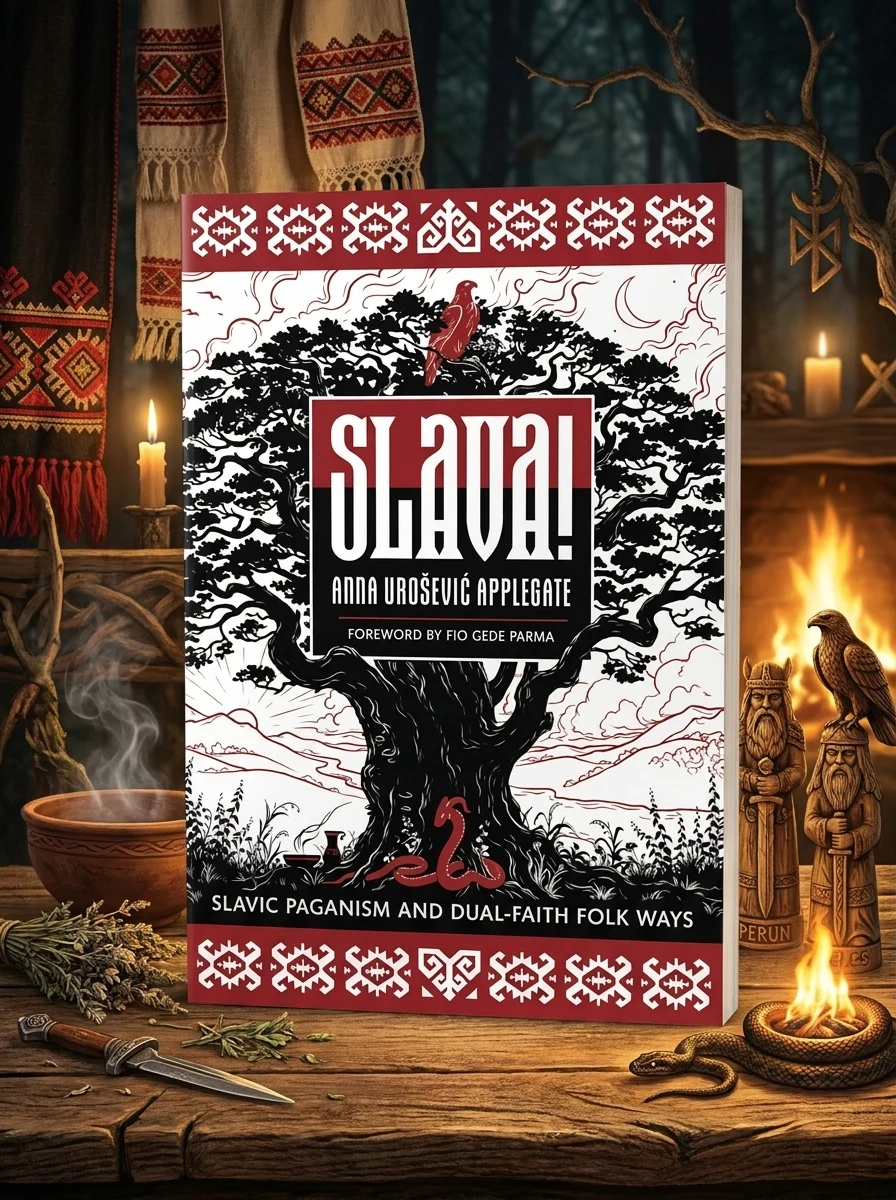
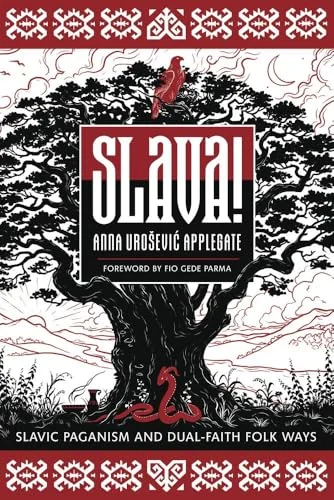
Slava!: Slavic Paganism and Dual-Faith Folk Ways
A guide to South Slavic Paganism, dual-faith folk ways, deities, and traditional magic.
Anna Urosevic Applegate explores South Slavic polytheism, dual-faith folk ways, Eastern European cosmology, deities, and folk magic. Drawing on historical spoken charms and living traditions, this volume addresses the practical realities of mixing Slavic Paganism with Christian customs. First-generation Serbian American author Applegate holds a Master of Arts in English from Loyola University Chicago, serves as ordained legal Pagan clergy, and founded an inclusive Rodnovery fellowship called the Circle of Rodu. Fio Gede Parma provides a foreword.
This work covers living South Slavic traditions, Eastern European Pagan cosmology, and dual-faith practices. It provides modern English-speaking diaspora readers with access to Slavic folk magic, spoken charms, and Native Faith resources.


Praise for this book
“A much-needed publication, opening up doors for the English-speaking diaspora and enthusiasts of Slavic culture...Complete with examples of historical spoken charms, family recipes for traditional dishes, and contemporary rituals and exercises, Slava! is a homely, cozy, and accessible guide into South Slavic-inspired practice.”
“Slava! invites readers of both Slavic and non-Slav background to learn about the nitty gritty of the traditions and beliefs of a huge area of Europe. More importantly, Urosevic Applegate speaks directly and repeatedly to the question of dual faith, a question many readers from many backgrounds are tackling for themselves.”
“A masterful work of ancestral reclamation, demonstrating how folkloric heritage can be woven into a meaningful and beautiful spiritual practice. Equal parts scholarly survey and intimate memoir, this book guides readers through the rich world of Slavic folkways with clarity and care.”
📝 Description: Slava!: Slavic Paganism and Dual-Faith Folk Ways
📑 What's inside
- Exercise List xvii
- Epigraph xviii
- Foreword by Fio Gede Parma xix
- Introduction 1
- Conclusion 261
- Appendix A: Serbian Cyrillic Alphabet and Pronunciation Guide 263
- Appendix B: Glossary 267
- Appendix C: Slavic Native Faith Resources (Groups, Musicians/Artists) 279
- Appendix D: My Family's Recipes of Classic Serbian Foods 285
- Bibliography 291
- Index 299
- About the Author 327
💎 Expert review
📖 Why choose it
Why this book is worth reading
Readers deeply invested in Eastern European heritage will find immense value in this illuminating guide to Slavic spirituality. It is ideal for those seeking to move beyond surface-level knowledge and connect with the ancestral wisdom of the region through authentic polytheistic practices. The book offers a comprehensive understanding of the diverse pantheon, making it essential for practitioners interested in folk magic and traditional rituals. By detailing the unique Dual-Faith phenomenon, it helps individuals build a resilient, personal spiritual path rooted in genuine historical context. Those craving a vibrant cosmology and hidden traditions will appreciate the meticulous unveiling of this worldview, bridging the gap between ancient roots and modern esoteric application.
⭐ Reader reviews
Reader rating
This title provides a robust exploration of Slavic Dual-Faith folk ways, offering readers a clear entry point into Eastern European polytheism. While it succeeds in outlining the pantheon and ritual structures for those seeking ancestral connection, it may not suit readers looking for rigorous academic anthropology or strict historical documentation. Those expecting purely modern Wiccan adaptations might find the specific cultural nuances challenging to integrate without prior knowledge of Slavic history. However, for enthusiasts of comparative religion and folk magic who value authentic heritage over generic occultism, this resource fills a vital niche by detailing the interwoven pagan and later spiritual influences that create such a distinct worldview.
❓ Frequently asked questions
📖 Who should read this
If you're drawn to the rich tapestry of Eastern European spirituality, seek genuine pagan practices, or wish to understand the resilience of folk traditions amidst historical change, this guide is for you. It offers profound insights for both seasoned practitioners and curious newcomers.
🎯 Key themes and symbolism
Authentic Slavic Polytheism
This work meticulously reconstructs the pre-Christian spiritual landscape of Slavic lands, detailing the pantheon of gods and goddesses, their roles in the cosmos, and their connection to daily life. It moves beyond superficial interpretations to present a deeply researched and reverent portrayal of ancestral beliefs and practices, offering a pathway to connect with the original spiritual currents of Eastern Europe.
Eastern European Folk Magic
Explore the practical application of Slavic spiritual beliefs through an array of folk magical practices. From protective charms and healing rituals to divination techniques and seasonal observances, the book provides insight into the everyday magic that shaped the lives of Slavic peoples. It emphasizes the connection between the natural world, community, and the unseen forces that influence human experience.
The Dual-Faith Path
Uncover the fascinating phenomenon known as 'Dvoeverie' or Dual-Faith, where ancient pagan customs and beliefs persisted and evolved alongside the adoption of Christianity. This section highlights how folk practices, deities, and ancestral reverence subtly integrated into new spiritual frameworks, showcasing the resilience and adaptability of indigenous traditions in Eastern Europe. It reveals a unique spiritual synthesis.
📜 Historical context
📚 Glossary
- Slavic Paganism
- Dual-Faith (Dvoeverie)
- Cosmology
📔 Questions to reflect on
- Reflect on a personal or ancestral folk practice you've encountered. How does it connect to the themes of nature, protection, or community found in Slavic traditions?
- Consider the concept of 'Dual-Faith' in your own spiritual journey. Have you ever blended different spiritual paths or found old beliefs persisting within new frameworks?
- If you were to create a small altar or sacred space inspired by Slavic cosmology, which deities, natural elements, or ancestral symbols would you include and why?
📖 Read on the blog
🏛 Books from this publisher Llewellyn Publications
All books from this publisher →


You might also like
See more →
Have a question about this item?
Ask about the edition, condition, delivery or anything else — we reply by email or phone, usually within a day.
