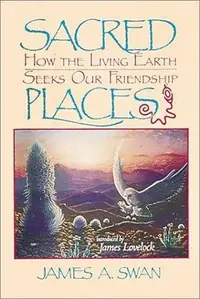
Sacred Places: How the Living Earth Seeks Our Friendship (Original)


This edition can be ordered. No arrival date is confirmed.
Discover the profound truth: the living Earth yearns for your conscious communion.
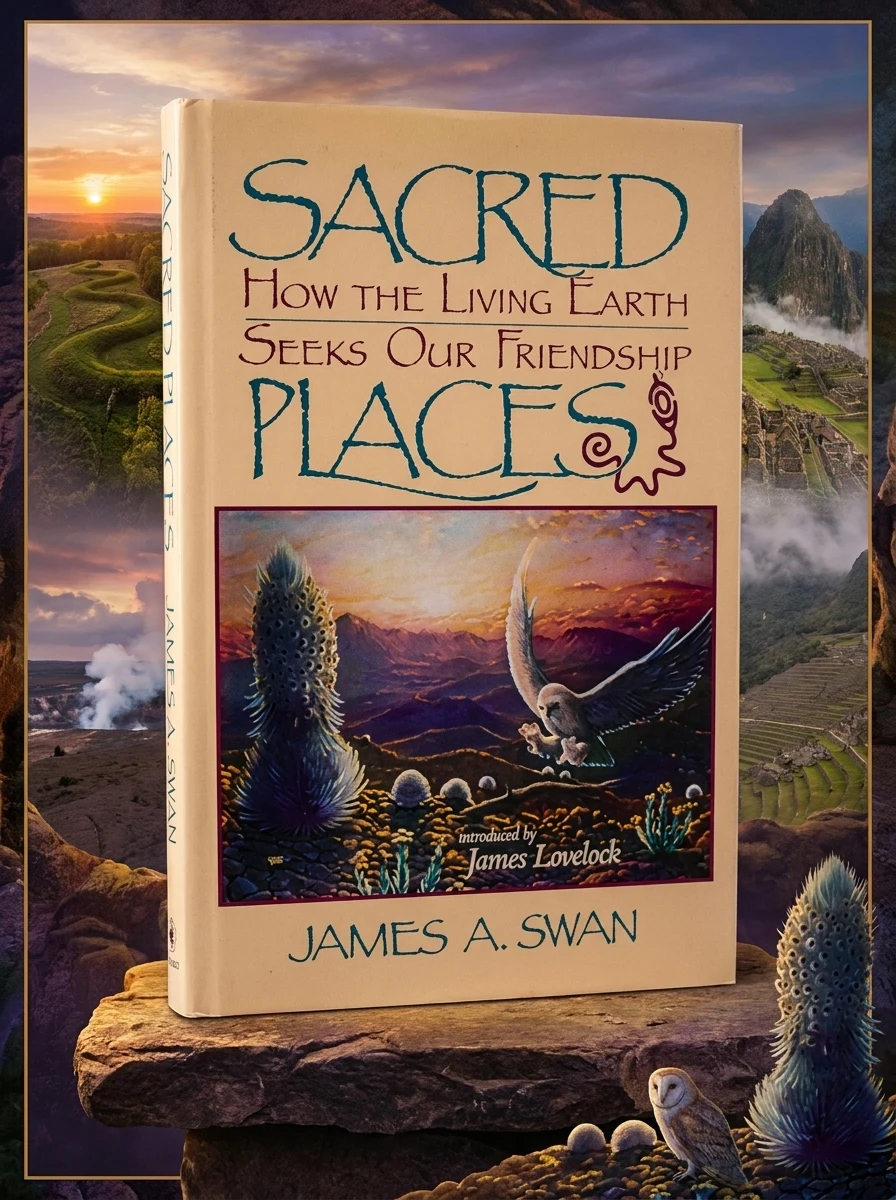
James Swan's "Sacred Places" invites readers to reconsider our relationship with the planet, proposing that Earth is a sentient entity actively seeking connection with humanity. Drawing inspiration from James Lovelock's groundbreaking Gaia hypothesis, Swan explores how certain revered natural locations, from the ancient Serpent Mound to the majestic Kilauea, possess an inexplicable potency. He posits that these sites are not merely geological formations but focal points of a living Earth's energy, capable of profoundly impacting us in ways that elude conventional scientific understanding. This work encourages a deeper, more spiritual engagement with our planetary home.
This work emerges from the modern esoteric tradition that blends New Age spirituality with ecological philosophy, specifically drawing upon the Gaia hypothesis to frame Earth as a conscious entity. It represents a shift in occult literature towards planetary consciousness and sacred geometry within natural landscapes.


📝 Description: Sacred Places: How the Living Earth Seeks Our Friendship (Original)
💎 Expert review
📖 Why choose it
Why this book is worth reading
Readers who feel a deep, intuitive pull toward nature but seek a spiritual framework to understand that connection will find profound resonance here. James Swan offers a compelling narrative for those who sense that the Earth is not merely dead matter but a living being yearning for communion. If you are weary of detached scientific observation and crave a relationship with the planet based on friendship and reciprocity, this book provides the philosophical grounding for such engagement. It is ideal for eco-spiritualists, earth-based practitioners, and anyone who experiences unexplainable potency in ancient sites like Serpent Mound or Kilauea. This text empowers you to view your interactions with natural landmarks as active, conscious dialogues rather than passive visits.
⭐ Reader reviews
Reader rating
Swan’s proposal that the Earth actively seeks our friendship is a bold metaphysical stance that may alienate strict materialists or skeptics of sentient planetary theories. Readers expecting rigorous geological data or conventional scientific proof will find this work lacking in empirical substance, as it prioritizes spiritual potency over measurable fact. However, for those open to the Gaia hypothesis as a spiritual guide rather than just a scientific model, the exploration of sacred sites like Kilauea offers a refreshing perspective. The book succeeds in bridging esoteric thought with ecological awareness, though its reliance on subjective experience may frustrate readers who demand objective validation for claims of Earth’s sentience.
❓ Frequently asked questions
📖 Who should read this
If you sense a deeper pulse within nature, are drawn to ancient mysteries, or seek a more profound, spiritual connection with our planetary home, this book is for you. It offers a compelling framework for understanding Earth as a living, conscious entity.
🎯 Key themes and symbolism
Earth's Sentient Presence
Swan posits that our planet is far more than an inert rock; it is a conscious being, much like Lovelock's Gaia. This book delves into the implications of such a living entity, suggesting Earth actively communicates and desires a relationship with its inhabitants, offering profound insights into ecological interconnectedness and spiritual reciprocity.
Power of Sacred Sites
The author examines specific geographical locations, such as Machu Picchu and Serpent Mound, as powerful conduits for Earth's energy. He argues these sites are not arbitrarily chosen but resonate with an inherent spiritual charge, capable of evoking deep emotional and spiritual experiences that defy purely rational explanation.
Beyond Scientific Understanding
“Sacred Places” challenges the limitations of purely materialist science in explaining the profound impact of certain natural phenomena. Swan suggests that the spiritual and emotional responses we feel at these sites operate on a level inaccessible to current scientific measurement, urging a more holistic and intuitive approach to understanding our world.
💬 Quotes from the book
“The Earth is not merely a stage upon which life unfolds; it is a conscious participant, a vast being whose pulse we can feel if we only learn to listen.”
“At places like Serpent Mound or Machu Picchu, the veil thins. We are not just observing history or geology; we are entering into a dialogue with the planet itself.”
📜 Historical context
📚 Glossary
- Gaia Hypothesis
- Sacred Site
- Animism
📔 Questions to reflect on
- Reflect on a natural place you've visited that felt uniquely powerful or sacred. What sensations or emotions did it evoke that science might struggle to explain?
- How might your daily interactions with the natural world change if you genuinely believed the Earth was a conscious, living being seeking your friendship?
- Consider the concept of "listening to the Earth's pulse." What practices or meditations could help you develop a more intuitive connection with your environment?
🏛 Books from this publisher Bear & Company
All books from this publisher →
You might also like
See more →