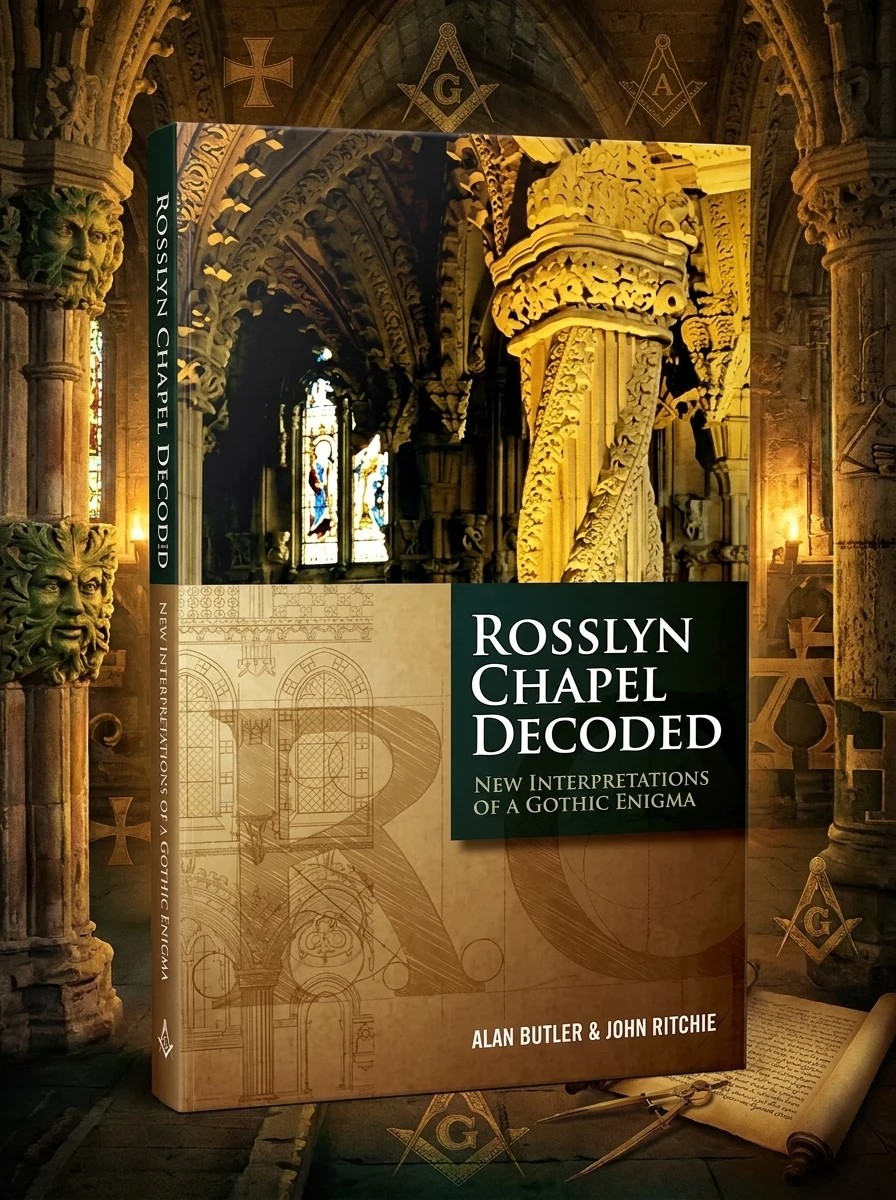
Rosslyn Chapel Decoded: New Interpretations of a Gothic Enigma
Butler, AlanThis edition can be ordered. No arrival date is confirmed.
Rosslyn Chapel: A 15th-century enigma concealing secrets far beyond its sacred facade.
Delve into the profound mysteries of Rosslyn Chapel, the revered 15th-century Scottish masterpiece often mistaken for a mere parish church. This compelling investigation posits that its true purpose extends far beyond conventional Christian worship, revealing a structure deliberately encoded with esoteric knowledge. Uncover compelling evidence suggesting its creators intended to establish a "New Jerusalem" in Scotland, potentially housing a lost holy relic. The authors meticulously decode its intricate carvings and powerful symbols, linking it to ancient orders and a hidden history, challenging centuries of conventional understanding.
This work sits firmly within the tradition of esoteric architectural decoding and alternative historical inquiry, exploring how sacred spaces may conceal hidden philosophical or religious meanings beyond their orthodox appearances. It aligns with literature that investigates ancient orders and lost relics through symbolic analysis rather than traditional ecclesiastical history.


📝 Description: Rosslyn Chapel Decoded: New Interpretations of a Gothic Enigma
💎 Expert review
📖 Why choose it
Why this book is worth reading
Readers fascinated by the intersection of architecture, history, and spirituality will find this book deeply rewarding. It appeals to those who suspect that grand structures like Rosslyn Chapel hold more than just religious significance. If you enjoy unraveling symbolic codes and exploring theories about secret societies or hidden relics, this investigation offers a compelling narrative. It is ideal for enthusiasts of Gothic mysteries who want to look past the surface level of a famous site. The book provides a fresh perspective on a well-known location, inviting you to see it as a deliberate vessel for esoteric knowledge rather than a simple place of worship. This approach satisfies the curiosity of those seeking deeper, perhaps concealed, truths within historical monuments.
⭐ Reader reviews
Reader rating
This text offers a provocative reimagining of Rosslyn Chapel, positioning it as a 'New Jerusalem' filled with encoded secrets. While the analysis of carvings and symbols is engaging for believers in alternative history, it may disappoint academic historians or strict traditionalists who prefer documented facts over speculative interpretations. Readers looking for dry, conventional religious history will likely find the esoteric focus distracting or unsubstantiated. However, for those open to mystical explanations and hidden narratives, the book delivers a intriguing puzzle. It is not for skeptics demanding rigorous archaeological proof, but it succeeds in presenting a cohesive, albeit unconventional, thesis that challenges standard perceptions of this Scottish landmark.
❓ Frequently asked questions
📖 Who should read this
If you are drawn to unsolved historical puzzles, the esoteric underpinnings of sacred architecture, or the hidden legacies of secret societies, this book will captivate your imagination. Question accepted narratives and embark on an intellectual journey through Scotland's enduring enigma.
🎯 Key themes and symbolism
Esoteric Architecture Decoded
This book meticulously dissects Rosslyn Chapel's architectural anomalies, arguing that its design and intricate carvings are not merely decorative. Instead, they form a complex symbolic language, deliberately crafted to obscure a deeper, non-Christian purpose, hinting at a profound, alchemical or Gnostic understanding held by its enigmatic builders.
Templar & Masonic Roots
Explore the compelling connections between Rosslyn Chapel and the shadowy legacies of the Knights Templar and early Freemasonry. The authors uncover how the chapel's iconography and strategic location align with the secret traditions and possible survival of these powerful, often persecuted, esoteric fraternities in Scotland.
The Lost Relic Hunt
At the heart of the chapel's mystery lies the astonishing claim of housing the skull of St. Matthew the Evangelist. This book presents the startling hypothesis that this significant relic was brought to Rosslyn in the 15th century by the polymath Sir Gilbert Hay, providing a radical new motivation for the chapel's construction.
💬 Quotes from the book
“The stone speaks, not in scripture, but in symbols woven into the very fabric of its being, a silent testament to a truth deliberately veiled from the uninitiated.”
“To truly understand Rosslyn, one must abandon the comfortable narratives of history and embrace the unsettling possibility that nothing here is as it initially appears.”
📜 Historical context
📚 Glossary
- Rosslyn Chapel
- Knights Templar
- Freemasonry
📔 Questions to reflect on
- If Rosslyn Chapel was indeed built to house a lost relic, what implications does this have for our understanding of historical religious power structures?
- How might an architectural masterpiece like Rosslyn serve as a "textbook" for esoteric knowledge, and what role do symbols play in conveying such hidden wisdom?
- Consider other historical sites or texts that, like Rosslyn, might conceal a deeper, non-obvious purpose. What methodologies could be applied to "decode" them?
✍️ More books by this author Butler, Alan
All books by this author →
🏛 Books from this publisher Watkins Publishing
All books from this publisher →



![Pregnancy Health Yoga: Your Essential Guide for Bump, Birth and Beyond [With DVD]](/img/pregnancy-health-yoga-your-essential-guide-for-bump-birth-and-beyond-with-dvd.webp)
You might also like
See more →

 91
91