
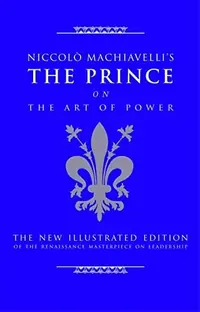
Niccolo Machiavelli's the Prince on the Art of Power: The New Illustrated Edition of the Renaissance Masterpiece on Leadership Nederman, Cary J
This edition can be ordered. No arrival date is confirmed.
Unveil the stark, unvarnished truths of power and statecraft that shape empires.
Step into the mind of Renaissance Florence's most controversial political thinker with this beautifully presented new edition of Machiavelli's seminal work. Penned in 1512, "The Prince" remains an uncompromising guide to acquiring and maintaining political power, dissecting human nature and the necessities of leadership with chilling precision. This edition features a fresh translation and insightful historical context by Cary J. Nederman, complemented by evocative illustrations, making the enduring lessons of this masterpiece accessible to a new generation of scholars and enthusiasts alike.
This work anchors itself in the Renaissance tradition of political philosophy, specifically emerging from the turbulent era of Florence's statecraft. It serves as a foundational text within the esoteric study of power dynamics and leadership strategies that have influenced centuries of governance.


📝 Description: Niccolo Machiavelli's the Prince on the Art of Power: The New Illustrated Edition of the Renaissance Masterpiece on Leadership Nederman, Cary J
💎 Expert review
📖 Why choose it
Why this book is worth reading
Readers seeking to understand the raw mechanics of leadership and statecraft will find profound value in this edition. It is ideal for those fascinated by the intersection of history, psychology, and political strategy who wish to explore human nature through a lens of uncompromising realism. The fresh translation and insightful historical context provided by Cary J. Nederman make these enduring lessons accessible to modern scholars and enthusiasts alike. Those interested in acquiring or maintaining power, whether in business or politics, will gain clarity on the necessities of leadership. The evocative illustrations further enhance the experience, bridging the gap between the Renaissance masterpiece and contemporary understanding for a new generation eager to dissect the truths that shape empires.
⭐ Reader reviews
Reader rating
This edition offers a compelling entry point into Machiavelli’s seminal work, enhanced by Nederman’s contextual insights and beautiful presentation. However, it is candidly unsuitable for readers seeking moralistic guidance or comforting affirmations of virtue in leadership. Those expecting a sanitized version of history or purely academic dryness may find the stark truths of power unsettling or overly simplistic. It does not cater to those who prefer abstract theory over practical application. Nevertheless, for individuals ready to confront the unvarnished realities of statecraft and human nature, this volume delivers a chilling precision that remains relevant. It is a robust tool for analyzing authority, provided one accepts its uncompromising stance on the necessities of rule without expecting ethical consolation.
❓ Frequently asked questions
📖 Who should read this
If you are fascinated by the mechanics of leadership, the complex interplay of ethics and power, or the enduring legacy of Renaissance political thought, this meticulously crafted edition is an essential addition to your collection. Delve into the mind of a master strategist.
🎯 Key themes and symbolism
Pragmatic Statecraft
Machiavelli discards idealistic notions of morality in favor of practical considerations for effective governance. He argues that a ruler must prioritize the stability and security of the state above all else, often necessitating actions that might be deemed unethical by conventional standards, revealing the true nature of power dynamics.
Virtù and Fortuna
Explore the interplay between a leader's skill and prowess (virtù) and the unpredictable forces of luck or circumstance (fortuna). Machiavelli advises how a prince can best leverage their own abilities and adaptability to navigate the whims of fate, asserting control over destiny as much as possible to secure their reign.
Maintaining Authority
This text offers stark counsel on how a ruler can not only seize power but, more importantly, retain it. From managing alliances to dealing with internal dissent and external threats, Machiavelli provides a blueprint for consolidating and exercising authority through a combination of strategic perception and decisive action.
💬 Quotes from the book
“It is better to be feared than loved, if one cannot be both.”
“A prince must learn how not to be good, and to use this knowledge or not use it according to the necessity of the case.”
📜 Historical context
📚 Glossary
- Virtù
- Fortuna
- Realpolitik
📔 Questions to reflect on
- How do Machiavelli's arguments for maintaining power resonate with or conflict with contemporary leadership styles you observe today?
- Reflect on a situation where a leader you know faced a choice between a morally 'good' action and a pragmatically 'effective' one. Which path did they choose, and what were the consequences?
- Consider Machiavelli's concept of 'virtù.' How might you cultivate such qualities in your own life to navigate challenges and achieve your goals?
🏛 Books from this publisher Watkins Publishing
All books from this publisher →



![Pregnancy Health Yoga: Your Essential Guide for Bump, Birth and Beyond [With DVD]](/img/pregnancy-health-yoga-your-essential-guide-for-bump-birth-and-beyond-with-dvd.webp)
You might also like
See more →
 91
91