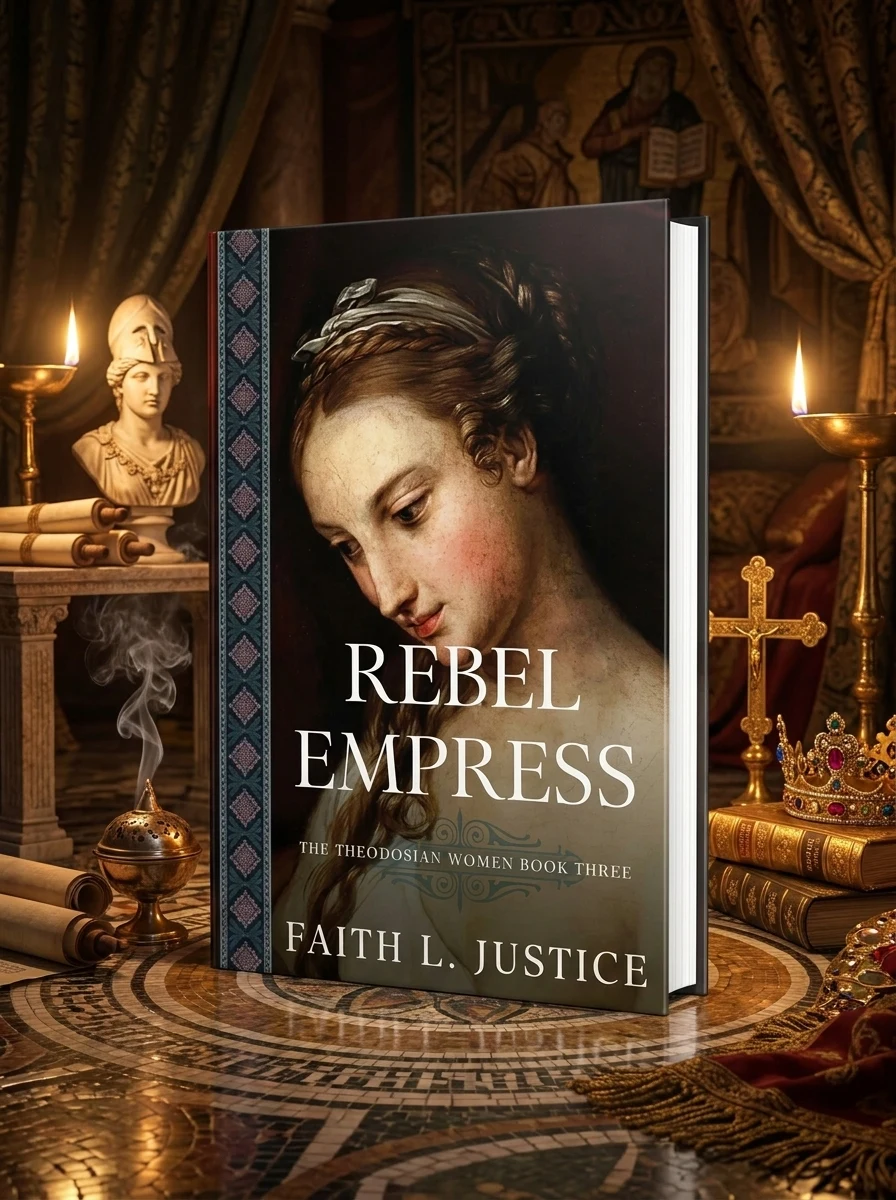
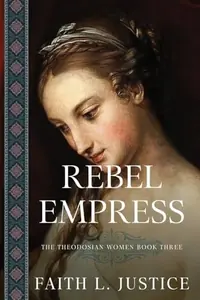
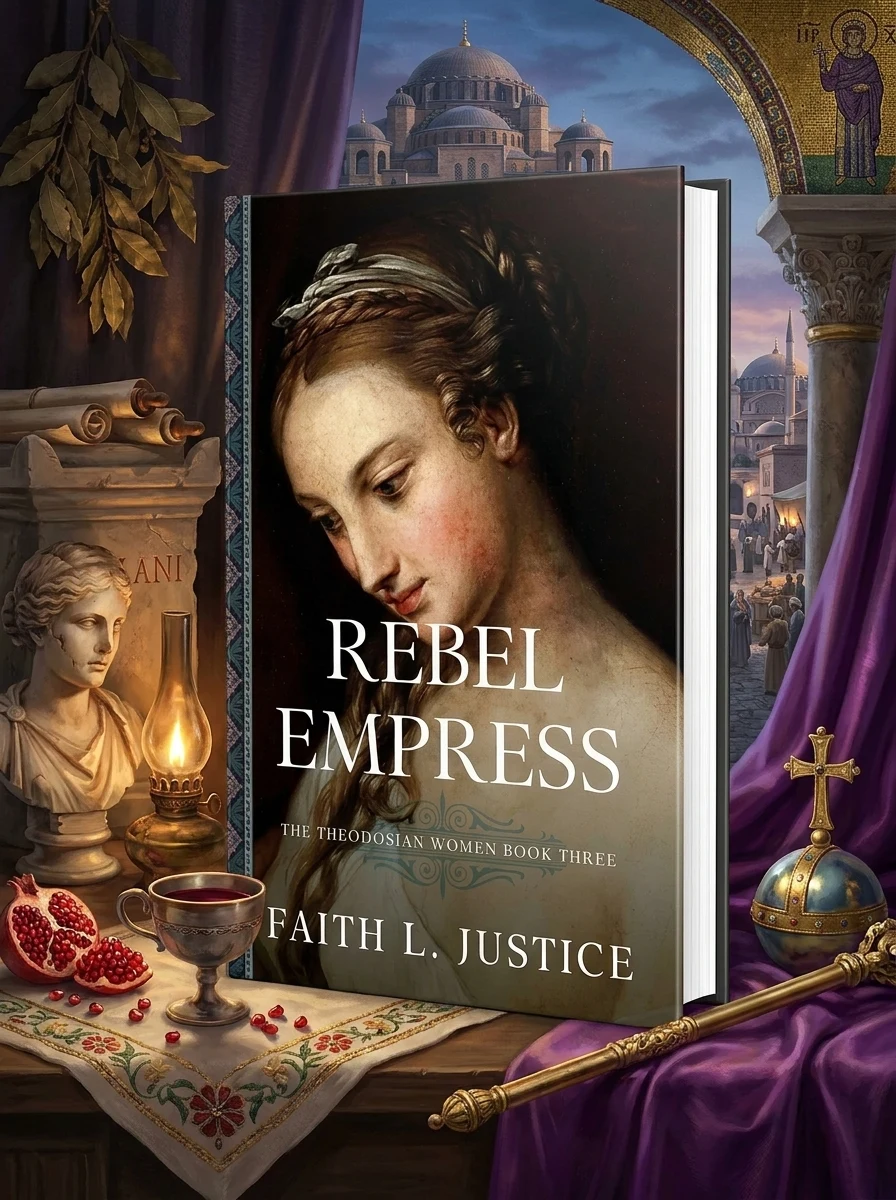
Rebel Empress: A Novel of Imperial Rome Justice, Faith L
Justice, Faith LStock reported in the catalog; fulfillment is confirmed with your request.
Her brilliance defied an empire, her spirit forged a legacy amidst Roman intrigue.
Step into the vibrant yet treacherous world of 5th-century Constantinople with the compelling story of Athenais. Initially a reluctant pagan scholar offered to Emperor Theodosius II, she navigates a forced conversion to Christianity and the cutthroat politics of the imperial court. As she rises to the esteemed position of Augusta, Athenais leverages her intellect to build a circle of influence, challenging her adversaries and striving to secure her place and that of her family. This narrative vividly portrays her struggle to maintain respect, affection, and power against overwhelming odds.
This novel sits within the historical fiction tradition, specifically exploring the intersection of late Roman imperial politics and early Christian theological shifts in Constantinople. It draws upon the esoteric and philosophical tensions between pagan scholarship and emerging orthodox faith during a period of significant religious transformation.


📝 Description: Rebel Empress: A Novel of Imperial Rome Justice, Faith L
💎 Expert review
📖 Why choose it
Why this book is worth reading
Readers who enjoy complex character studies set against the backdrop of oppressive political systems will find this narrative deeply rewarding. Athenais serves as a powerful archetype for those fascinated by intellectual resistance and the strategic navigation of hostile environments. The story offers a compelling look at how personal integrity and scholarly brilliance can be weaponized in a court dedicated to dogma. It appeals to anyone interested in the nuanced dynamics of power, faith, and survival within historical settings where dissent is perilous. By focusing on Athenais's internal and external struggles, the book provides an intimate portrait of resilience, making it ideal for those seeking stories of underestimated figures who carve out agency amidst overwhelming institutional pressure.
⭐ Reader reviews
Reader rating
This title succeeds in highlighting the intellectual fortitude required to survive in a treacherous imperial court, offering a fresh perspective on Athenais’s life. However, readers seeking fast-paced action or traditional fantasy elements will likely be disappointed by the focus on political maneuvering and philosophical debate. The narrative prioritizes internal conflict and social intrigue over external adventure, which may feel slow to those expecting dramatic battles or mystical occurrences. It is best suited for patients who appreciate detailed psychological profiling and historical atmosphere. Those looking for straightforward romance or unambiguous moral victories should look elsewhere, as the text embraces the messy, ambiguous nature of power and faith in fifth-century Constantinople.
❓ Frequently asked questions
📖 Who should read this
If you are captivated by strong female protagonists who defy societal expectations, enjoy immersive historical settings, and appreciate narratives rich with political maneuvering and personal growth, then this journey into Imperial Byzantium is absolutely for you.
🎯 Key themes and symbolism
Imperial Power Dynamics
The novel meticulously illustrates the intricate and often brutal machinations within the Byzantine court. Athenais must learn to wield her nascent influence, manage jealous rivals, and understand the subtle currents of loyalty and betrayal that define life at the heart of an empire, where personal ambition often clashes with state policy.
Faith and Identity
Athenais's journey from a pagan intellectual to a Christian empress forms a central pillar of the narrative. The book explores not just the political necessity of her conversion but also the profound intellectual and spiritual struggle of reconciling her deeply held beliefs with the demands of a new, ascendant faith in a religiously charged era.
Female Agency in Antiquity
This work shines a light on how a woman in a patriarchal society can carve out significant influence and power. Athenais, initially a pawn, transforms into a formidable figure, demonstrating resilience and strategic intellect to protect her position, her family, and to leave her own indelible mark on history, despite constant opposition.
💬 Quotes from the book
“The emperor's gaze was a gilded cage; to survive, she would learn not to escape it, but to sing within its bars.”
“Old gods still whispered in the marble halls of her memory, even as new prayers shaped the empire's dawn.”
📜 Historical context
📚 Glossary
- Augusta
- Pagan
- Constantinople
📔 Questions to reflect on
- Consider Athenais's forced conversion. How do you think an individual reconciles deeply held personal beliefs with external pressures for conformity, especially concerning faith?
- Athenais gained influence through intellect and strategic alliances. What are some non-traditional ways individuals can accrue power or agency in challenging circumstances?
- Reflect on the theme of legacy. What kind of legacy do you think Athenais ultimately sought, and what lasting impact do you believe her story has on understanding historical female figures?
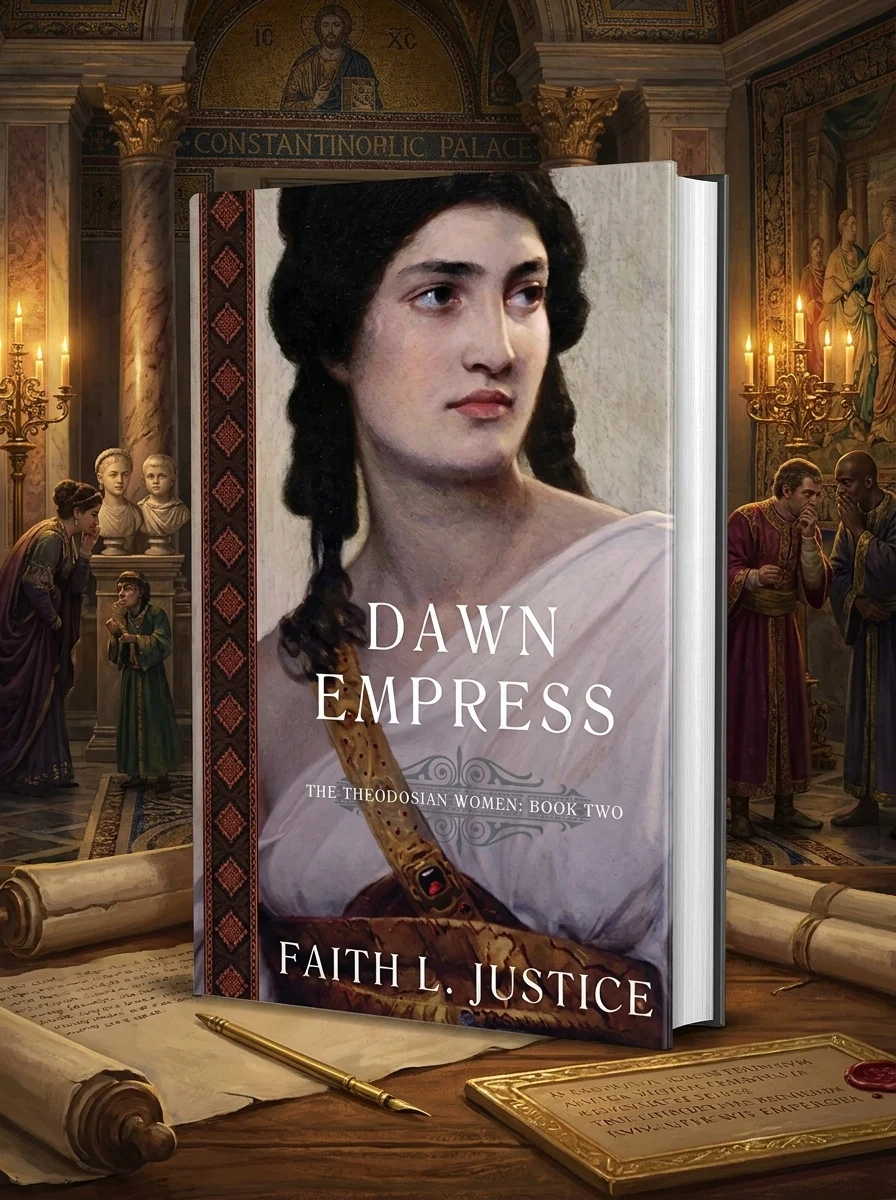
📖 From the series “The Theodosian Women”
All books in the series →



✍️ More books by this author Justice, Faith L
All books by this author →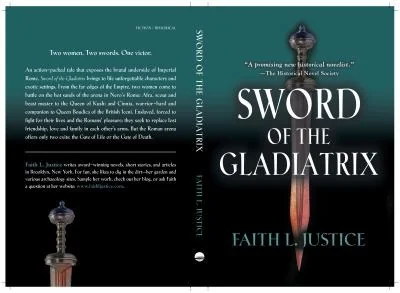

🏛 Books from this publisher Raggedy Moon Books
All books from this publisher →

You might also like
See more →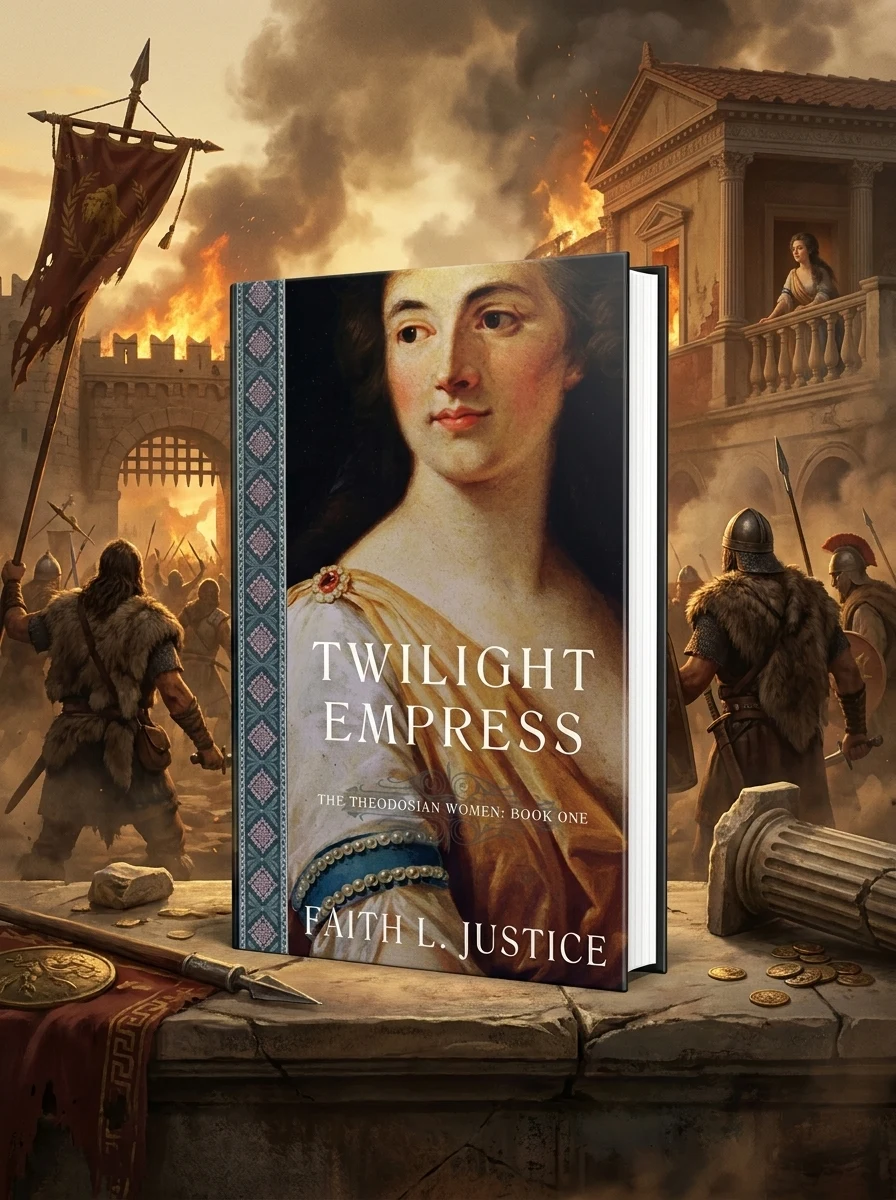


 82
82