US shipping Secure card payment Occult and esoteric books

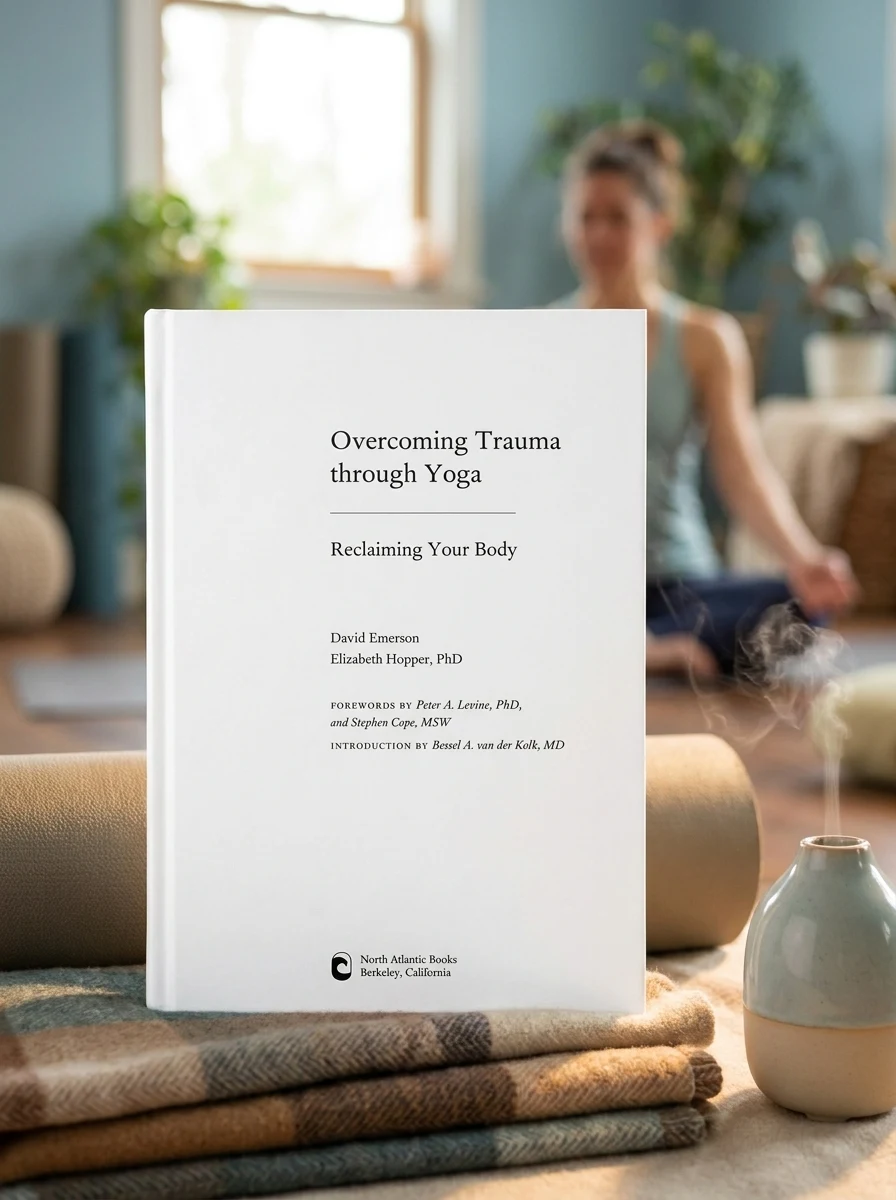
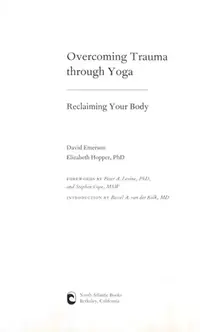
Overcoming Trauma Through Yoga: Reclaiming Your Body

Emerson, David
Reader rating
4.7
(4 reviews) 133 sold
In stock

Stock reported in the catalog; fulfillment is confirmed with your request.

📚 ABOUT THE BOOK

Reclaim your physical autonomy and dissolve trauma's grip through evidence-based, somatic yoga practices.

David Emerson presents a rigorous, neurologically grounded framework for healing post-traumatic stress through the medium of yoga. Drawing from the Trauma Center at Justice Resource Institute, this text bridges clinical psychology and somatic practice. It details how gentle movement, breathwork, and mindful awareness can regulate the nervous system and restore a sense of safety within the body. The guide offers specific protocols for survivors navigating triggers and for practitioners seeking to create secure environments, ensuring that healing is both accessible and deeply respectful of the survivor's autonomy.

Key themes
Somatic healing Nervous system regulation Trauma-informed pedagogy
Historical context

This work sits at the intersection of contemporary somatic psychology and clinical trauma therapy, reflecting the modern integration of Eastern yogic traditions with Western neuroscience. It represents a shift towards evidence-based spiritual practices that prioritize physiological safety over mystical experience.

Difficulty
●● Moderate
Fans will love it
Bessel van der Kolk · Gabor Maté · Peter Levine · Tara Brach
🕯️ Occult Philosophy
🏛 North Atlantic Books 📖 184 pages 📔 Paperback 📐 Paperback ISBN: 9781556439698
Fun fact
Emerson’s text is a vital bridge between clinical rigor and accessible practice. It excels in demystifying neurobiology for the layperson while offering clinicians actionable protocols. However, readers seeking traditional asana alignment guides will find it lacking. It sits firmly in the realm of therapeutic yoga, essential for anyone viewing the body as a primary vessel for recovery rather than an object to be perfected.

📝 Description: Overcoming Trauma Through Yoga: Reclaiming Your Body

A trauma-informed approach to healing body and mind: an evidence-based yoga program for survivors, clinicians, and yoga teachers Research-backed and trauma-informed, this book introduces a yoga program that helps readers heal from the cognitive, emotional, and physiological symptoms of PTSD. From managing triggers to accessing safety, the approaches and exercises presented in Overcoming Trauma through Yoga are deeply practical and grounded in what survivors need to know to heal from the effects of trauma. The book opens with an introduction written by Bessel van der Kolk, moving into a transformative approach to recovery that was developed by experts at the Trauma Center at Justice Resource Institute. The program facilitates somatic healing through gentle breath, mindfulness, and movement practices, and offers insights on the specific needs of trauma survivors practicing yoga at home or in class: adjusting pace, creating safety, accessing empowered choice, and more. The final chapters offer specific guidance and practical, trauma-informed insights for: Survivors to develop a trauma-sensitive practice at home and in the studio Clinicians to integrate yoga into clinical care, pair yoga-based interventions with therapeutic goals, and address challenges to yoga-based strategies Yoga teachers to build trauma-sensitive yoga classes and learn best practices for responding to triggered responses "In this landmark book, the authors offer survivors a gentle, step-by-step, mindful yoga that is tailored for their specific needs...it is a great companion and guide to those taking the journey of recovery from trauma to wholeness" (Peter A. Levine).

💎 Expert review

💎
Esoterica Books editorial team
Occult literature desk
Emerson delivers a vital resource that successfully demystifies the connection between trauma and the body through rigorous clinical frameworks. The text is commendable for its emphasis on autonomy and safety, avoiding coercive spiritual tropes in favor of neurobiological clarity. However, it does not suit readers seeking mystical enlightenment or those uncomfortable with academic medical terminology. It is also ill-suited for individuals requiring immediate crisis intervention, as it focuses on long-term somatic regulation rather than acute psychological rescue. The tone remains clinical yet warm, making it a sturdy reference for serious practitioners. While it lacks the narrative flair of memoir-style trauma accounts, its utility for structured healing is undeniable.
✓ EDITOR'S REVIEW

📖 Why choose it

📖

Why this book is worth reading

Survivors of trauma seeking a gentle, non-verbal path to healing will find profound comfort in Emerson’s scientifically grounded approach. This book is essential for yoga teachers aiming to create inclusive, safe spaces that honor bodily autonomy. It also serves clinicians and therapists who wish to integrate somatic practices into their work with confidence. By bridging rigorous neuroscience with accessible movement, it empowers readers to reclaim their physical agency. You will gain practical protocols for regulating your nervous system, offering a respectful roadmap to safety without demanding spiritual bypassing. It is ideal for those ready to engage deeply with their bodies as sites of recovery and resilience.

⭐ Reader reviews

The starting rating comes from the team Esoterica Books —
⭐ Esoterica editorial review Editorial rating 4.7/5
★★★★
Survivors of trauma seeking gentle, body-based recovery tools, and yoga instructors or clinicians wishing to deepen their understanding of trauma-sensitive teaching methods and clinical integration.

Reader rating

4.7
Based on 4 reviews
5
2
4
2
3
0
2
0
1
0
G
Grace P. ✓ Verified purchase
June 19, 2025
Very good

Was skeptical at first. Plenty of passages worth underlining; my copy is already full of margin notes. It rewards patience more than any book I've bought this year. My only quibble is the cover feels thinner than expected. Recommended with reservations.

M
Margaret S. ✓ Verified purchase
November 6, 2024

Bought this as a gift for my sister and ended up ordering a second copy for myself. It connects ideas I'd only seen treated separately elsewhere. The print is clean and easy on the eyes for long sessions. A keeper.

S
Silas C. ✓ Verified purchase
September 15, 2024
A treasure

Ordered this after seeing it referenced in another book I was studying. The typesetting is comfortable for study, with good margins for notes. Five stars from me.

E
Esoterica Books editorial team

Emerson delivers a vital resource that successfully demystifies the connection between trauma and the body through rigorous clinical frameworks. The text is commendable for its emphasis on autonomy and safety, avoiding coercive spiritual tropes in favor of neurobiological clarity. However, it does not suit readers seeking mystical enlightenment or those uncomfortable with academic medical terminology. It is also ill-suited for individuals requiring immediate crisis intervention, as it focuses on long-term somatic regulation rather than acute psychological rescue. The tone remains clinical yet warm, making it a sturdy reference for serious practitioners. While it lacks the narrative flair of memoir-style trauma accounts, its utility for structured healing is undeniable.

❓ Frequently asked questions

No, the practices are designed to be accessible and gentle, focusing on internal awareness rather than external physical achievement or complex postures.
Yes, the text provides specific guidance for healthcare providers on how to safely integrate yoga into clinical care plans for PTSD treatment.

📖 Who should read this

Survivors of trauma seeking gentle, body-based recovery tools, and yoga instructors or clinicians wishing to deepen their understanding of trauma-sensitive teaching methods and clinical integration.

🎯 Key themes and symbolism

Somatic healing

Nervous system regulation

Trauma-informed pedagogy

💬 Quotes from the book

“The body keeps the score, and the body must be the site of the cure.”

“Safety is not a place, but a physiological state that must be cultivated.”

📜 Historical context

This work emerges from the late 20th and early 21st-century convergence of Western neuroscience and ancient yogic traditions. It reflects the shift from purely talk-based trauma therapy to somatic approaches, pioneered by researchers at institutions like the Justice Resource Institute, emphasizing that trauma resides in the body and requires physical, not just cognitive, resolution.

📚 Glossary

Somatic
Trauma-Informed
Nervous System Regulation

📔 Questions to reflect on

  1. Where do you hold tension in your body when you recall difficult memories?
  2. How does your breath change when you feel unsafe versus when you feel secure?
  3. What small movement feels like an act of reclaiming ownership over your physical self?

🏛 Books from this publisher North Atlantic Books

All books from this publisher →
You might also like

See more →