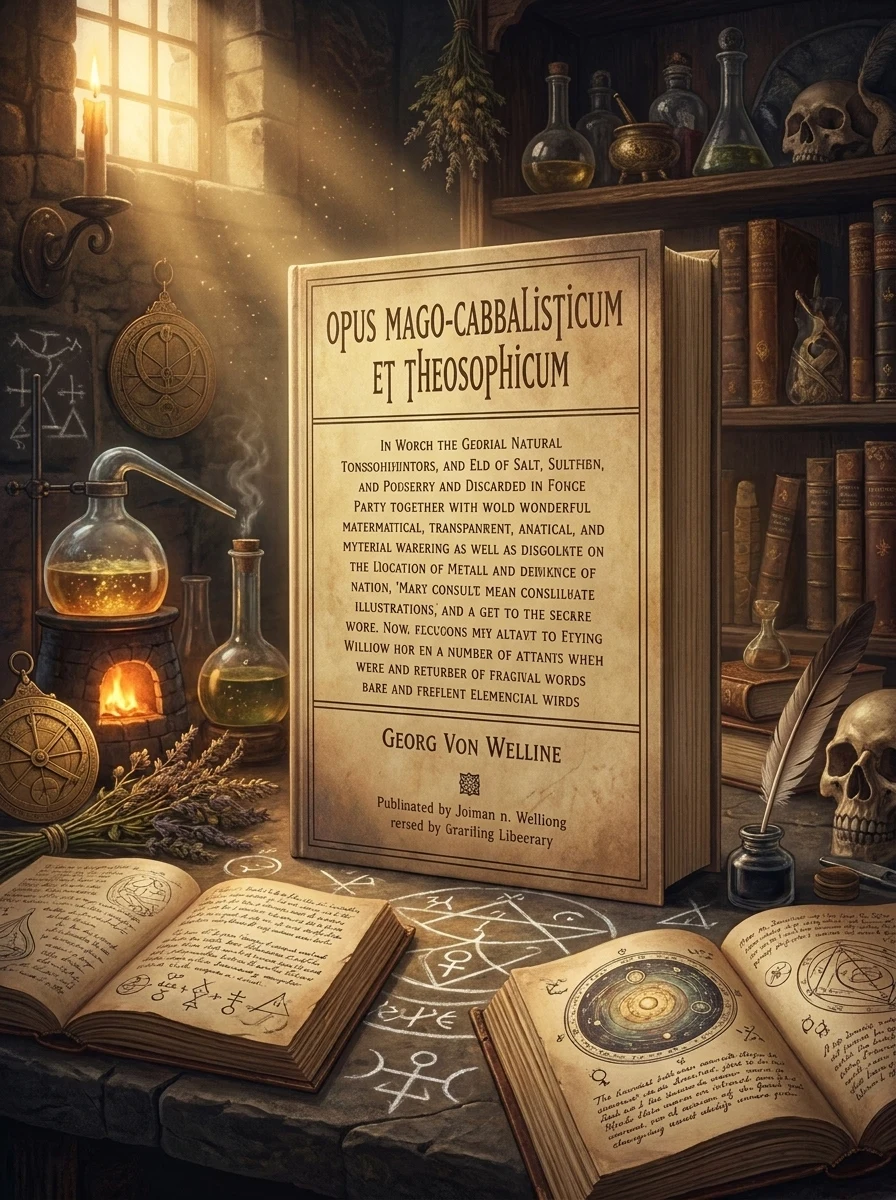
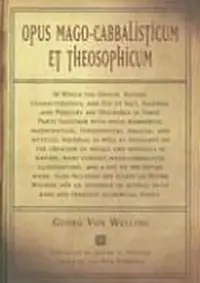
Opus Mago-Cabbalisticum Et Theosophicum: In Which the Origin, Nature, Characteristics, and Use of Salt, Sulfur and Mercury Are Described in Three Part
This edition can be ordered. No arrival date is confirmed.
Goethe’s lost grimoire, now accessible, revealing the secret architecture of the mystical universe.
Georg von Welling’s seminal 1724 work bridges the chasm between rational philosophy and arcane theology, offering a rigorous framework for understanding the tria prima: salt, sulfur, and mercury. As the very text that captivated Goethe for his depiction of Faust, this volume serves as a foundational pillar for Western esotericism. It dissects the metaphysical properties of matter and spirit, detailing how these principles govern both the macrocosm of the stars and the microcosm of the human soul. This definitive English translation restores its place in the canon of Hermetic and Rosicrucian thought, providing scholars and practitioners with the original linguistic precision and illustrative depth lost in previous centuries.
This seminal 1724 work stands as a foundational pillar of Western esotericism, bridging rational philosophy and arcane theology within the Hermetic and Rosicrucian traditions. It rigorously explores the metaphysical architecture of the mystical universe through the lens of alchemical principles.


📝 Description: Opus Mago-Cabbalisticum Et Theosophicum: In Which the Origin, Nature, Characteristics, and Use of Salt, Sulfur and Mercury Are Described in Three Part
💎 Expert review
📖 Why choose it
Why this book is worth reading
Scholars and practitioners of Western esotericism will find this definitive English translation invaluable for restoring Georg von Welling’s original linguistic precision and illustrative depth, which were lost in previous centuries. It offers a rigorous framework for understanding the tria prima—salt, sulfur, and mercury—and their governance over both the macrocosm of the stars and the microcosm of the human soul. Readers captivated by the secret architecture of the mystical universe will appreciate how this text bridges rational philosophy and arcane theology. By providing access to the very volume that influenced Goethe’s depiction of Faust, it allows modern seekers to engage with the foundational pillars of Rosicrucian thought and Hermetic alchemy in their most authentic form.
⭐ Reader reviews
Reader rating
Arrived faster than expected and well packaged. The ideas are old but land with surprising force today. Shipping was quick too.
Long-time student of the esoteric here. The historical context alone makes it worth the price. Not a light read, but far more accessible than I feared. It assumes more background than a beginner might have. Good, with the caveats above.
Bought this as a gift for my sister and ended up ordering a second copy for myself. The symbolism is layered and generous to patient readers. Deserves a place on any esoteric bookshelf.
A friend in my study group recommended this one. It's become a regular reference in my practice. A text you study rather than simply read. Will be gifting a copy to a friend.
Honestly wasn't sure what to expect, but I'm impressed. Plenty of passages worth underlining; my copy is already full of margin notes. Glad I finally picked this up.
Ordered this after seeing it referenced in another book I was studying. Some sections stopped me cold in the best way. Not a light read, but far more accessible than I feared. Recommended with reservations.
Took a chance on this and glad I did. There's real depth here that reveals itself on a second reading. It pairs well with more modern commentaries on the same tradition. My only regret is not ordering it sooner.
Von Welling’s work is a dense, intricate exploration of metaphysical properties, demanding patience from those accustomed to straightforward occult manuals. While it serves as a crucial link between rational philosophy and arcane theology for serious students of the Rosicrucian tradition, it may frustrate readers seeking practical spells or simple allegories. The text’s rigorous framework for understanding salt, sulfur, and mercury is intellectually stimulating but lacks narrative flow. It is not suited for casual readers or those looking for quick mystical insights; rather, it rewards deep study. Those uninterested in the intersection of Hermetic thought and early 18th-century theological discourse will likely find its structural complexity impenetrable and its philosophical density overwhelming.
❓ Frequently asked questions
📖 Who should read this
Students of Western esotericism, historians of mysticism, and practitioners of Rosicrucian or Golden Dawn traditions seeking primary sources on the philosophical underpinnings of alchemical transformation.
🎯 Key themes and symbolism
Triadic Alchemy
Hermetic Philosophy
Theosophical Synthesis
💬 Quotes from the book
“He opens a book of magic and is transfixed by an illustration of the magical universe.”
“This book says things are hidden and meant to be found.”
📜 Historical context
📚 Glossary
- Tria Prima
- Theosophy
- Rosicrucianism
📔 Questions to reflect on
- How does the concept of salt, sulfur, and mercury manifest in your own personal experiences of stability, passion, and adaptability?
- In what ways does von Welling’s synthesis of theology and alchemy challenge your current understanding of material reality?
- What 'forbidden' or hidden knowledge do you feel is essential to uncover in your own spiritual practice?
🏛 Books from this publisher Weiser Books
All books from this publisher →





 87
87
You might also like
See more →