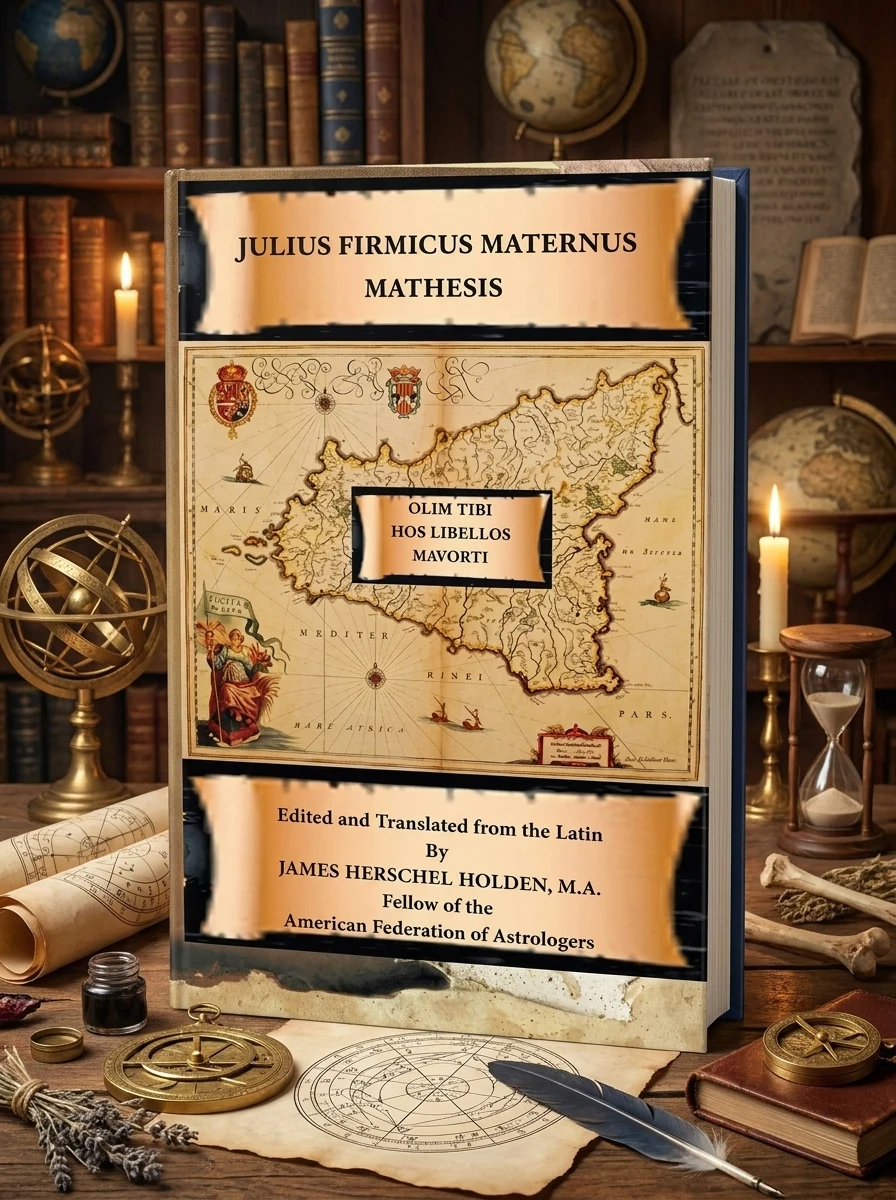
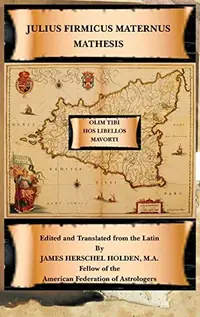
Mathesis
Maternus, Julius Firmicus; , Holden, James HerschelStock reported in the catalog; fulfillment is confirmed with your request.
Unearth the celestial wisdom of Rome's most influential ancient astrologer.
This seminal work presents a complete translation of Julius Firmicus Maternus's *Mathesis*, an exhaustive 4th-century treatise on astrological principles. Beyond its historical significance, the volume offers profound insight into the intricate methods of ancient horoscope interpretation, detailing planetary influences, house systems, and aspects. It includes invaluable indexes categorizing occupations, causes of death, and personal characteristics based on astrological configurations, providing a unique window into the practical application of celestial divination in the Roman world. An essential primary source for serious students of classical astrology.
This text serves as a vital bridge between ancient Roman astrological tradition and modern esoteric study, preserving the comprehensive methods of 4th-century celestial divination for contemporary practitioners. It stands as a primary source documenting the practical application of horoscope interpretation in the Roman world.


📝 Description: Mathesis
💎 Expert review
📖 Why choose it
Why this book is worth reading
Serious students of classical astrology will find immense value in this exhaustive treatise, which offers a rare window into the intricate methods of ancient horoscope interpretation. By providing complete translations of planetary influences, house systems, and aspects, it allows readers to understand how celestial divination was practically applied in the Roman world. The invaluable indexes categorizing occupations, causes of death, and personal characteristics make this an essential reference for those seeking to master historical astrological principles rather than just modern adaptations.
⭐ Reader reviews
Reader rating
While this volume is indispensable for scholars and dedicated practitioners of classical astrology, it may overwhelm casual readers or those seeking simple, accessible horoscopes. The exhaustive nature of the 4th-century treatise demands patience and a strong interest in historical methodology rather than immediate practical application. It is not suited for beginners looking for light entertainment or quick insights. However, for those willing to engage with profound primary sources, it offers unparalleled insight into ancient celestial wisdom and the complex logic that governed Roman astrological practice.
❓ Frequently asked questions
📖 Who should read this
If you are a dedicated student of classical astrology, a historian of ancient thought, or an esoteric practitioner seeking primary source material, this book is an indispensable addition. It demands careful study but rewards with unparalleled historical and practical insights into a foundational tradition.
🎯 Key themes and symbolism
Divinatory Practice
The text serves as a practical manual for casting and interpreting horoscopes. It delves into predictive techniques, offering detailed methodologies for assessing an individual's life path, career, health, and even the manner of their demise, reflecting the fatalistic yet highly structured approach to destiny in the Roman era.
Societal Beliefs & Fate
Beyond technical instruction, *Mathesis* implicitly reveals the cultural and philosophical underpinnings of 4th-century Roman society. The extensive indexes on occupations and death causes highlight the prevailing social structures and the deep-seated belief in cosmic determinism that shaped individual and collective existence during this period.
💬 Quotes from the book
“Observe the lord of the Ascendant in trine to Jupiter, for such a native shall prosper in all enterprises and enjoy the favor of princes.”
“The malefic planets, when ill-dignified and angular, portend struggles and tribulations, yet even in adversity, wisdom may be found by the discerning spirit.”
📜 Historical context
📚 Glossary
- Mathesis
- Firmicus Maternus
- Horoscope
📔 Questions to reflect on
- How do the ancient astrological principles described by Maternus align with or diverge from modern astrological interpretations you may be familiar with?
- Reflect on the role of fate versus free will as implicitly or explicitly addressed in Maternus's astrological philosophy. How might this perspective influence one's life choices?
- Consider how the specific indexes for occupations or causes of death reflect the societal values and beliefs of the 4th-century Roman Empire. What does this tell us about their worldview?
✍️ More books by this author Maternus, Julius Firmicus; , Holden, James Herschel
All books by this author →
🏛 Books from this publisher American Federation of Astrologers
All books from this publisher →

 86
86


You might also like
See more →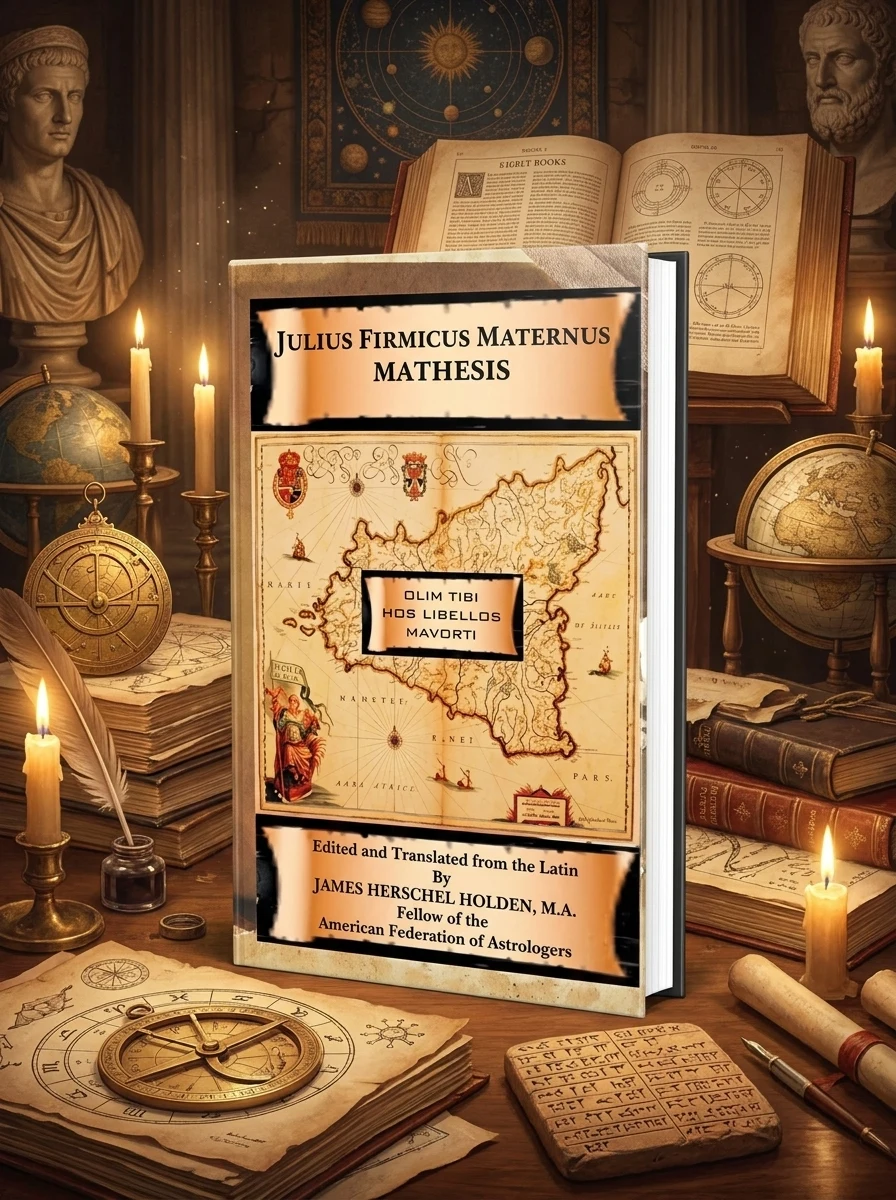
 91
91