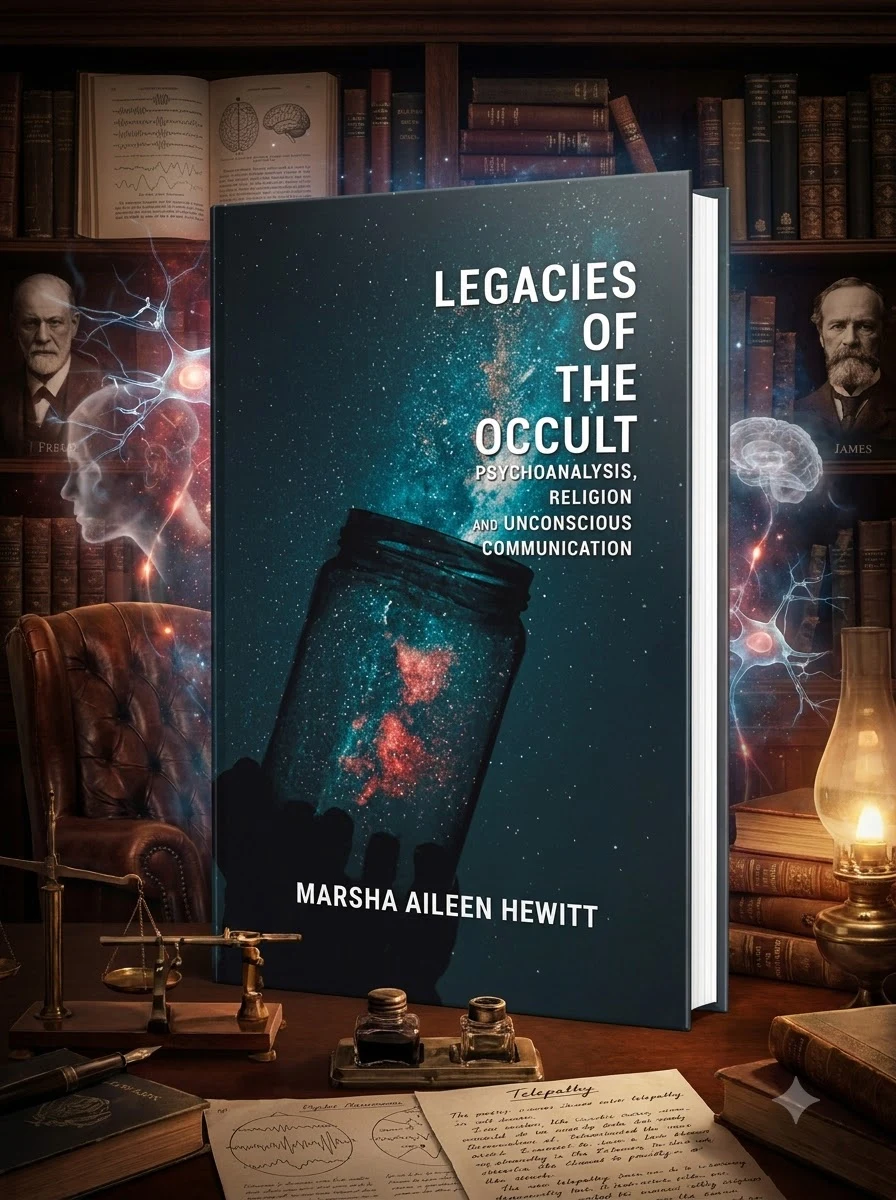


Legacies of the Occult: Psychoanalysis, Religion, and Unconscious Communication
Hewitt, Marsha Aileen 85
85
 Editorial score
How we rate
Editorial score
How we rate
Stock reported in the catalog; fulfillment is confirmed with your request.
Unravel the hidden currents of thought that bridge minds and defy simple explanation.
This compelling volume delves into the fascinating history of unconscious communication, tracing its intellectual journey through the formative years of psychology and psychoanalysis. It meticulously examines how luminaries like William James, F.W.H. Myers, and Sigmund Freud confronted the phenomenon of thought transference, each proposing radically different theoretical frameworks—from psychical research to purely unconscious processes. The book highlights Freud's unique, non-paranormal interpretation and tracks how this concept, often overlooked, has persisted as a subtle, quasi-spiritual undercurrent within psychoanalytic thought, now re-emerging in contemporary theories of intersubjectivity.
This work sits at the intersection of esoteric history and the academic study of psychoanalysis, exploring how early psychological theories grappled with phenomena once considered supernatural.


📝 Description: Legacies of the Occult: Psychoanalysis, Religion, and Unconscious Communication
💎 Expert review
📖 Why choose it
Why this book is worth reading
This book is essential for scholars and enthusiasts who seek to understand the intellectual lineage of the unconscious mind beyond standard psychoanalytic dogma. Readers interested in the historical tension between psychical research and clinical psychology will find immense value in tracing how luminaries like William James and F.W.H. Myers confronted thought transference. It offers a unique perspective on how Freud’s non-paranormal interpretation shaped modern theory, revealing a subtle, quasi-spiritual undercurrent that persists today. If you are fascinated by the hidden currents of thought that bridge minds and defy simple explanation, this volume provides the rigorous historical context needed to appreciate the evolution of these complex ideas within the broader occult and philosophical traditions.
⭐ Reader reviews
Reader rating
Hewitt delivers a meticulous examination of unconscious communication’s formative years, offering a fresh look at figures like Myers and Freud. However, this text is not for casual readers seeking accessible self-help or straightforward paranormal narratives. It demands patience from those uninterested in dense theoretical frameworks or the nuanced history of psychology. Readers expecting clear-cut answers on telepathy or immediate practical applications will likely find the academic tone dry and the focus on historical theory overly abstract. It is best suited for those willing to engage with complex intellectual debates rather than those looking for simple mystical revelations.
❓ Frequently asked questions
📖 Who should read this
If you're drawn to the intersection of psychology, esotericism, and intellectual history, this book offers profound insights. It's for readers curious about the origins of psychoanalytic thought and the enduring mystery of how minds subtly connect.
🎯 Key themes and symbolism
Pioneering Minds on Telepathy
The book meticulously explores how foundational figures such as William James and Frederic Myers approached thought transference. It details their empirical investigations and theoretical interpretations, firmly situating their work within the broader context of psychical research and the exploration of the 'subliminal mind,' which sought to understand mental connections beyond conventional sensory input.
Freud's Radical Unconscious
This section illuminates Sigmund Freud's distinctive theory of thought transference. Unlike his contemporaries, Freud emphatically disavowed any paranormal or spiritual implications. Instead, he grounded these phenomena entirely within his evolving understanding of the unconscious mind, presenting a groundbreaking, psychoanalytic interpretation that profoundly reshaped the discourse around inter-personal mental influence.
Enduring Psychoanalytic Presence
The book traces the subtle yet persistent role of unconscious communication within psychoanalysis, even after its initial prominence faded. It reveals how this concept, though often relegated to the margins or implicitly understood, has continuously influenced analytical thought. Furthermore, it highlights the renewed contemporary interest in 'loosely boundaried subjectivities,' signaling a resurgence of this vital idea.
💬 Quotes from the book
“To truly grasp the concept of thought transference, one must navigate the divergent paths forged by psychical researchers and Freud's radical re-framing of the unconscious.”
“Though often relegated to the shadows, the notion of minds communicating beyond conscious awareness has always pulsed beneath the surface of psychoanalytic theory.”
📜 Historical context
📚 Glossary
- Telepathy
- Subliminal Mind
- Unconscious Communication
📔 Questions to reflect on
- Reflect on a time you felt an unspoken connection or understanding with another person. How might the theories discussed in this book explain that experience?
- Consider the tension between scientific inquiry and phenomena that defy easy explanation. How have your own beliefs about the 'unseen' evolved?
- If communication can occur unconsciously, what implications does this have for our understanding of identity, boundaries, and interpersonal relationships?
✍️ More books by this author Hewitt, Marsha Aileen
All books by this author →
🏛 Books from this publisher Equinox Publishing
All books from this publisher →You might also like
See more →